 Save
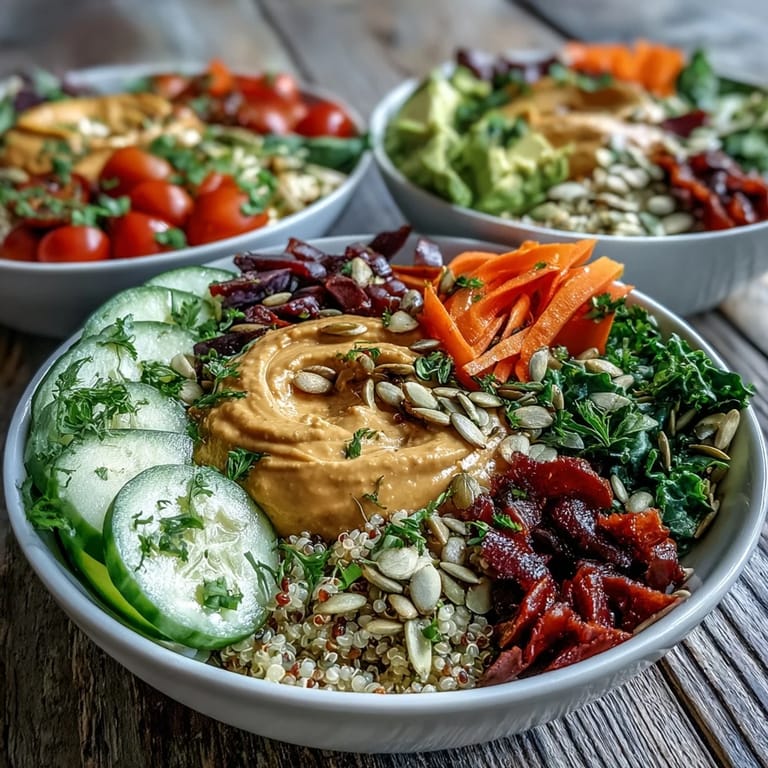
Save There's something about assembling a Buddha bowl that feels less like cooking and more like creating edible art. I discovered these vibrant compositions during a season when I was craving color on my plate as much as nutrition, and the roasted red pepper hummus became the ingredient that changed everything—it's that silky, slightly smoky anchor that makes you want to build a whole meal around it. What started as an experiment with leftover roasted peppers turned into my go-to lunch that friends started asking for by name. The beauty is that once you make the hummus, the rest comes together in minutes, and you get that satisfying moment when all those fresh textures and flavors finally meet in one bowl.
I made these bowls for my sister during her first week of trying veganism, and I watched her face light up when she realized something so vibrant and satisfying could be entirely plant-based. She kept asking for bites of different components, mixing them all together in her own order, treating the bowl like a choose-your-own-adventure meal. That's when I understood that Buddha bowls aren't just about nutrition—they're about giving people permission to build exactly what they want to eat.
Ingredients
- Chickpeas (400 g / 14 oz can, drained and rinsed): The foundation of any great hummus, and rinsing them really does make the final texture silkier and prevents the grittiness that can happen if you skip this step.
- Roasted red bell pepper: You can roast your own (char it over a flame or under the broiler, then steam it in a covered bowl to loosen the skin) or grab jarred ones—either way, this ingredient is what gives the hummus its distinctive warm color and subtle sweetness.
- Tahini (2 tablespoons): This sesame paste is non-negotiable for authentic hummus; it adds body and a nutty undertone that regular oil simply can't replicate.
- Fresh lemon juice (2 tablespoons for hummus, plus 2 more for dressing): Acid is what makes hummus taste alive, so don't skip it or use bottled—fresh lemon makes a tangible difference.
- Garlic (1 clove, minced): One clove is generous enough to make its presence known without overwhelming the other flavors; mince it finely so it blends seamlessly into the hummus.
- Extra virgin olive oil (2 tablespoons for hummus, 1 more for dressing): Quality matters here since it's tasted directly—a fruity, peppery oil adds complexity to both the hummus and the simple dressing.
- Cumin and smoked paprika (1/2 teaspoon each): These spices add warmth and depth; the paprika especially echoes the roasted pepper flavor and makes the hummus taste more sophisticated.
- Quinoa (1 cup cooked): A complete protein that keeps you satisfied, though brown rice or millet work equally well if that's what you have on hand.
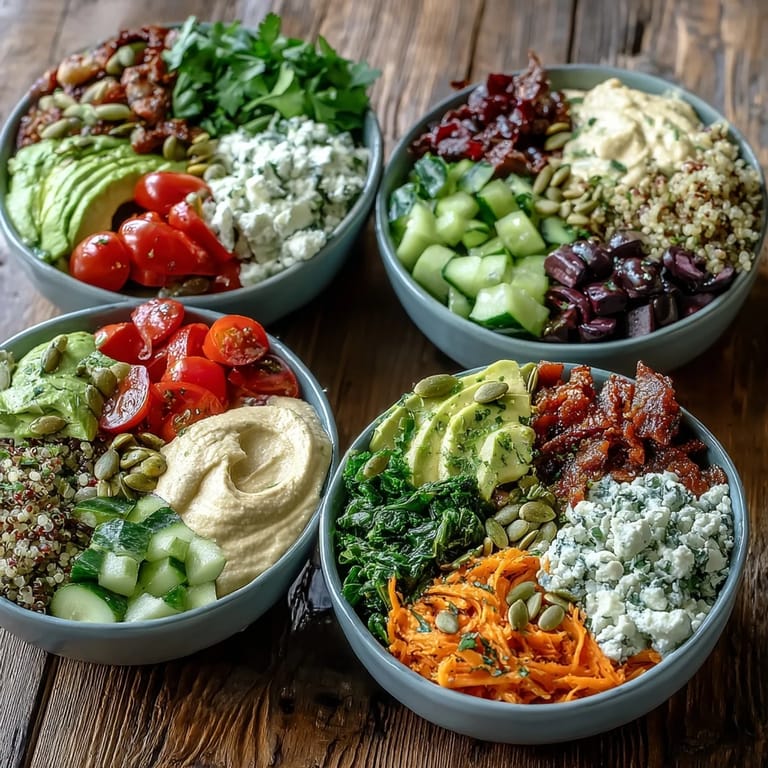
- Cherry tomatoes, cucumber, purple cabbage, spinach, avocado, carrots, kalamata olives, and pumpkin seeds: Mix and match from this lineup based on what looks fresh at your market—the variety of colors and textures is what makes these bowls visually exciting and keeps every bite interesting.
- Fresh parsley or cilantro: A handful of fresh herbs at the end lifts the entire bowl and adds a brightness that makes everything taste more vibrant.
Tired of Takeout? 🥡
Get 10 meals you can make faster than delivery arrives. Seriously.
One email. No spam. Unsubscribe anytime.
Instructions
- Make the hummus:
- Add your drained chickpeas, roasted red pepper, tahini, lemon juice, minced garlic, olive oil, cumin, paprika, and salt to a food processor and blend on high for about two minutes, stopping to scrape down the sides. Add water one tablespoon at a time, blending between additions, until you reach that perfect creamy consistency that's smooth but still has some body to it.
- Toast the grains and prep your vegetables:
- If your grains have cooled completely, you can serve them at room temperature or warm them gently. While the food processor is still humming, arrange all your vegetables on a cutting board and get them prepped—cherry tomatoes halved, cucumber diced, cabbage shredded—so everything is ready when you need it.
- Assemble each bowl:
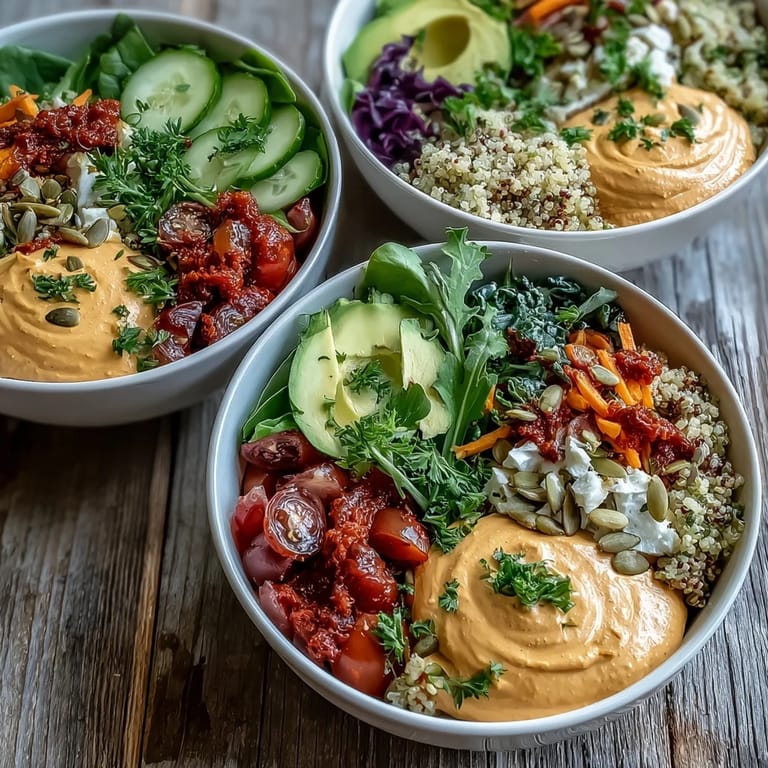
- Start with a generous base of quinoa in each of four bowls, then arrange your prepared vegetables in little piles around the rim, creating sections of color. This isn't just for looks; it makes it easier for people to eat exactly what they want in every spoonful.
- Add the hummus and toppings:
- Nestle a large scoop of roasted red pepper hummus into the center of each bowl, then scatter toasted pumpkin seeds over the top and finish with fresh herbs. If you're making the optional dressing, whisk the lemon juice and olive oil together with a pinch of salt and pepper, then drizzle it lightly across the bowl.
- Serve right away:
- These bowls are best enjoyed immediately while the vegetables are still crisp and everything has contrasting temperatures and textures.
 Save
Save What struck me most about these bowls was watching someone who'd never eaten hummus taste the roasted red pepper version and realize that plant-based food doesn't mean sacrificing flavor or richness. It became the meal I'd make when I wanted to nourish someone—a friend going through something difficult, a family member making dietary changes, or simply a Tuesday when I needed to remember that feeding myself well matters.
Why Roasted Red Pepper Changes Everything
Standard hummus is wonderful, but roasting a red pepper transforms it into something with more dimension and depth. The roasting process caramelizes the pepper's natural sugars and adds a subtle smokiness that makes people stop and ask what's different about your hummus. It's also a technique that builds confidence—once you roast your first pepper, you realize it's not as intimidating as it sounds, and suddenly you're roasting them for other dishes too.
Building Your Perfect Bowl
The magic of Buddha bowls is that they're infinitely customizable without requiring any special techniques. You don't need every single vegetable listed here; instead, build your bowl based on what's in season and what you actually enjoy eating. I've made versions with roasted cauliflower, shredded beets, crispy chickpeas, and different grains depending on what I had in the pantry, and they've all been delicious because the hummus holds everything together.
Storage and Make-Ahead Tips
The hummus keeps refrigerated for up to five days, which means you can make it on Sunday and have a ready-made component for quick weekday meals. The grains and most vegetables also store well separately, so you can assemble bowls fresh each time rather than eating sad pre-packed versions by day three. The one exception is avocado—always slice or add it just before serving to prevent browning and keep that buttery texture intact.
- Make the hummus up to five days ahead and store it in an airtight container; it actually develops deeper flavor as it sits.
- Pre-cut vegetables can be stored in separate containers with a damp paper towel to keep them fresh and crisp through the week.
- If you're bringing a bowl to work, pack the hummus and dressing separately from the vegetables and assemble just before eating for the best texture.
 Save
Save These bowls have become my answer to the question of what constitutes a satisfying plant-based meal, and they've converted more than a few skeptics into Buddha bowl enthusiasts. Serve them with warm pita or flatbread on the side, and watch people build their own perfect bite every time.
Recipe Guide
- → Can I make the hummus ahead of time?
Yes, prepare the roasted red pepper hummus up to 5 days in advance and store it in an airtight container in the refrigerator. The flavors actually develop and improve over time.
- → What grains work best in these bowls?
Quinoa, brown rice, farro, bulgur, or millet all work beautifully. Choose based on preference and cook according to package directions before assembling.
- → How do I roast the red peppers?
Broil red peppers under high heat for 15-20 minutes, turning occasionally until charred on all sides. Place in a bowl, cover, and steam for 10 minutes. The skin will peel off easily.
- → Can I add protein beyond the hummus?
Absolutely. Roasted chickpeas, crispy tofu cubes, grilled tempeh, or even falafel make excellent protein additions. These boost the protein content from 12g to 20g+ per serving.
- → Are these bowls freezer-friendly?
The hummus and cooked grains freeze well separately. Store fresh vegetables and toppings separately and assemble bowls just before serving for best texture and freshness.