 Save
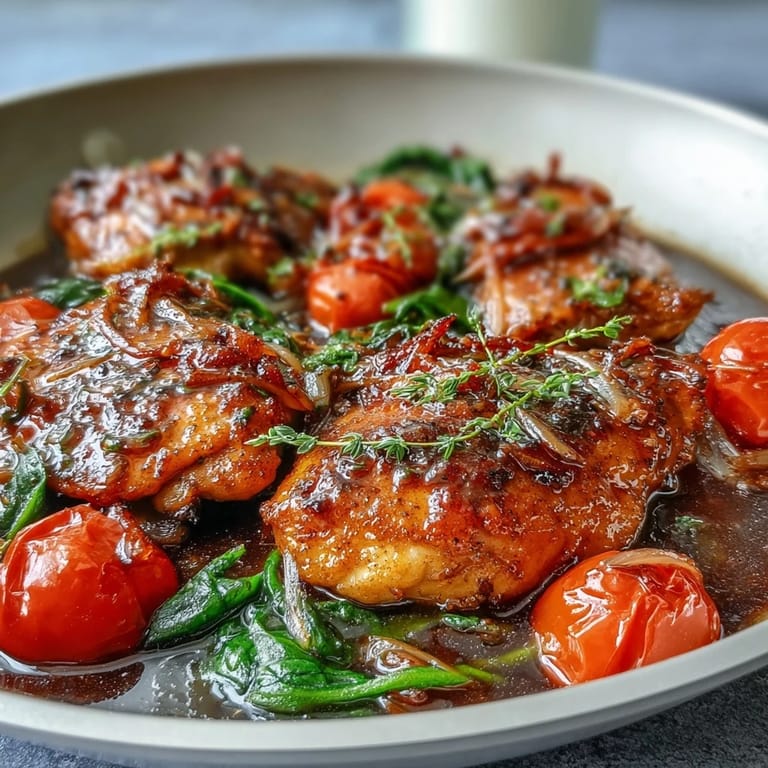
Save There's something magical about weeknight dinners that don't demand a stack of dirty dishes afterward. A few years back, I was standing in my kitchen on a Tuesday evening, exhausted from work, when I grabbed a chicken breast and some cherry tomatoes I'd picked up at the market. That single pan on the stove became my salvation—tangy balsamic vinegar hitting the heat, the tomatoes bursting into soft sweetness, and within 35 minutes, something that tasted far too good to be called simple. Now I make it constantly, and it never feels routine.
I cooked this for my sister during one of those unexpected visits where she showed up hungry and I had almost nothing in the fridge. Watching her face light up when she tasted that first bite—the way the garlic and balsamic played against the tender chicken—made me realize this wasn't just a dinner, it was proof that the best meals don't require hours of prep or complexity.
Ingredients
- Boneless, skinless chicken breasts: Four breasts around 150g each give you evenly-cooked protein that stays moist when you sear them properly—don't skip the searing step, it builds flavor.
- Cherry tomatoes: Use 2 cups halved; they soften beautifully under heat and release their juices into the sauce, creating depth without extra steps.
- Fresh baby spinach: Four cups sounds like a lot until it hits the pan and wilts down to nothing; the balsamic sauce clings to every leaf.
- Garlic and red onion: Three minced cloves and one medium onion thinly sliced—they're your aromatic base that makes this taste like you spent hours cooking.
- Balsamic vinegar: Use 1/3 cup of good quality if you can find it; cheap balsamic tastes thin and sharp, while decent balsamic brings sweetness and complexity.
- Extra-virgin olive oil: Two tablespoons in the sauce plus one for searing; this oil carries all the flavors and creates that glossy finish.
- Honey: Just 1 tablespoon balances the vinegar's acidity and rounds out the glaze without making it cloying.
- Dried Italian herbs: One teaspoon of the blend, or mix your own basil, oregano, and thyme for fresher taste.
- Salt and black pepper: Season at every stage, not just at the end—it builds layers of flavor.
Tired of Takeout? 🥡
Get 10 meals you can make faster than delivery arrives. Seriously.
One email. No spam. Unsubscribe anytime.
Instructions
- Prepare your glaze:
- In a small bowl, whisk together the balsamic vinegar, honey, 2 tablespoons of olive oil, dried herbs, and a good pinch of salt and pepper. Set it aside and let those flavors start getting acquainted while you work on the chicken.
- Season and sear the chicken:
- Pat your chicken breasts completely dry with paper towels—moisture is the enemy of a good sear. Season both sides generously with salt and pepper, then heat 1 tablespoon of olive oil in your large skillet over medium-high heat until it shimmers slightly. Lay the chicken breasts in the pan and let them sit undisturbed for 3-4 minutes until they develop a golden-brown crust, then flip and sear the other side for another 3-4 minutes. They won't be fully cooked through yet, and that's exactly right.
- Build the flavor base:
- Remove the chicken to a plate and reduce your heat to medium. Add the sliced red onion to the same pan and let it soften for about a minute, then add your minced garlic and cook for another minute until the kitchen smells incredible. You're not browning these, just releasing their essence into the pan.
- Add the tomatoes:
- Scatter your halved cherry tomatoes into the pan and let them cook for 3-4 minutes, stirring occasionally, until they start to soften and their skins begin to split. This is when they release their juices and start building the base of your sauce.
- Bring it all together:
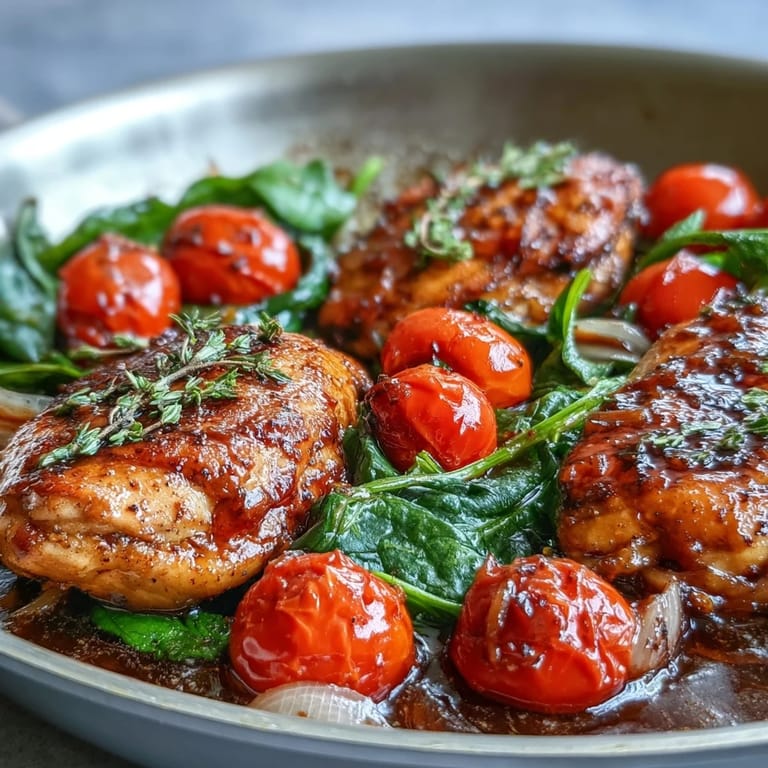
- Return the seared chicken to the pan, nestling it among the tomatoes and onions. Pour your balsamic glaze evenly over everything, then cover the pan with a lid and reduce the heat slightly. Let it simmer for 8-10 minutes until a meat thermometer inserted into the thickest part of the chicken reads 74°C (165°F)—this is when you know it's safe to eat but still tender.
- Finish with spinach:
- Uncover the pan and add your 4 cups of fresh spinach, gently stirring it into the sauce and vegetables. Within a minute or two, it'll wilt down completely and absorb all those wonderful flavors. Don't skip this step even if spinach isn't your usual thing—it becomes something else entirely in this sauce.
- Plate and garnish:
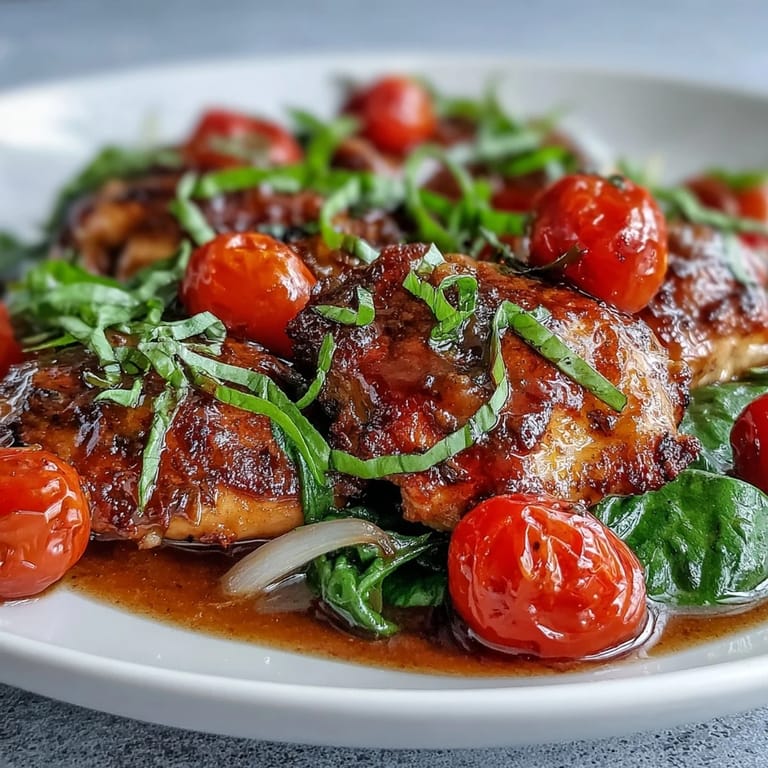
- Transfer a chicken breast to each plate and spoon the tomatoes, spinach, and glossy pan sauce over the top. If you have fresh basil and some crumbled feta or shaved Parmesan, scatter those on now—they add brightness and richness that ties everything together beautifully.
 Save
Save There was a night I made this for my kids, and my youngest actually ate spinach without complaining—something that had seemed impossible until then. That's when I understood this dish wasn't just about efficient cooking or balanced nutrition; it was about making something so delicious that people forget to resist it.
Why This Works as a Weeknight Dinner
The beauty of one-pan cooking is that every element gets a chance to build flavor without creating an overwhelming list of tasks. Your chicken gets seared for depth, your vegetables soften and release their juices into the sauce, and by the time everything comes together, you have a restaurant-quality dish that tastes like you've been cooking for hours. The whole process is actually just 35 minutes, and most of that is hands-off simmering while you can set the table or step away briefly.
Variations That Keep Things Interesting
Once you've made this a few times and it feels comfortable, you can start playing with it. I've added red pepper flakes when I wanted heat, swapped the spinach for arugula at the end for a peppery bite, and even used chicken thighs instead of breasts on nights when I wanted extra richness and didn't worry about them drying out. The balsamic-honey base is forgiving enough to handle experiments, so don't be afraid to make it your own.
Serving and Pairing Ideas
On its own, this is a complete, satisfying meal, but it really shines when you have something to soak up that incredible pan sauce. I've served it over fluffy rice, creamy quinoa, and thick slices of crusty bread that I use to push around the plate catching every last drop. A crisp glass of Sauvignon Blanc or a light Pinot Noir feels just right alongside it—the acidity of the wine echoes the balsamic, and suddenly dinner feels a little more intentional.
- Crusty bread for sauce soaking is non-negotiable if you're serious about flavor.
- If you're going low-carb, the dish is perfect on its own without any starch.
- Leftover sauce can be drizzled on salads or grilled vegetables the next day.
 Save
Save This dish has become my go-to proof that simple ingredients and proper technique are all you ever really need. Make it once and it'll be there for you on those nights when you need dinner to taste like you care, without the stress of caring too much.
Recipe Guide
- → Can I use chicken thighs instead of breasts?
Yes, boneless skinless chicken thighs work wonderfully and add extra juiciness. Adjust cooking time to ensure thighs reach 74°C/165°F internally, typically 10-12 minutes total.
- → What can I serve with this dish?
This pairs beautifully with rice, quinoa, crusty bread to soak up the sauce, or roasted vegetables. For wine, try a crisp Sauvignon Blanc or light Pinot Noir.
- → Is this dish gluten-free?
Yes, the main dish is naturally gluten-free. Verify your balsamic vinegar is certified gluten-free, and skip cheese garnishes or use gluten-free varieties if needed.
- → How do I store leftovers?
Store in an airtight container in the refrigerator for up to 3 days. Reheat gently in a skillet over medium heat, adding a splash of water or broth to refresh the sauce.
- → Can I make this ahead?
The balsamic marinade can be mixed up to 2 days ahead. For best results, cook fresh, though leftovers reheat well for quick lunches the next day.