 Save
Save There's something about a stuffed pepper that feels both elegant and approachable, like you're serving restaurant food without the fuss. I discovered this version on a sunny afternoon when I had a handful of colorful peppers from the farmers market and wanted to prove to myself that vegan cooking could be genuinely satisfying. The tahini sauce was an afterthought that turned into the star, creamy and bright enough to make everything feel special.
I made these for a dinner party when my friend mentioned she was trying to eat less meat, and watching people go back for seconds without realizing there was no cheese involved was genuinely thrilling. The kitchen smelled incredible—all lemon, garlic, and herbs mingling with roasted pepper skin—and that's when I knew I'd found something worth repeating.
Ingredients
- Large bell peppers (4, in red, yellow, or orange): Choose ones that sit flat on the bottom so they stay upright while baking, and cut the tops off carefully to preserve the pepper walls.
- Olive oil (1 tablespoon): Good quality makes a real difference here since it's one of the few fats in the dish.
- Red onion (1 small, diced): The sharpness mellows as it cooks and adds natural sweetness to the filling.
- Garlic (2 cloves, minced): Don't skip this—it's the backbone of the Mediterranean flavor profile.
- Zucchini (1 small, diced): Keeps the filling light and adds moisture without overwhelming the other flavors.
- Cherry tomatoes (1 cup, quartered): These stay plump and burst slightly when cooked, creating little pockets of brightness.
- Cooked chickpeas (1½ cups or 1 can, drained and rinsed): This is your protein anchor, so don't skimp on them or they'll become mealy.
- Cooked quinoa or rice (½ cup): Acts as a binder and adds substance; I prefer quinoa for its slightly nutty flavor but rice works beautifully too.
- Kalamata olives (¼ cup, pitted and chopped): Their briny, salty quality is essential to the Mediterranean character of this dish.
- Sun-dried tomatoes (2 tablespoons, chopped): Concentrated tomato flavor that adds depth, but chop them small so they distribute evenly.
- Dried oregano (1 teaspoon): The classic Mediterranean herb that ties everything together.
- Ground cumin (½ teaspoon): A whisper of warmth that makes people wonder what the secret ingredient is.
- Smoked paprika (¼ teaspoon): Just enough to add color and a subtle smoky note without dominating.
- Salt (½ teaspoon) and freshly ground black pepper: Season as you taste, because the intensity of other ingredients can vary.
- Fresh parsley (¼ cup, chopped): Stirred in at the end for brightness and a pop of color.
- Fresh mint (2 tablespoons, optional): A game changer if you have it—adds an unexpected coolness that lifts the whole dish.
- Lemon juice (juice of ½ lemon plus 3 tablespoons for the sauce): Lemon is the thread that connects every component, so don't use bottled juice here.
- Tahini (¼ cup): The creamy foundation of the sauce; make sure yours is smooth and not separated.
- Water (2 tablespoons plus more): Adjust gradually until your sauce reaches a drizzleable consistency.
- Garlic (1 small clove, grated for the sauce): Raw garlic in the sauce adds a punch that mellows slightly once everything sits together.
Tired of Takeout? 🥡
Get 10 meals you can make faster than delivery arrives. Seriously.
One email. No spam. Unsubscribe anytime.
Instructions
- Prepare your space:
- Preheat the oven to 375°F (190°C) and lightly grease your baking dish. This isn't just about preventing sticking—a well-greased dish helps the peppers cook evenly on the bottom.
- Build the base:
- Heat olive oil in a large skillet over medium heat, then sauté the diced red onion for 3 minutes until it softens and becomes translucent. Add the minced garlic and cook for just 1 minute more, until the aroma hits you—that's your signal it's ready.
- Develop the vegetables:
- Stir in the diced zucchini and cook for 4 minutes, letting it soften slightly without losing all its texture. Then add the cherry tomatoes and cook for 2 more minutes; they'll begin to blister at the edges, which is exactly what you want.
- Bring it together:
- Add the chickpeas, cooked quinoa, olives, sun-dried tomatoes, oregano, cumin, smoked paprika, salt, and pepper all at once. Stir everything gently for 3 to 4 minutes, letting the spices warm through and coat every ingredient.
- Finish with fresh elements:
- Remove the skillet from heat and fold in the fresh parsley, mint if you're using it, and the lemon juice. Take a moment to taste and adjust the seasoning—this is your only chance before it goes into the peppers.
- Stuff with care:
- Divide the filling evenly among the four prepared peppers, packing it gently but firmly so it stays put. Stand each stuffed pepper upright in your greased baking dish.
- The two-stage bake:
- Cover the baking dish tightly with foil and bake for 25 minutes, then remove the foil and bake for another 10 minutes. The peppers should be tender when pierced with a fork but still holding their shape—they shouldn't collapse.
- Make the sauce:
- While the peppers bake, whisk together the tahini, fresh lemon juice, water, grated garlic, and salt in a small bowl until smooth and creamy. Add water a tablespoon at a time if it's too thick—you're aiming for something that drizzles easily but still has body.
- Serve with flourish:
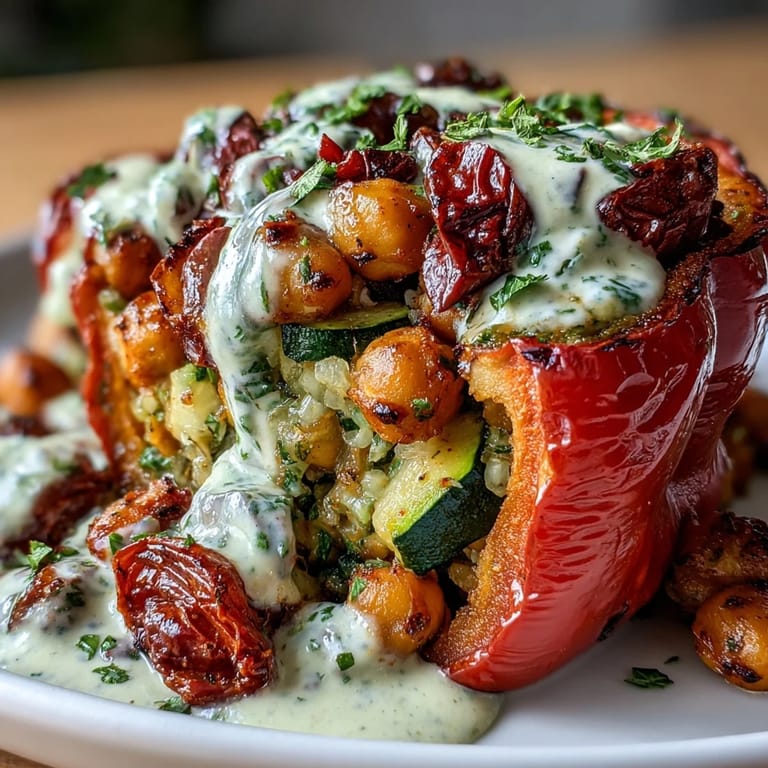
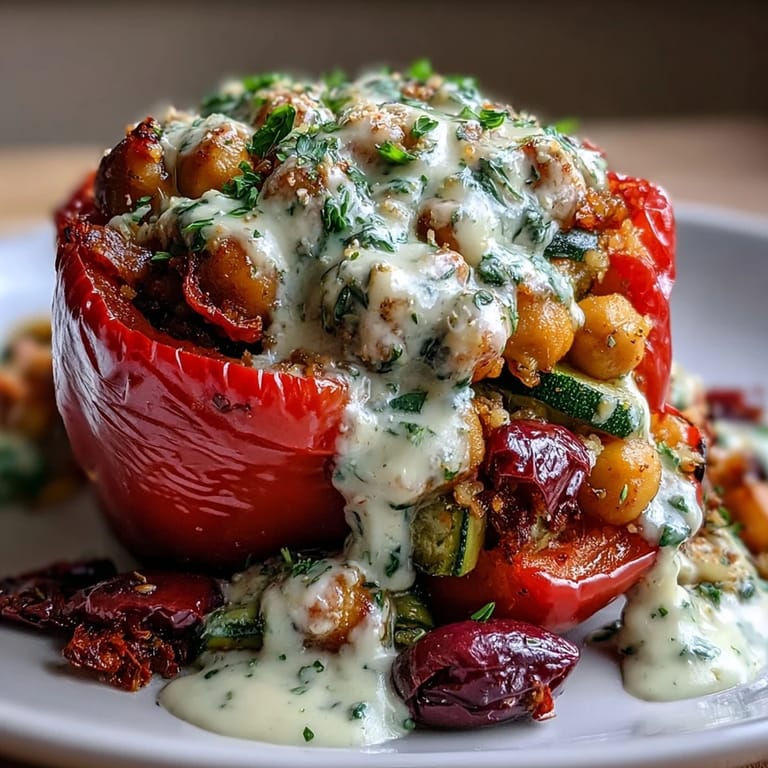
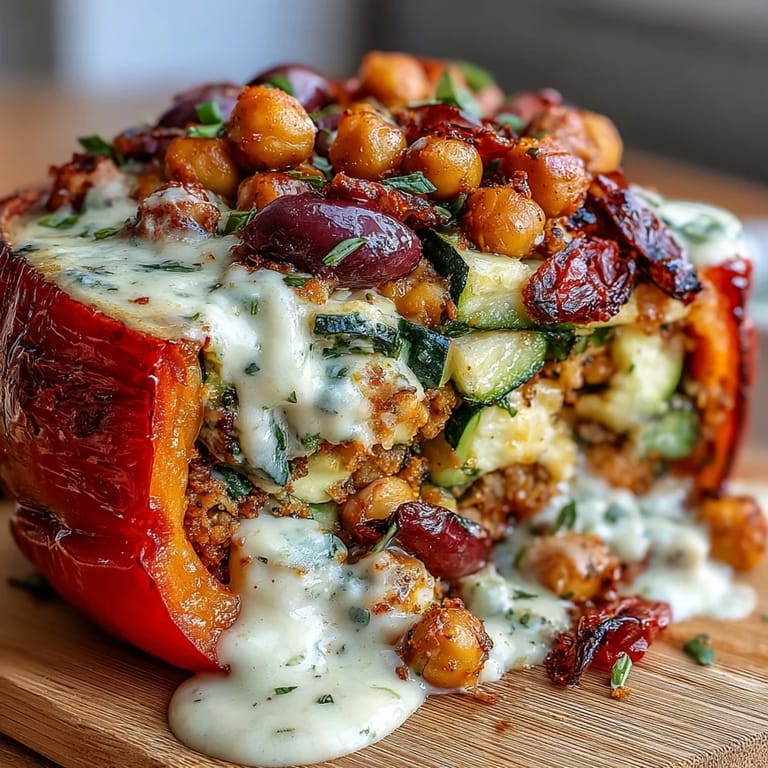
- Transfer the warm peppers to a platter and generously drizzle the lemon tahini sauce over the top. The sauce will pool slightly around the base, which is beautiful and delicious.
 Save
Save There was a moment when my teenage nephew, who considers himself a devoted meat eater, asked for a second helping and then a third, and it suddenly clicked that good food isn't about checking dietary boxes—it's about flavors and textures that make people want more. That's when this recipe stopped being just vegan and became something I genuinely cook because it's delicious.
The Magic of Tahini Sauce
Tahini deserves its own moment because this sauce is where the dish shifts from good to unforgettable. It's creamy without dairy, lemony without being harsh, and it brings all the components together into something cohesive and luxurious. Once you understand how tahini works—how the lemon juice helps it emulsify, how garlic intensifies it, how water loosens it—you'll find yourself making this sauce for roasted vegetables, grain bowls, and everything in between.
Customizing Without Losing the Thread
The beauty of this recipe is that it can flex with what you have and what you love. I've made it with farro instead of quinoa on nights when I wanted something heartier, added roasted cauliflower when a pepper didn't stuff quite full enough, and once swapped half the chickpeas for white beans because that's what I had open. The fundamentals stay strong—the aromatics, the spices, the tahini sauce—so there's room to play without losing what makes it work.
Bringing It to the Table
These peppers sit beautifully on a table, each one a little work of art, and they feel substantial enough to anchor a meal without needing much else. A simple green salad alongside them is all you really need, though a crisp white wine like Sauvignon Blanc is a lovely touch if you're in the mood. This dish also keeps well—the filling holds in the fridge for three days, and the peppers actually taste better when they've had time for the flavors to meld.
- Garnish with extra fresh herbs or toasted pine nuts right before serving for texture and a moment of elegance.
- If you want heat, a pinch of red chili flakes stirred into the filling changes the whole mood in the best way.
- Make the tahini sauce ahead and store it in the fridge; whisk in a splash of water if it's thickened too much when you're ready to serve.
 Save
Save There's real satisfaction in setting a beautiful plate in front of someone and watching them realize that eating well and eating ethically can be the same thing. These peppers are proof of that.
Recipe Guide
- → Can I use different grains instead of quinoa or rice?
Yes, cooked farro, bulgur, or couscous can be substituted, though this may affect the gluten-free status.
- → How do I make the lemon tahini sauce smooth?
Whisk tahini with fresh lemon juice, grated garlic, salt, and water, adding water gradually until a creamy, drizzle-ready texture forms.
- → What type of bell peppers work best?
Large red, yellow, or orange bell peppers are ideal for stuffing and provide vibrant color and balanced sweetness.
- → Can I add heat to this dish?
Yes, sprinkling chili flakes into the filling adds a pleasant spicy kick.
- → How should I serve these stuffed peppers?
Serve warm, drizzled generously with lemon tahini sauce, and optionally garnish with fresh herbs or toasted pine nuts.