 Save
Save There's something almost meditative about tossing vegetables in olive oil and watching them transform in a hot oven. I discovered this salad on an unexpectedly cool evening when I had a fridge full of peppers and eggplant from the farmers market, and I needed something that felt both light and satisfying. The moment I pulled that baking sheet out and saw the caramelized edges catch the kitchen light, I knew I'd stumbled onto something special. My partner took one bite of the warm vegetables over those tender greens and asked if I could make it again the next week. That's when I knew this wasn't just a way to use up produce—it had become something I'd crave.
I made this for a potluck once and brought it in a big shallow container, still warm from my kitchen. People kept coming back to it, piling their plates higher than they expected to, and I overheard someone say they didn't even miss the meat. That's the quiet victory of a good roasted vegetable dish—it stops being a side and becomes the main event.
Ingredients
- Zucchini: Cut into thick half-inch slices so they stay firm during roasting instead of turning mushy.
- Red and yellow bell peppers: The two colors together aren't just pretty—they taste slightly different, with yellow being a touch sweeter.
- Red onion: Cut into wedges so each piece stays intact, getting soft and almost caramelized at the edges.
- Eggplant: One-inch cubes work best, and don't skip salting the cut sides lightly before roasting—it helps them brown instead of steam.
- Cherry tomatoes: Halved so they release their juice and concentrate their sweetness in the heat.
- Olive oil for roasting: Use something you don't mind spending a little on, since the heat will make a difference in the final taste.
- Dried Italian herbs: A pinch of oregano and thyme work harder than you'd expect in a hot oven.
- Mixed salad greens: Something with a little personality—arugula brings a peppery note that plays well with the sweet roasted vegetables.
- Extra virgin olive oil for dressing: This one should be good oil, the kind you taste, since it's doing all the flavor work raw.
- Balsamic vinegar: A quality one makes a noticeable difference; the cheap stuff tastes thin and sharp by comparison.
- Dijon mustard: Just a teaspoon acts as an emulsifier and adds a subtle tang that keeps the dressing from tasting flat.
- Garlic: Minced fine so it disappears into the dressing without harsh raw-garlic bite.
- Honey or maple syrup: A touch of sweetness rounds out the acidity and ties everything together.
- Pine nuts or walnuts: Toasting them first brings out their oil and makes them taste nutty instead of raw and dull.
- Parmesan or feta: Shaved Parmesan adds a salty umami note; feta crumbles bring a briny tang that works beautifully with the roasted warmth.
Tired of Takeout? 🥡
Get 10 meals you can make faster than delivery arrives. Seriously.
One email. No spam. Unsubscribe anytime.
Instructions
- Heat your oven and prep your workspace:
- Set the oven to 425°F and line a large baking sheet with parchment paper. This temperature is hot enough to coax color out of the vegetables without turning them to mush in the time they need.
- Toss the vegetables with oil and seasoning:
- In a bowl, combine your cut vegetables with the olive oil, dried herbs, salt, and pepper, making sure every piece gets a light coat. Uneven coating means some pieces brown while others stay pale.
- Spread and roast with intention:
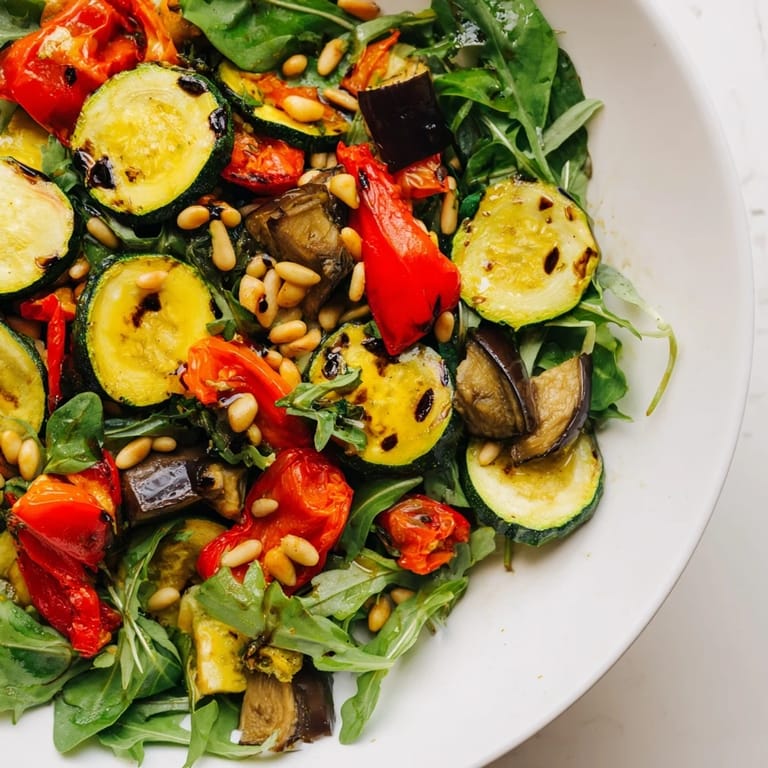
- Lay the vegetables in a single layer—don't crowd the pan. Roast for about 25 to 30 minutes, stirring halfway through, until the edges turn golden and caramelized. You'll know it's done when you can smell that toasted, slightly sweet aroma.
- Build your dressing while vegetables roast:
- Whisk together the extra virgin olive oil, balsamic vinegar, Dijon mustard, minced garlic, and a touch of honey in a small bowl. The mustard helps everything emulsify so it coats the greens instead of pooling at the bottom.
- Compose the salad with care:
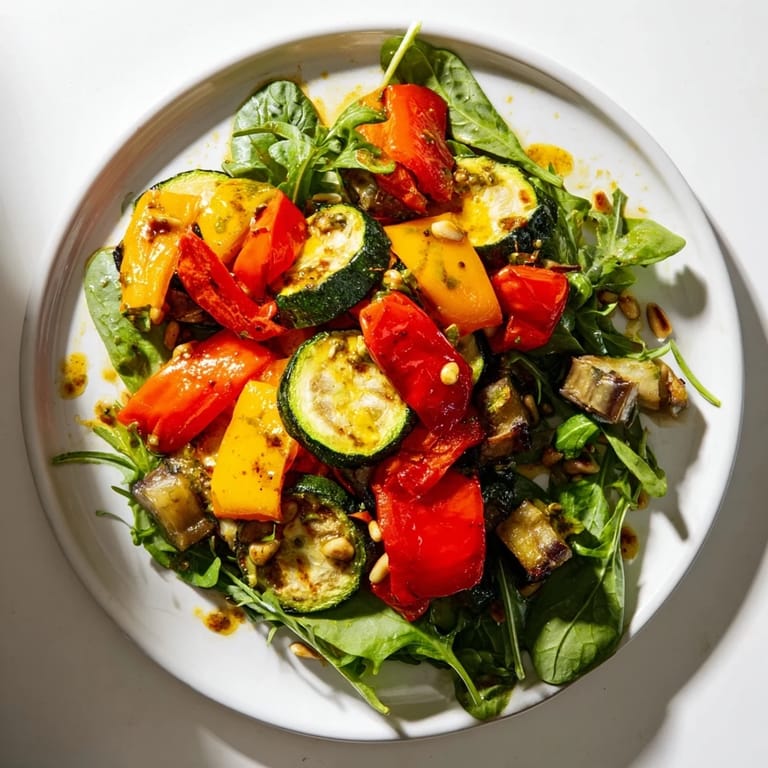
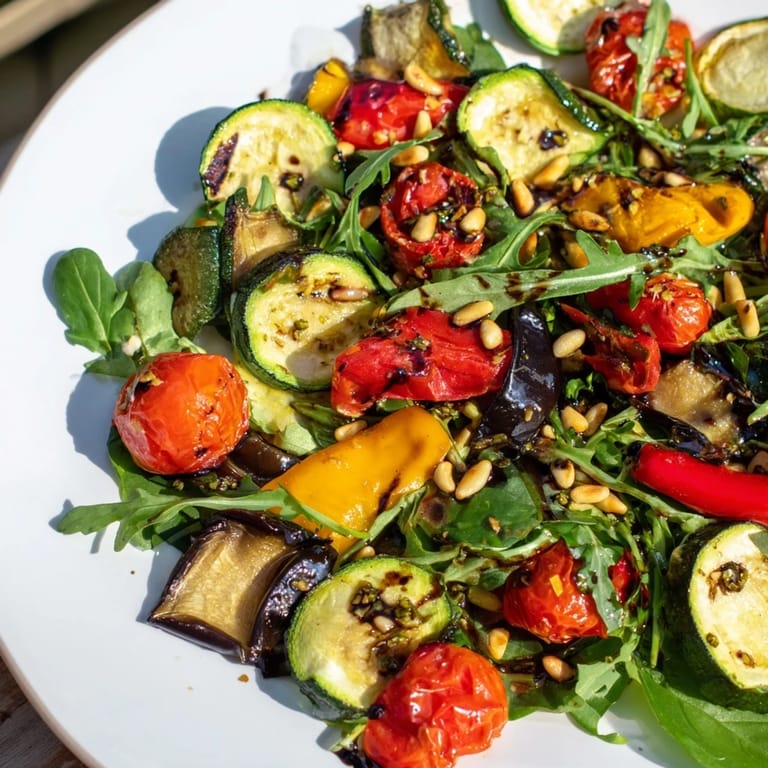
- Arrange your greens on a platter or individual plates, then top with the warm or cooled roasted vegetables. The warmth of the vegetables will slightly soften the greens, which is exactly what you want.
- Finish with dressing and garnish:
- Drizzle the balsamic dressing over everything, then scatter with toasted nuts and cheese if you're using them. Serve right away while the vegetables still hold their warmth.
 Save
Save I made this once for a friend who was going through a phase of eating only vegetables, and I watched her face as she realized how much flavor and texture you can coax out of simple produce. That's when this salad stopped being just a recipe in my rotation and became something I think of when I want to show someone that good food doesn't have to be complicated.
Roasting Vegetables Like You Mean It
The secret to this salad isn't in the dressing or the greens—it's in the roasting. When vegetables hit a hot oven with oil and heat, something magical happens: water evaporates, natural sugars concentrate, and the edges turn brown and caramelized. This is where eggplant stops being watery and becomes creamy, where bell peppers taste almost like jam, where red onions turn sweet. The key is not crowding the pan and not skipping the stirring halfway through. Every piece needs direct contact with the hot sheet to brown properly.
Why the Dressing Matters More Than You'd Think
A great dressing is what separates a pile of roasted vegetables from an actual dish. The balsamic brings acidity and a subtle sweetness, the mustard acts as an invisible hand that holds the oil and vinegar together, and the garlic whispers underneath without shouting. If your dressing tastes thin or one-dimensional, it's usually because the balsamic isn't good quality or you haven't emulsified it properly. Take the extra minute to whisk it well, and you'll taste the difference immediately.
Making It Your Own
This salad is a canvas, not a strict formula. I've added roasted sweet potatoes on fall evenings, thrown in carrots when they looked good at the market, and once used leftover roasted cauliflower when I was low on other vegetables. The bones of the recipe stay the same, but the details bend to what you have and what you're craving. Some days I serve it warm and almost soup-like; other times I let it cool completely so it feels more like a traditional composed salad.
- Roasted sweet potatoes or carrots add earthiness and pair beautifully with the balsamic.
- Leftover roasted vegetables from dinner can be repurposed here without losing their character.
- Swap the cheese or nuts based on what you have, or skip them entirely if you're eating vegan or just prefer the vegetables to shine.
 Save
Save There's real comfort in a salad that tastes like someone took their time with it. This one has become the dish I reach for when I want to feel like I'm cooking something thoughtful but without the fuss.
Recipe Guide
- → What vegetables are best for roasting in this salad?
Zucchini, bell peppers, red onion, eggplant, and cherry tomatoes work well as they roast evenly and develop rich flavors.
- → Can I prepare the salad ahead of time?
Roast the vegetables in advance and keep them refrigerated. Assemble with greens and dressing just before serving to maintain freshness.
- → What dressing complements roasted vegetables?
A balsamic-based dressing with olive oil, Dijon mustard, garlic, and a touch of honey balances the roasted flavors perfectly.
- → Are nuts necessary as a garnish?
Nuts add a pleasant crunch and texture but can be omitted or substituted according to dietary preferences.
- → Can this dish be served warm or cold?
It’s delicious served warm or at room temperature, allowing flexibility depending on your preference or occasion.