 Save
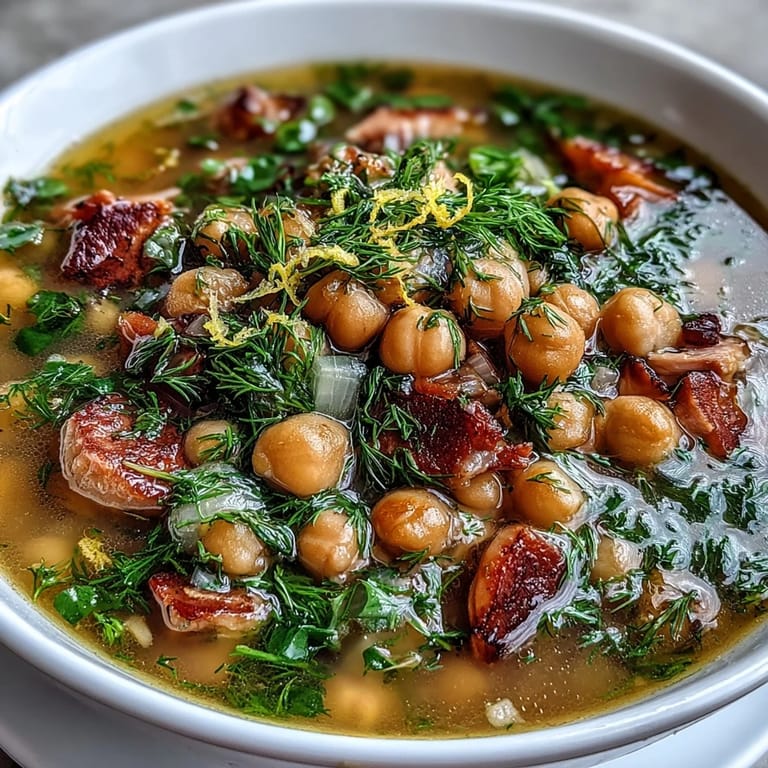
Save There's something about the smell of ham and dill simmering together that stops me mid-morning—suddenly I'm standing at my stove instead of rushing through my day. This soup emerged from a Tuesday when I had leftover ham in the fridge and a lemon that needed purpose, and what started as improvisation became the kind of meal I now make on purpose. The broth turns golden and warm, chickpeas soften into creamy pockets, and that hit of fresh lemon at the end feels like a small celebration in a bowl.
I made this for my neighbor who was recovering from surgery, and watching her take that first spoonful—how her shoulders relaxed when the warm broth hit—reminded me that soup isn't just food, it's permission to slow down. She asked for the recipe the moment she finished, which felt like the highest compliment.
Ingredients
- Cooked ham, diced (250 g): This is your backbone—it gives the broth a subtle smokiness and salinity that you can't replicate with anything else, so don't skip it or substitute too quickly.
- Chickpeas, canned (1 can, 400 g): Drain and rinse them well to remove the starchy liquid, which keeps the soup clear and bright instead of cloudy.
- Onion, medium: Chop it finely so it dissolves almost completely into the broth, building flavor rather than texture.
- Carrots, medium (2): Dice them into small, even pieces so they cook evenly and add natural sweetness without overpowering the lemon.
- Celery stalks (2): This is the unsung hero—it deepens the savory notes and makes the whole thing taste more intentional.
- Garlic cloves, minced (2): Toast it briefly after adding so it loses that raw bite and becomes sweet and aromatic instead.
- Low-sodium broth (1.2 liters): Use chicken or vegetable depending on your mood, but taste it first—some broths are saltier than others and the ham adds its own salt.
- Olive oil (2 tbsp): Good quality matters here because it's not cooked into invisibility—you taste it.
- Lemon, 1 whole: Use both juice and zest, adding them at the very end so the brightness doesn't fade into the heat.
- Fresh dill (2 tbsp plus extra): Fresh is non-negotiable—dried dill tastes like sadness in comparison, so shop for it specifically or grow a pot on your windowsill.
- Bay leaf (1): Remove it before serving or you'll find it later—I learned this the hard way.
- Dried thyme (1/2 tsp): It's subtle but essential, adding an earthy note that bridges the salty ham and bright lemon.
- Salt and black pepper: Taste as you go because the ham and broth bring their own salt, and you might need less than you think.
Tired of Takeout? 🥡
Get 10 meals you can make faster than delivery arrives. Seriously.
One email. No spam. Unsubscribe anytime.
Instructions
- Heat your oil and start the foundation:
- Warm the olive oil in a large pot over medium heat, then add the onion, carrots, and celery together. You want to hear them sizzle softly—this is when the magic starts, when the vegetables begin to soften and release their sweetness. Stir them occasionally for about 5 to 6 minutes until they're tender and the onion turns translucent.
- Build the aromatics:
- Stir in the minced garlic and let it cook for just one more minute—any longer and it starts to brown, which tastes bitter instead of fragrant. You'll smell it immediately, which is your signal that the pot is ready for the next layer.
- Add the ham:
- Toss in the diced ham and let it warm through for 2 to 3 minutes, stirring occasionally so it doesn't stick to the bottom. This brief cooking releases its flavor into the oil and makes it part of the whole rather than just a ingredient floating on top.
- Build the broth:
- Pour in your broth, then add the drained chickpeas, bay leaf, and thyme. Stir everything together, bring it up to a boil (you'll see the surface ripple and steam rise), then immediately turn the heat down to a gentle simmer. Let it bubble softly for about 20 minutes while the flavors marry and deepen.
- Finish with brightness:
- Fish out the bay leaf, then add the lemon juice, lemon zest, and fresh dill all at once. This moment changes everything—the soup shifts from warm and savory to warm and alive. Taste it now and season with salt and pepper, keeping in mind that the ham already brought saltiness to the party.
- Final simmer and serve:
- Let it bubble gently for 2 to 3 more minutes to meld everything together, then ladle it into bowls and finish each one with a small pinch of fresh dill. The heat from the soup will release the dill's oils, so don't skip this last garnish.
 Save
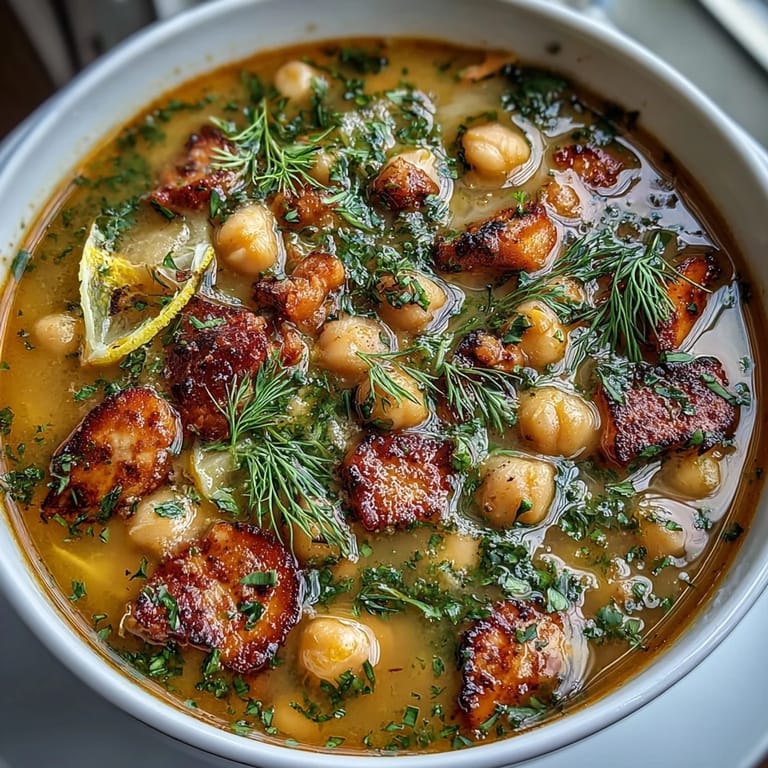
Save I remember my daughter coming home from school and asking what smelled so good—she sat at the counter with a bowl before she even took off her backpack. That's when I knew this soup had become the kind of thing worth making again and again.
How to Thicken It If You Want To
Some mornings I want a brothier soup, and other days I crave something thicker that clings to the spoon. If you're in the thicker mood, before you add the lemon and dill, scoop out about a cup of chickpeas into a small bowl and mash them roughly with a fork—then stir them back in. You lose some of the individual bean texture, but you gain a creamier body that feels more substantial.
Swaps and Flexibility
This soup is forgiving enough that you can swap things around based on what's in your kitchen or what you're craving. Turkey works beautifully instead of ham, or you can skip the meat entirely and use vegetable broth for a vegetarian version—the chickpeas and herbs carry the flavor just fine. Some people add a splash of white wine before the broth, and I've even thrown in a handful of spinach at the very end because it was there.
Serving and Storage
This soup is best eaten the day you make it, while the dill still tastes fresh and the lemon hasn't faded, but it keeps in the refrigerator for three days and actually tastes better on day two when the flavors have settled. Reheat it gently over medium heat and taste it again before serving—you might want to add a little more lemon juice to bring back the brightness that cooking can soften.
- Pair it with thick slices of crusty bread that you can tear and dip into the broth.
- A crisp white wine like Sauvignon Blanc or Pinot Grigio cuts through the richness and echoes the lemon.
- Keep a wedge of fresh lemon nearby at the table so people can squeeze more brightness into their bowls if they want.
 Save
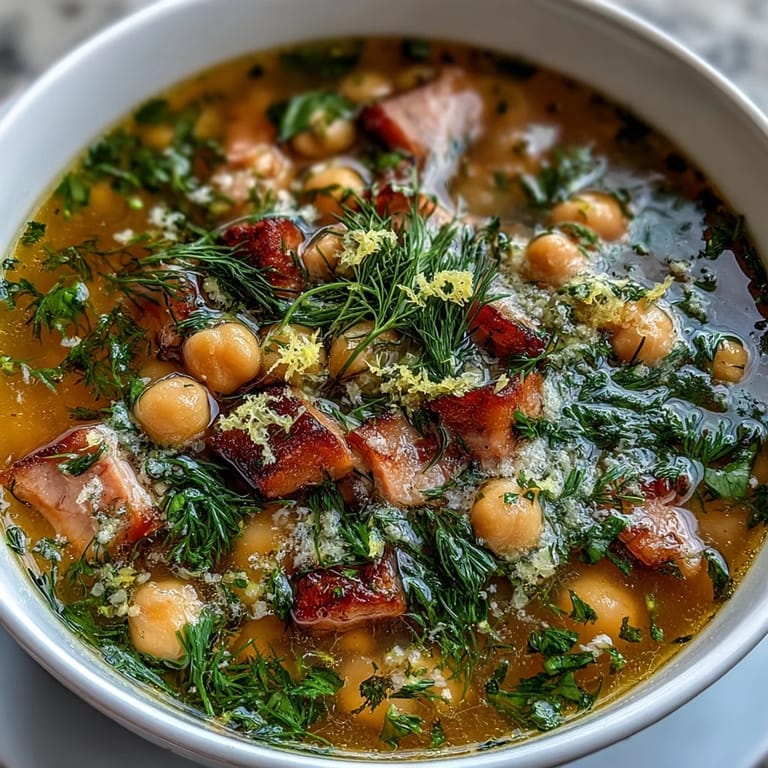
Save This soup is proof that simple meals often taste the best, and that sometimes the most satisfying cooking moments happen when you're not trying too hard. Make it for yourself on a quiet afternoon, or make it for someone you want to take care of.
Recipe Guide
- → Can I use smoked turkey instead of ham?
Yes, smoked turkey is a great substitute that provides a similar savory depth without overpowering the other flavors.
- → How can I thicken the soup's texture?
Mash a portion of the chickpeas before adding them to create a creamier, thicker consistency.
- → Is it possible to make this soup dairy-free?
Absolutely, this dish is naturally dairy-free when using vegetable or chicken broth and olive oil.
- → What herbs complement the lemon and dill flavors?
Bay leaf and dried thyme wonderfully enhance the herbal notes and balance the citrus freshness.
- → What side pairs well with this soup?
Crusty bread and a crisp white wine like Sauvignon Blanc perfectly complement the soup’s bright and savory profile.