 Save
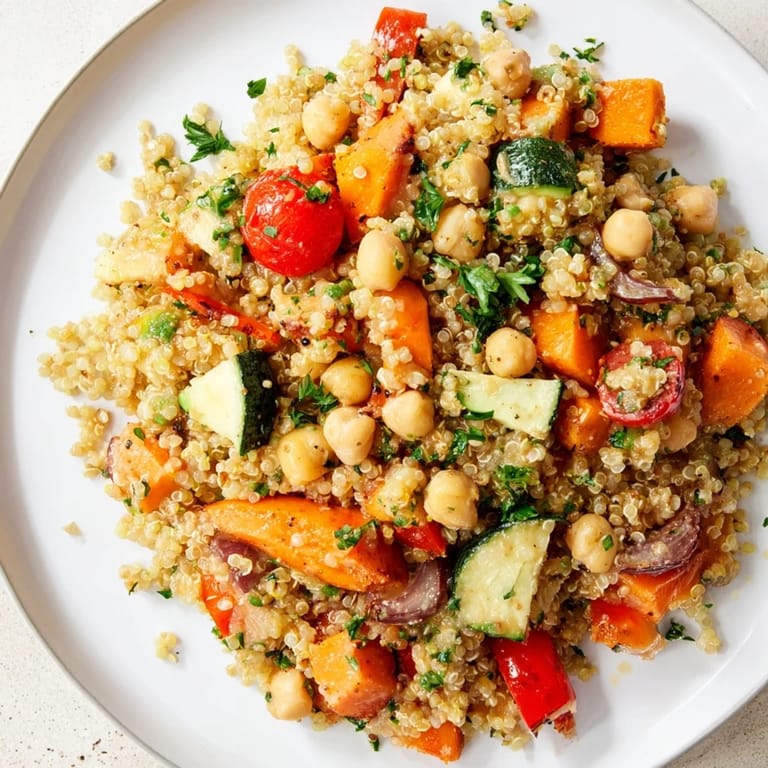
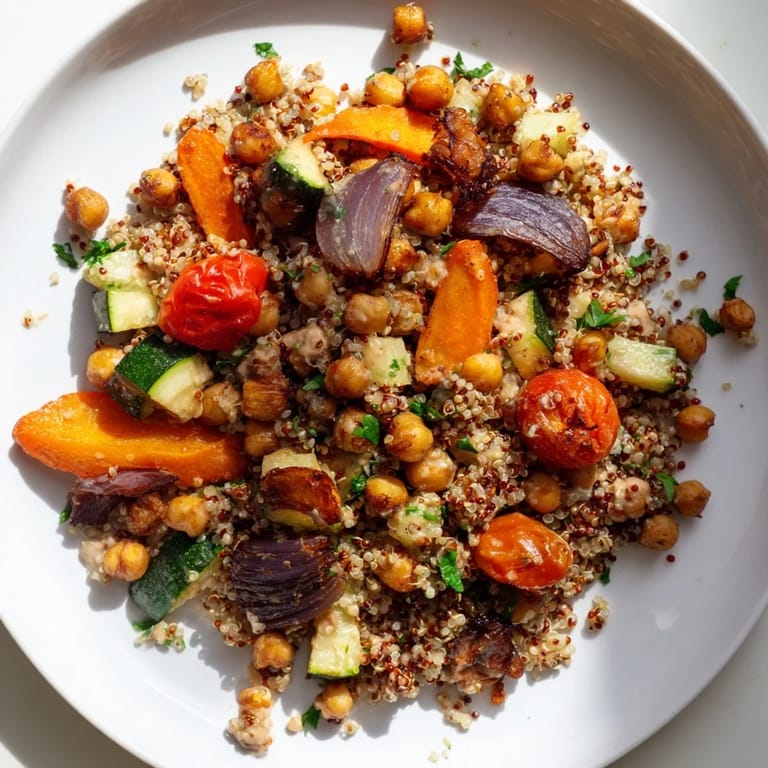
Save There's a specific moment I'll never forget—standing in my kitchen on a Tuesday afternoon, staring at a wilted bag of spinach and realizing I needed lunch that didn't feel like a punishment. So I threw together whatever was in my pantry: quinoa, roasted vegetables, chickpeas, and this golden tahini dressing that changed everything. That salad became my answer to "but healthy food is boring," and now I make it constantly because it actually tastes like something I want to eat.
I made this for my friend who kept saying she had "no time" for healthy eating, and watching her devour an entire bowl while barely looking up was honestly more satisfying than any compliment. She now texts me for the recipe at least once a month, usually when she's stressed and needs something that feels like self-care in a bowl.
Ingredients
- Quinoa, rinsed: The rinsing step matters more than you'd think—it removes the bitter coating and makes the grains actually fluffy instead of gummy.
- Water or vegetable broth: Broth adds flavor depth that water simply can't match, trust me on this one.
- Red bell pepper, zucchini, red onion, carrot: Mix and match seasonality here—fall means roasted sweet potato, summer means fresh cherry tomatoes scattered raw on top.
- Olive oil: Use something you'd actually taste on its own; cheap oil tastes cheap in this.
- Salt and black pepper: Season the vegetables boldly before roasting—this is when half your flavor happens.
- Chickpeas, drained and rinsed: The rinsing removes the canning liquid that makes them taste tinny and metallic.
- Cherry tomatoes and fresh parsley: These are your brightness—don't skip them or you'll have a heavy salad instead of a lively one.
- Tahini: Buy the kind that's just ground sesame seeds; brands with added oil separate and cause endless frustration.
- Fresh lemon juice: Bottled lemon juice will ruin this—the dressing needs actual brightness, not chemical tartness.
- Maple syrup or honey: This balances the tahini's earthiness and keeps the dressing from tasting like you're eating hummus for lunch.
- Garlic clove and water: Thin your dressing carefully—you want it pourable but still luxurious, not thin like vinaigrette.
Tired of Takeout? 🥡
Get 10 meals you can make faster than delivery arrives. Seriously.
One email. No spam. Unsubscribe anytime.
Instructions
- Preheat and prep:
- Set your oven to 425°F and line a sheet with parchment paper. This temperature will caramelize the edges of your vegetables while keeping them tender inside.
- Toss and spread:
- Coat your vegetables with olive oil, salt, and pepper, then lay them out in a single layer. They need space to roast, not steam—if they're crowded, they'll just get soft and sad.
- Roast with attention:
- After about 12 minutes, give everything a stir. This ensures even color and prevents the onions from burning while the carrots are still hard. You're looking for edges that are slightly caramelized and charred, not brown all over.
- Cook quinoa gently:
- Bring water or broth to a boil, add rinsed quinoa, then immediately turn the heat down. Simmer covered for 15 minutes—don't peek or stir, just let it sit. After 5 minutes of resting off heat, fluff with a fork and let it cool slightly; warm quinoa is better than cold for mixing.
- Make the dressing:
- Whisk tahini, lemon juice, olive oil, sweetener, and minced garlic together until it starts to thicken. Then slowly add water, a tablespoon at a time, whisking constantly until you get that glossy, pourable consistency that coats a spoon.
- Combine with care:
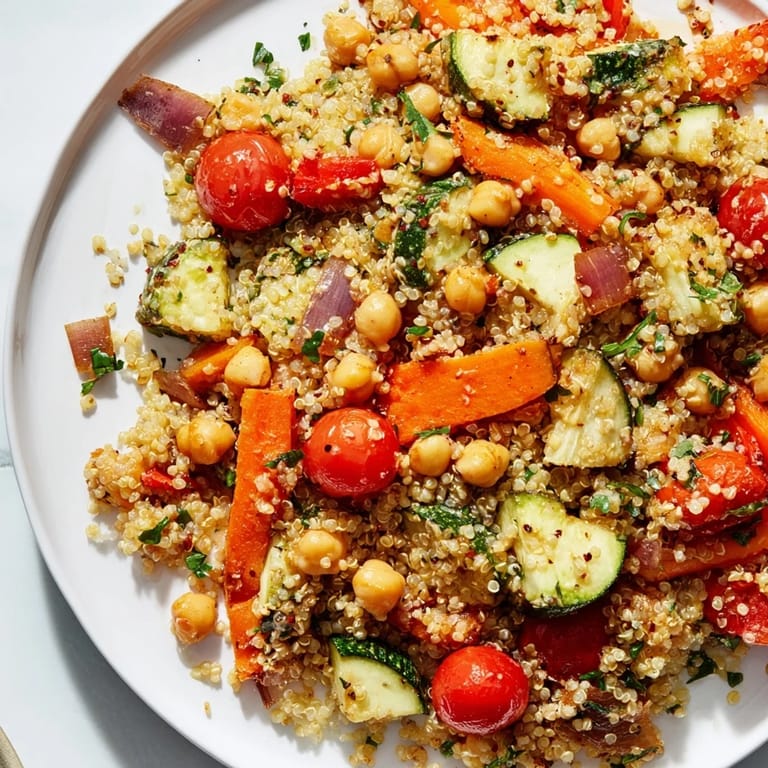
- Toss your cooled quinoa with roasted vegetables, chickpeas, tomatoes, and parsley. Pour dressing over everything and toss gently—you want the grains intact, not crushed into a paste.
- Serve your way:
- Warm salad has a completely different feel than chilled; warm feels like comfort, chilled feels like summer. Choose based on your mood.
 Save
Save There's something almost meditative about eating this salad—each bite has different textures and temperatures and flavors, so you actually have to pay attention instead of just shoveling food in while checking your phone. That shift from autopilot eating to noticing what's in front of you? That's when salad stops being punishment and becomes something you actually look forward to.
Why This Salad Works as a Weekday Staple
Most salads are sad the next day, but this one actually improves once the dressing has time to settle into the grains and vegetables. I've learned to make double batches on Sunday nights because Wednesday-me is always grateful that Thursday-me isn't starting from scratch. The beauty is that nothing needs to be warm or precisely timed—you can assemble it directly from the fridge and it tastes intentional, not lazy.
Seasonal Flexibility and Swaps
This salad is genuinely a template, not a strict formula. In spring, I skip the heavy roasting and throw in tender raw vegetables with herbs. Summer means halving the roasted portion and loading up on fresh tomatoes and cucumbers. By winter, I'm adding roasted sweet potato and doubling the chickpeas for warmth.
Quick Customizations That Actually Matter
The dressing carries this dish, so any vegetable swaps are just background noise, but there are a few moves that genuinely elevate it. Sometimes I add crunch with toasted seeds or nuts if I'm feeling fancy, sometimes I swap parsley for mint or cilantro depending on what's calling to me that day. These small choices keep the recipe feeling fresh even when you make it constantly.
- Toast pumpkin or sunflower seeds in a dry pan for two minutes and scatter them on top for crunch that actually stays crispy.
- A pinch of cumin or smoked paprika in the dressing transforms the entire flavor profile without complicating your ingredient list.
- Squeeze extra lemon juice over the finished salad just before eating to wake everything up.
 Save
Save This salad taught me that nourishing yourself doesn't have to be boring or require an entirely separate cooking regimen. It just needs attention and ingredients you actually enjoy eating.
Recipe Guide
- → How do I cook quinoa for this salad?
Rinse quinoa thoroughly to remove bitterness. Boil with water or vegetable broth, then simmer covered for about 15 minutes until moisture is absorbed. Fluff with a fork before combining.
- → Which vegetables are best roasted for this salad?
Red bell pepper, zucchini, red onion, and carrot are tossed in olive oil, salt, and pepper, then roasted until tender and slightly caramelized for optimal flavor.
- → Can I adjust the tahini-lemon dressing consistency?
Yes, add 2-3 tablespoons water gradually while whisking to achieve a smooth, creamy texture that coats the salad nicely.
- → Is it possible to make this salad nut-free?
Ensure tahini is processed in a nut-free facility and avoid additional nut toppings to maintain a nut-free dish.
- → What are good variations for the roasted vegetables?
Seasonal options like sweet potato, eggplant, or broccoli can be used to add different flavors and textures while keeping the dish vibrant.