 Save
Save I discovered mason jar meals on a Tuesday morning when I was running late and absolutely fed up with sad desk lunches. A friend had casually mentioned layering noodles and vegetables the night before, and something clicked—what if I could have restaurant-quality Asian noodles ready to go, no reheating required? My first attempt was chaotic; I overfilled a jar and everything tumbled out when I tried to pour hot water in. But that failure taught me something valuable about order and proportions, and now these jars have become my weekly ritual.
I made these for my coworkers one Friday and watched four people simultaneously open their jars at lunch, the aroma of sesame and ginger filling the entire office. One colleague told me it was the first time she'd actually looked forward to meal prep, and that simple comment made the whole thing feel less like efficiency and more like generosity. It's funny how packing lunch for others makes you care more about the details.
Ingredients
- Dried ramen or rice noodles (200 g): The foundation of everything—cook them just until tender, then rinse under cold water so they don't turn to mush when the hot liquid hits.
- Cooked chicken breast, tofu, or shrimp (200 g, diced): Whatever protein you choose, make sure it's already cooked and cooled; this is where the meal gets its staying power and substance.
- Shredded carrots (1 cup): These keep their crunch even after a day in the jar, and they add natural sweetness that balances the salty sauce.
- Thinly sliced bell peppers (1 cup): The brightness here cuts through rich sesame oil and adds color that makes you want to eat it as much as taste it.
- Baby spinach or kale (1 cup): Spinach wilts gently when hot water pours in; kale holds its texture better if you prefer something with more presence.
- Thinly sliced scallions (1/2 cup): These add a sharp, fresh note that wakes everything up—save some for garnish on top if you're feeling fancy.
- Bean sprouts (1/2 cup): They stay crisp and add a subtle crunch that you don't expect but absolutely appreciate with each bite.
- Soy sauce (4 tbsp): Use tamari if you need gluten-free; regular soy sauce is the backbone of this whole flavor story.
- Rice vinegar (2 tbsp): This gives the sauce its clean brightness and keeps everything from feeling heavy.
- Sesame oil (2 tbsp): Just enough to coat your mouth with warmth without overwhelming—too much and you lose the delicate balance.
- Honey or maple syrup (1 tbsp): A tiny bit of sweetness rounds out the umami and makes the sauce something you'll actually crave the next day.
- Sriracha or chili sauce (2 tsp, optional): Add this if you want heat, skip it if you're feeding people who prefer gentler flavors.
- Minced garlic (1 clove): Fresh is non-negotiable here; jarred won't give you that sharp, alive quality.
- Fresh grated ginger (1 tsp): Micro-plane it fresh rather than using ground; the difference is the difference between a good meal and one you remember.
Tired of Takeout? 🥡
Get 10 meals you can make faster than delivery arrives. Seriously.
One email. No spam. Unsubscribe anytime.
Instructions
- Cook and chill your noodles:
- Boil them according to the package, then immediately drain and rinse under cold water—this stops the cooking and keeps them from clumping. Spread them on a plate if you have time; they'll dry slightly and stay more separate when layered.
- Build your sauce with intention:
- Whisk soy sauce, rice vinegar, sesame oil, honey, optional Sriracha, minced garlic, and ginger in a small bowl until the honey dissolves completely. Taste it straight and adjust—this is your moment to make it exactly what you want.
- Divide the sauce among jars:
- Pour about 3 to 4 tablespoons into the bottom of each large mason jar, leaving a little room so nothing sloshes when you seal them.
- Layer with care and logic:
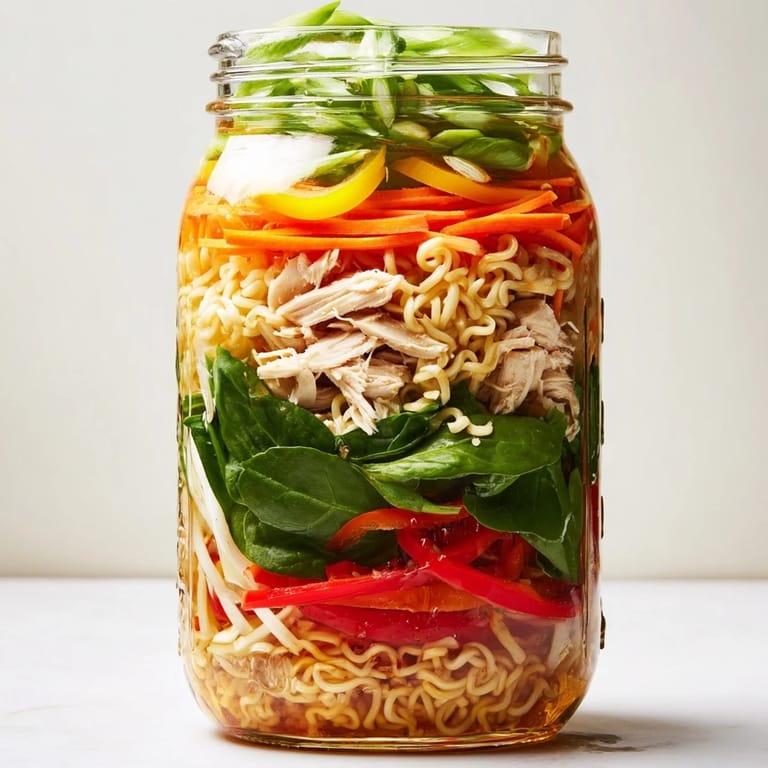
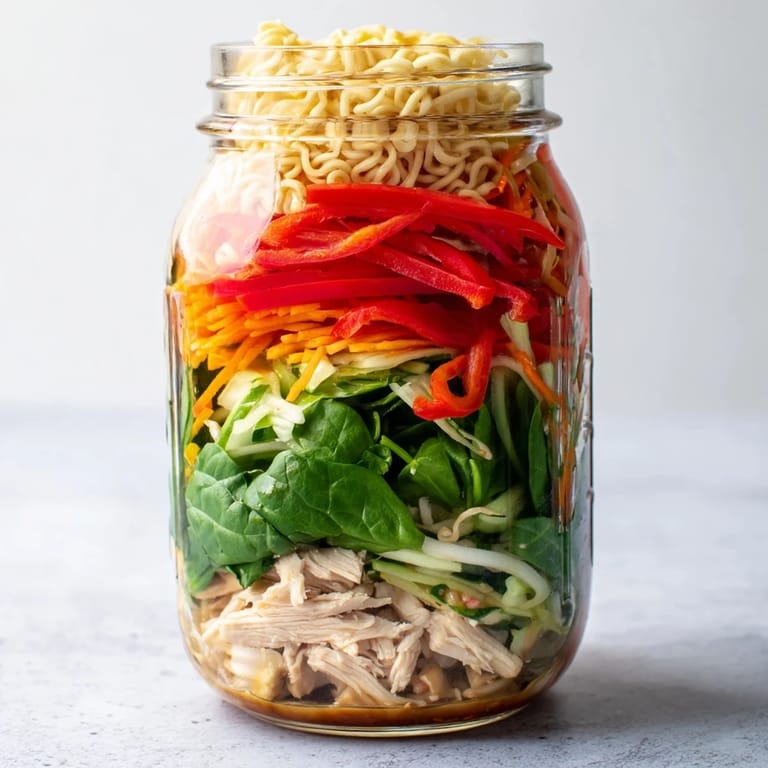
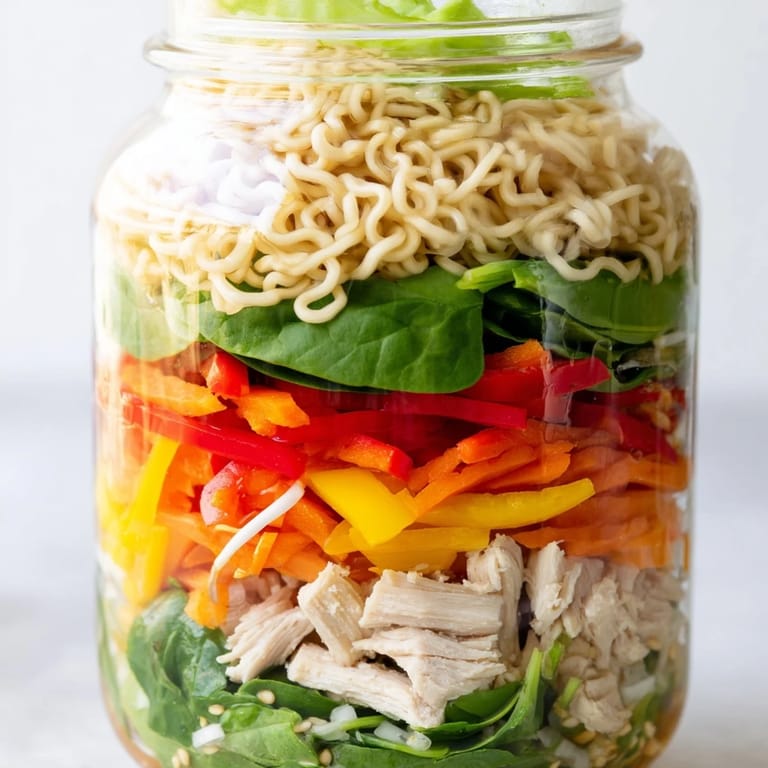
- Start with your protein directly on top of the sauce, then add carrots, bell peppers, spinach, scallions, and bean sprouts in that order. The denser vegetables go in the middle, softer greens toward the top so they don't get crushed.
- Crown with noodles:
- Add your cooled noodles as the final layer, pressing down gently so the lid seals properly without the jar feeling like it might burst.
- Seal and refrigerate:
- Screw the lids on tight and put them in the coldest part of your fridge where they'll keep for up to four days, flavors melding and tightening.
- Resurrect when hungry:
- Remove the lid, sprinkle on any toppings you like, then pour about half a cup of hot (not boiling) water into the jar. Let it sit for two to three minutes while the noodles soften and the heat warms everything through, then stir well and eat straight from the jar or transfer to a bowl.
 Save
Save The moment I realized this wasn't just convenient—it was actually delicious—was when my partner asked for seconds straight from the jar without even transferring it to a bowl. That's when I knew I'd hit on something real, something that proved eating well and eating fast didn't have to be enemies.
The Sauce is Everything
Spend the extra thirty seconds making your sauce from scratch rather than grabbing a bottled version; the difference between fresh-minced garlic and something that's been sitting in a jar is everything. The warmth from the hot water you add later will bloom those raw flavors into something almost luxurious, and you'll taste exactly why you spent the time. Once you nail your sauce ratio, you can riff endlessly—add a touch of fish sauce for deeper umami, squeeze in fresh lime juice for brightness, or whisk in a little peanut butter if you're in the mood for something richer.
Protein Swaps That Actually Work
Chicken breast is reliable and lean, but don't sleep on soft tofu cubed small so it soaks up sauce, or pre-cooked shrimp if you want something that feels a little fancier for a Friday lunch. Edamame works beautifully if you're cooking vegetarian, and it adds a satisfying chew that makes you feel like you're eating something substantial. Even a simple scrambled egg stirred in right before serving becomes something special, especially if you use a rich soy sauce and trust the heat to warm it through without drying it out.
Why These Vegetables
I tested a lot of combinations before landing on this mix, and what matters most is choosing vegetables that stay crisp even after a day in the fridge and sauce. Carrots, bell peppers, and sprouts have a natural resilience that keeps them from turning soft or sad, while spinach wilts just enough to become silky without disappearing entirely. The scallions are your emergency brake—they keep everything from feeling one-note and add a welcome sharpness that makes your mouth come alive.
- Cucumber adds freshness but releases water quickly, so add it just before eating if you're doing longer meal prep.
- Broccoli or cauliflower work if you like them steamed first, but raw is usually crunchier and more satisfying.
- Avoid tomatoes in these jars—they'll turn everything into soup after a day, and it's not worth the trade-off.
 Save
Save These jars have become my kitchen shortcut that doesn't feel like a shortcut, a way to eat well without the Tuesday morning panic. Every time I pull one out, I remember that cooking for yourself and others doesn't have to mean hours at the stove.
Recipe Guide
- → How should I prepare the noodles for this meal?
Cook the noodles according to package instructions, then drain and rinse with cold water to halt cooking before layering in jars.
- → Can I use different proteins in the jars?
Yes, options include cooked chicken, tofu, shrimp, or edamame for a plant-based alternative.
- → How long can the jars be stored?
Refrigerate the assembled jars tightly sealed for up to 4 days to maintain freshness.
- → How is the meal served from the jar?
Remove the lid, add desired toppings, pour hot water into the jar, let sit for a few minutes, then stir and enjoy.
- → What can I substitute for noodles for a low-carb option?
Try spiralized zucchini or shirataki noodles as a low-carb alternative to traditional noodles.