 Save
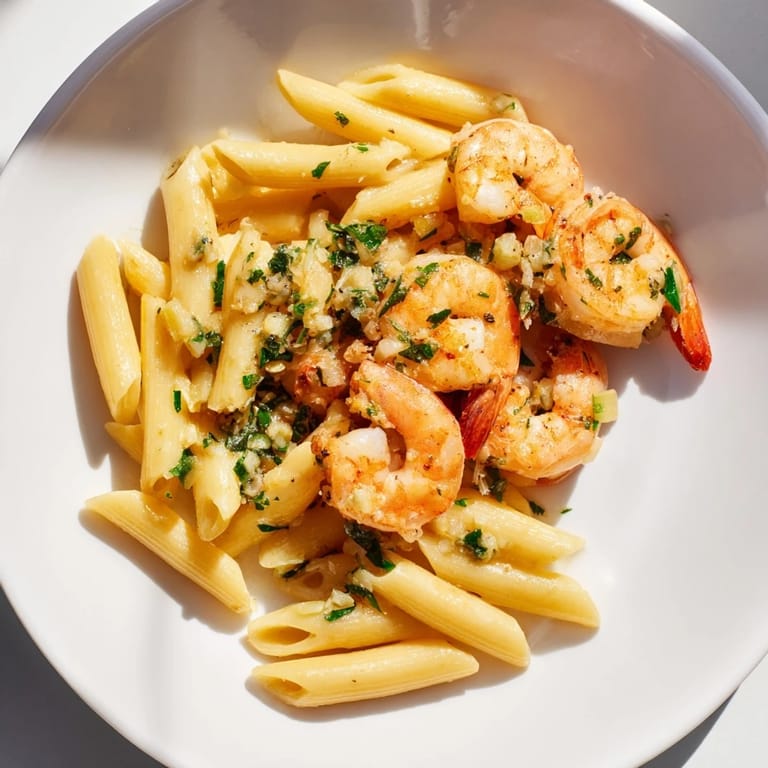
Save I learned to make garlic shrimp penne on a Tuesday night when my roommate surprised me with a bottle of wine and zero dinner plans. We'd both had rough days, the kind where takeout felt like surrender, so I opened the fridge and found shrimp, butter, and garlic staring back at me like they'd been waiting for this exact moment. Twenty minutes later, the kitchen smelled like a Roman trattoria, and we were twirling pasta on forks like we'd invented the dish ourselves.
The first time I made this for someone I was trying to impress, I panicked about the simplicity and almost added cream, breadcrumbs, and things that didn't belong. My friend took a bite, closed their eyes, and said it tasted like summer in a bowl. Sometimes the best meals are the ones that trust their ingredients instead of drowning them.
Ingredients
- Large shrimp (400 g): Look for shrimp that smell like ocean, not ammonia, and don't let anyone shame you for buying frozen—thawed properly, they're just as good as fresh.
- Penne pasta (350 g): Al dente is non-negotiable here; it needs enough structure to hold the garlic butter without turning mushy.
- Garlic (4 cloves, minced): Fresh garlic is everything in this dish, so mince it just before cooking to unlock those volatile oils that make it sing.
- Shallot (1 small, chopped): It adds sweetness and depth that plain onion can't quite achieve, and it melts into the butter beautifully.
- Fresh parsley (2 tbsp): Add it at the very end so it stays bright and herbaceous instead of turning dark and bitter.
- Lemon zest and juice: These aren't optional flourishes—they're the backbone that keeps the dish from feeling heavy and one-dimensional.
- Unsalted butter (60 g): Use real butter, not margarine, because it's the foundation of your sauce and cheap butter tastes like sadness.
- Parmesan cheese (2 tbsp plus more): Grate it fresh if you can; pre-grated versions are coated with anti-caking agents that don't melt as smoothly.
- Extra-virgin olive oil (2 tbsp): This is your cooking fat, so pick one you trust and wouldn't be embarrassed to taste on its own.
- Salt, black pepper, and red pepper flakes: The salt goes into the pasta water first, the pepper seasons everything along the way, and the red pepper flakes are optional but they add a whisper of heat that wakes up your palate.
Tired of Takeout? 🥡
Get 10 meals you can make faster than delivery arrives. Seriously.
One email. No spam. Unsubscribe anytime.
Instructions
- Start your pasta water:
- Fill a large pot with water, add salt until it tastes like the sea, and bring it to a rolling boil. Don't skimp on the salt—this is your only chance to season the pasta itself, and undersalted pasta water means bland noodles.
- Cook the penne:
- Drop the pasta in and stir it once or twice in the first minute so it doesn't stick together. Set a timer and check it a minute before the package says it's done; you want it tender but with a slight resistance in the center.
- Prepare the shrimp:
- Pat each shrimp dry with paper towels—this matters because wet shrimp won't sear properly and will steam instead of developing that golden exterior. Season them lightly now, not after cooking, so the salt has time to do its work.
- Sear the shrimp:
- Get your skillet hot, add oil and butter, and lay the shrimp in a single layer without crowding the pan. Let them sit undisturbed for a minute so they develop a slight crust, then flip and cook the other side; the moment they turn pink and opaque, they're done—no further.
- Build your sauce base:
- In the same skillet with residual heat and flavor, add more oil and butter, then sweat the shallot for a minute until it softens. The garlic goes in next but just for 30 seconds; any longer and it turns bitter and aggressive.
- Bring in the brightness:
- Add lemon zest, lemon juice, and red pepper flakes if you're using them, stirring so everything mingles and releases its aromatics. This is when your kitchen will smell so good you'll want to bottle it.
- Marry the pasta and sauce:
- Add the drained penne to the skillet and toss it in the garlic butter, adding pasta water a splash at a time until you have a light, silky sauce that coats each strand without pooling at the bottom. This is an emulsion coming together, and it requires patience and gentle tossing.
- Finish with the shrimp:
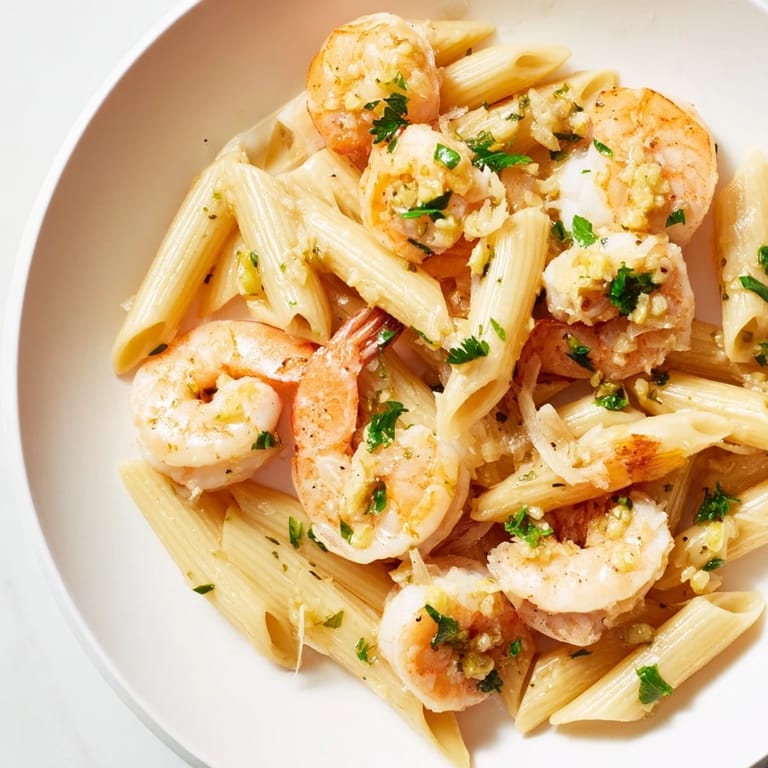
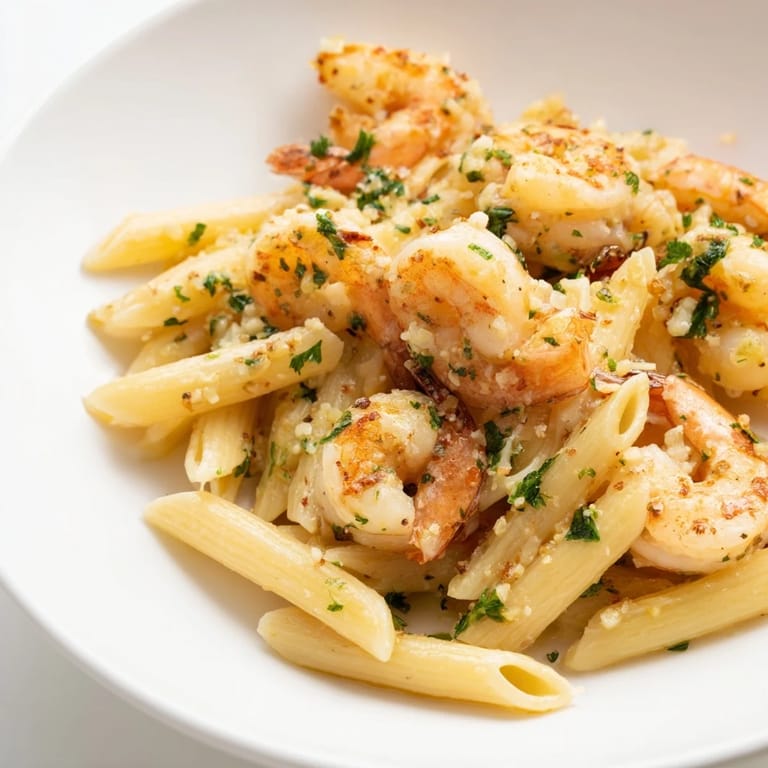
- Return the shrimp to the skillet, add the parsley and Parmesan, and toss everything once more so the flavors settle together. Taste it, adjust seasoning, and serve immediately while everything is still steaming.
 Save
Save There was one night when my neighbor came over and caught the smell through the walls—she stood in my kitchen and watched me finish the dish, and by the time I plated it, she was pulling up a chair. We ended up talking for three hours and drinking the rest of that wine, and the penne was just the excuse for a real conversation. That's when I knew this recipe wasn't just easy or delicious; it had become the kind of meal that brings people together without fussing.
The Magic of Pasta Water
Pasta water isn't a last-minute afterthought—it's liquid gold if you understand how to use it. The starch in that water emulsifies with butter and oil, creating a silky sauce that clings to each piece of pasta instead of sliding off. I learned this the hard way by ignoring it for years, wondering why my pasta dishes always felt slippery and separated. Now I treat that reserved half-cup like it's the most expensive ingredient in the dish, adding it gradually and watching the transformation happen in real time.
Timing and Temperature
The reason this dish is so approachable is that every component cooks at breakneck speed, but only if you respect the heat. Your skillet needs to be properly hot so the shrimp browns instead of poaches, but not so hot that the garlic burns before the shrimp is done. I've found that medium-high is the sweet spot, and preheating the pan for a full minute before adding oil makes all the difference. If you're nervous, start with medium-high and adjust after your first batch of shrimp; you'll feel the rhythm once you've done it once.
Variations and Swaps
This recipe is flexible without falling apart, which is part of what makes it reliable. You can swap the penne for linguine if you like longer strands, use spaghetti if you want something delicate, or even try bucatini for a fun hollow surprise. Some nights I add a splash of white wine with the lemon juice, or a pinch of saffron if I'm feeling bold. The recipe stays grounded because the shrimp and garlic butter are the real stars—everything else is just dancing around them.
- Cream lovers can add a splash of heavy cream to the pan before tossing the pasta, which makes the sauce richer and more forgiving.
- If you can't have shellfish, white fish like cod or halibut works beautifully and cooks in almost the same time.
- Finish with red pepper flakes if you want a gentle heat, or skip them entirely if you prefer the dish purely bright and savory.
 Save
Save This is the kind of dish that teaches you more about cooking by accident than many recipes do on purpose. Once you've made it a few times, you'll understand how pasta water works, how to time proteins, and when to trust your senses over the clock. That's when real cooking begins.
Recipe Guide
- → How do you prevent shrimp from overcooking?
Cook shrimp quickly on medium-high heat just until pink and opaque, about 1-2 minutes per side, to keep them tender and juicy.
- → Can this be made gluten-free?
Yes, simply substitute regular penne with a gluten-free pasta variety while following the same cooking instructions.
- → What is the purpose of reserving pasta water?
Reserved pasta water adds starchiness, helping to create a light, smooth sauce that coats the pasta evenly without thinning.
- → Is it necessary to add lemon zest and juice?
Lemon zest and juice brighten the buttery sauce, adding fresh acidity that balances richness and enhances overall flavor.
- → How can the sauce be made richer?
Adding a splash of cream while tossing the pasta will create a creamier, more indulgent sauce.