 Save
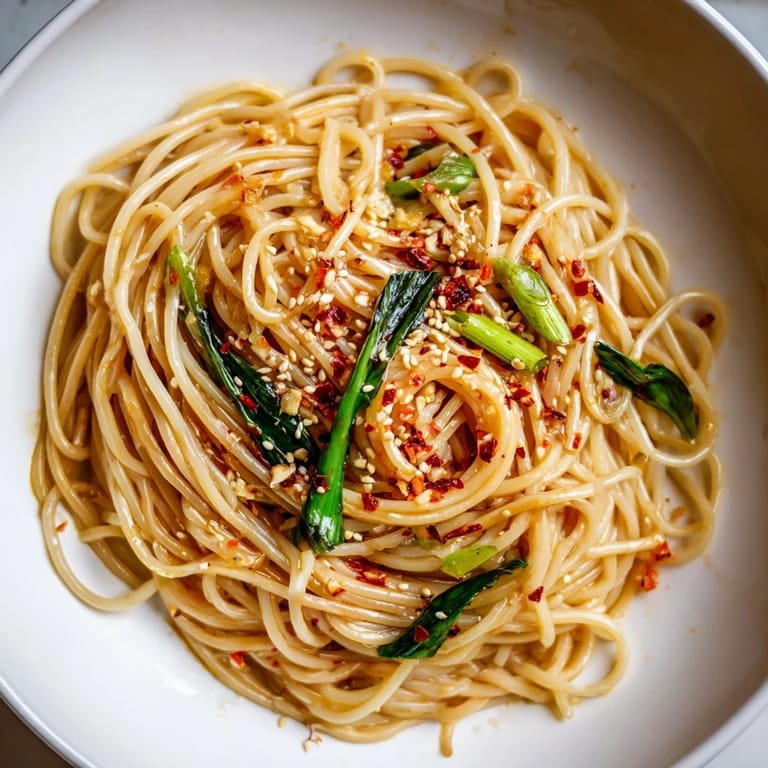
Save There's a particular 2 AM energy to making these noodles—something about standing in front of the stove with nothing but hunger and a handful of pantry staples. I discovered this dish during a late-night craving when I had exactly what I needed but no plan, and somehow that accident of simplicity became one of my most-reached-for meals. The way the hot oil blooms over the garlic and chili flakes, releasing that almost aggressive fragrance through the kitchen, felt like cooking alchemy. What started as improvisation turned into something I make whenever I want to feel both nourished and a little bit dangerous.
I made this for a friend who'd been having the kind of week where everything felt gray, and watching their face change when that first bite hit—the heat, the umami, the sesame coming through—reminded me why food matters. They asked for the recipe before they'd even finished the bowl, and now it's become our inside joke, the thing we cook when we need to reset.
Ingredients
- Wheat noodles (200g): Chinese wheat noodles have a particular chew that holds onto oil beautifully, but linguine works in a pinch; the key is not overcooking them since they'll finish cooking slightly from the hot oil.
- Garlic (4 cloves, finely minced): Don't use pre-minced—the fresher it is when it hits the hot oil, the more aromatic and less bitter it becomes.
- Scallions (2, white and green parts separated): The white parts go into the oil to bloom, the green parts stay raw as garnish for brightness and a gentle onion bite.
- Toasted sesame seeds (1 tablespoon): This is texture and nuttiness; toast your own if you can, they're sharper that way.
- Chili flakes (2½ tablespoons, Sichuan or Korean preferred): Sichuan gives a numbing tingle, Korean brings straightforward heat; know which one you want before you start.
- Sichuan peppercorns (½ teaspoon, optional): If you use these, you'll taste why they're optional—they add a prickly, almost electric sensation that transforms the whole dish.
- Ground white pepper (¼ teaspoon): White pepper is sharper and more background than black, giving heat without visibility.
- Sugar (½ teaspoon): Just enough to round out the heat and vinegar, not enough to make it sweet.
- Salt (½ teaspoon): Season the oil itself, not just the noodles; this changes everything.
- Neutral oil (3 tablespoons): Use something high-heat—canola, sunflower, or grapeseed; olive oil will make the flavor muddled.
- Light soy sauce (1½ tablespoons): Light soy is saltier and more delicate than dark; it's the base of your umami.
- Chinese black vinegar (1 tablespoon): This is not a substitute—it's malty and gentle, nothing like distilled vinegar; Chinkiang is the classic.
- Dark soy sauce (1 teaspoon, optional): Adds color and a deeper soy depth if you want it.
- Toasted sesame oil (½ teaspoon): The amount is small but essential; it's the final whisper of nutty richness.
Tired of Takeout? 🥡
Get 10 meals you can make faster than delivery arrives. Seriously.
One email. No spam. Unsubscribe anytime.
Instructions
- Boil the noodles:
- Cook according to package instructions until just tender but still with a slight resistance to the bite. Drain and set aside, but don't rinse them—that starch helps the oil cling. Save 2 tablespoons of the cooking water; you'll need it.
- Build your spice base:
- Combine the minced garlic, white scallion parts, chili flakes, Sichuan peppercorns if using, white pepper, sugar, salt, and half the sesame seeds in a heatproof bowl. This mixture is waiting for the hot oil to unlock everything it can become.
- Heat the oil until it shimmers:
- Pour neutral oil into a small saucepan over medium-high heat and watch it carefully—you want it fragrant and shimmering but not smoking or browning. This takes about 2 minutes.
- Bloom the aromatics:
- Carefully pour the hot oil over the garlic-chili mixture and listen for the sizzle; that sound means the flavors are blooming. Stir gently to combine everything, letting it cool slightly as you do.
- Make your sauce:
- In a large bowl, whisk together light soy sauce, black vinegar, dark soy sauce if using, and toasted sesame oil. Add the reserved noodle cooking water—this thins the sauce just enough so it coats rather than pools.
- Bring it all together:
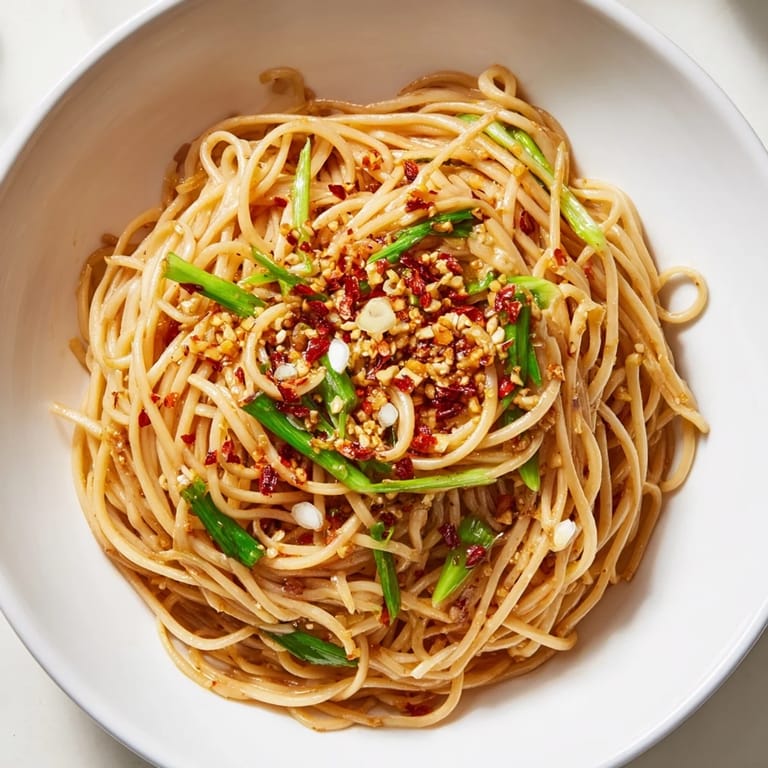
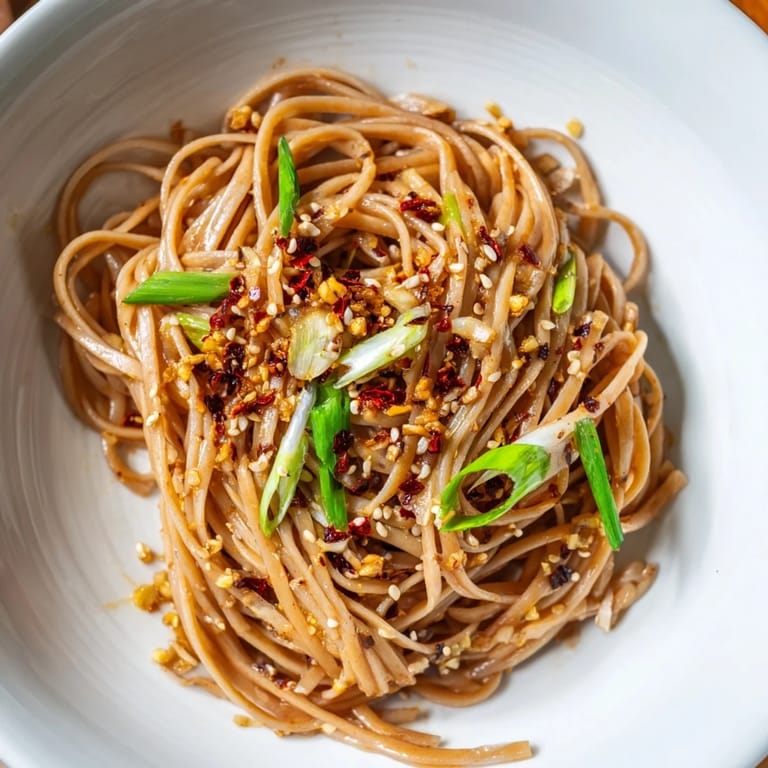
- Add the drained noodles to the sauce bowl, then pour the infused chili oil over top. Toss with chopsticks or tongs until every strand is glossy and evenly coated in that deep, fragrant oil.
- Finish and serve:
- Scatter the green scallion parts and remaining sesame seeds across the top. Serve immediately while the noodles are still warm and the oil is still carrying its heat.
 Save
Save I learned the real purpose of this dish on a cold night when a bowl of these noodles was exactly what my body and mind needed at the same time. The heat clears your sinuses, the umami settles your hunger, and the act of making something this deliberately flavorful in 20 minutes feels like a small act of self-respect.
Heat Levels and Your Tolerance
The beautiful thing about this dish is how honest it is about spice—you can adjust the chili flakes up or down depending on what you're in the mood for. I've made it for people who wanted just a whisper of heat and for friends who added another full tablespoon because they wanted to feel it in their chest. Start with the amount called for, taste as you go, and remember that the heat builds slightly as you eat, so it might feel hotter halfway through your bowl than it did on the first bite.
Making It Your Own
While these noodles are perfect on their own, they become something different and equally good when you add protein or vegetables. Soft tofu cubes will soak up the oil like little flavor sponges, thinly sliced vegetables add brightness and crunch, and shredded leftover chicken makes it substantial enough for lunch the next day. I've also learned that a squeeze of fresh lime juice at the end, or a handful of fresh cilantro if you have it, adds a dimension I didn't know was missing.
Pairings and Timing
These noodles pair unexpectedly well with cold things—a crisp beer, iced jasmine tea, or even cold cucumber slices on the side for moments when you want to cool your mouth down. The best time to make them is when you're genuinely hungry and want to eat immediately, because they're at their best within a few minutes of being tossed. I've tried reheating them and it's never quite the same; the oil separates, the noodles firm up, and you lose that moment of glossy perfection.
- Mix again right before you eat, because the heavier oil will settle as you stand there.
- If you have leftover chili oil, save it in a jar and drizzle it onto eggs, toast, or soup the next day.
- Keep the ingredients in your pantry always; this meal lives in the space between planning and impulse.
 Save
Save This recipe is a reminder that the most powerful meals are often the simplest ones, built on knowing how to coax flavor from heat and time. Make it when you need something fast and honest, and you'll understand why it keeps calling you back to the kitchen.
Recipe Guide
- → What type of noodles work best?
Wheat noodles such as Chinese wheat noodles or linguine hold texture well and absorb the aromatic oil evenly.
- → Can I adjust the spiciness?
Yes, simply vary the amount of chili flakes or omit Sichuan peppercorns to control the heat level.
- → How do I make the chili oil aromatic?
Pouring hot neutral oil over the chili, garlic, and spices releases essential oils, creating a fragrant and bold flavor.
- → What can I add to boost protein?
Consider tossing in tofu, shredded chicken, or sautéed vegetables to enhance nutritional value.
- → How should the dish be served?
Serve immediately after mixing to enjoy glossy, evenly coated noodles with fresh scallion garnish.
- → Are there common allergens in this dish?
Yes, it contains wheat (gluten) and soy from the noodles and soy sauce, so check labels if needed.