 Save
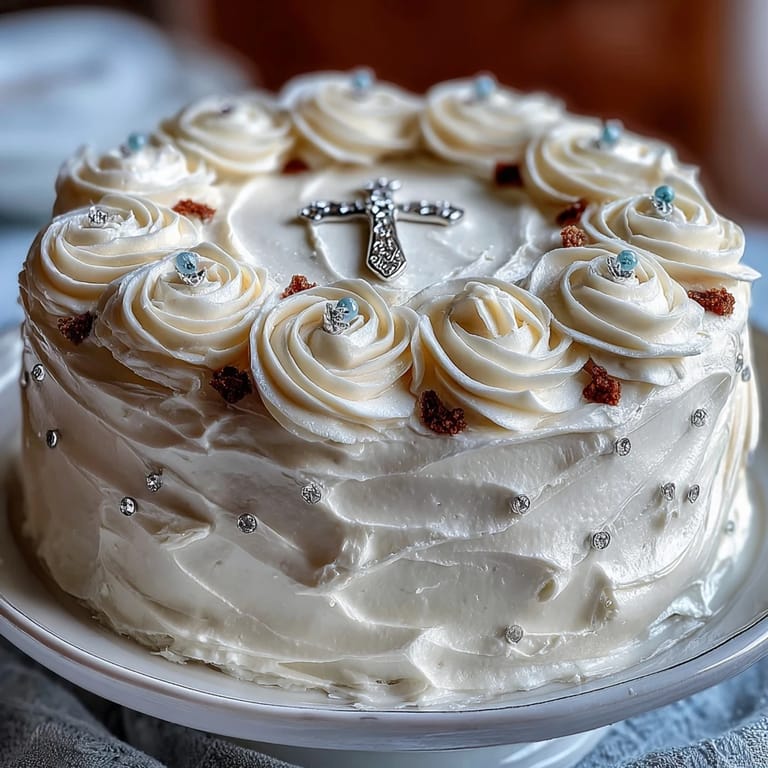
Save My cousin's daughter turned seven, and her mother asked me to bake something special for her First Communion celebration. I'd never made a fondant rose before, so I decided to learn that week—watching videos at midnight, practicing on the kitchen counter while my coffee went cold. There's something about making a cake for a moment that matters that shifts how you approach every ingredient, every fold, every decoration. This vanilla sponge is tender enough to taste like celebration, with buttercream smooth as silk and roses that look almost too delicate to eat.
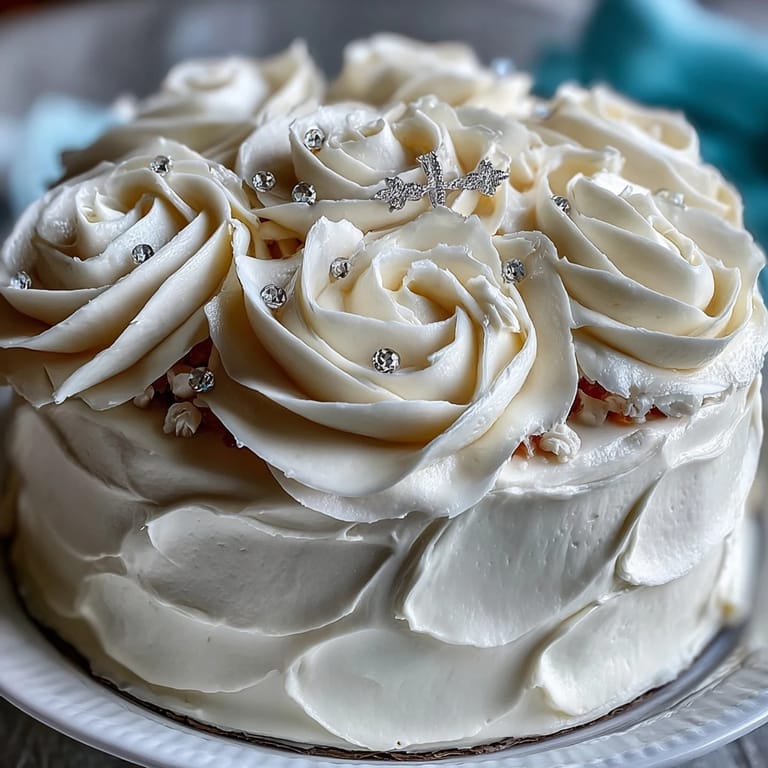
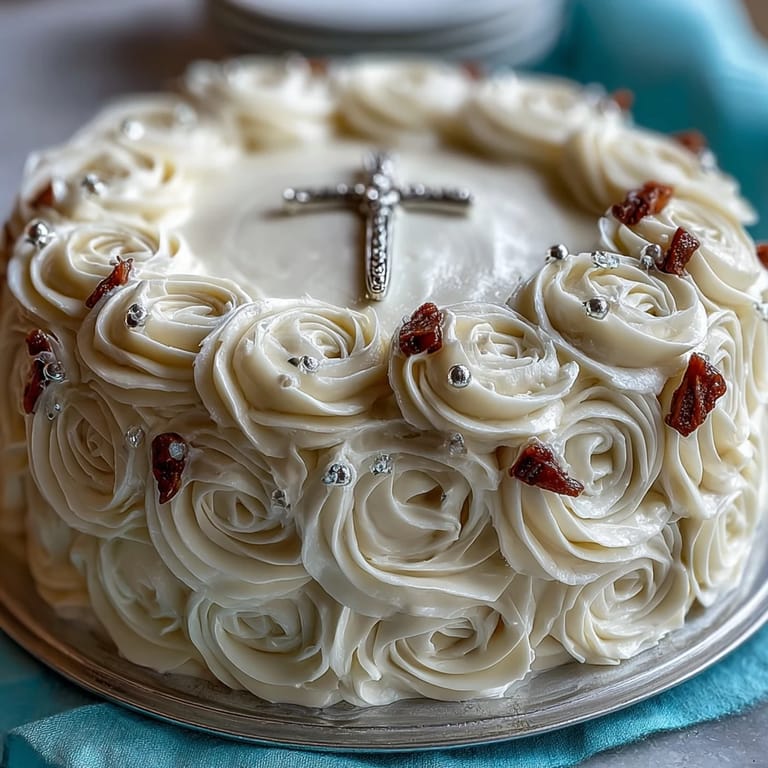
Watching that little girl's face light up when she saw her cake—with the white roses arranged just so and the cross catching the light—reminded me that baking isn't just about feeding people, it's about marking moments that matter. Her grandmother cried, which made me tear up too, flour still somehow in my hair. That's when I knew this recipe deserved to live in my notes forever.
Ingredients
- All-purpose flour: Use 2½ cups (310 g) measured by spooning and leveling, not scooping—this keeps the cake tender rather than dense.
- Baking powder: 2½ tsp ensures even rise without any gummy center that sometimes happens with too little.
- Salt: Just ½ tsp brightens the vanilla and balances sweetness in ways you won't consciously notice but will definitely taste.
- Unsalted butter: 1 cup (225 g) for the sponge must be softened to room temperature, not melted—this traps air and makes the cake cloud-like.
- Granulated sugar: 2 cups (400 g) creams with butter to create the foundation of tender crumb; don't skip this step.
- Eggs: 4 large eggs at room temperature mix in smoothly without deflating the batter—cold eggs break the emulsion.
- Pure vanilla extract: 1 tbsp in the sponge and 2 tsp in the buttercream; pure extract tastes sophisticated compared to imitation.
- Whole milk: 1 cup (240 ml) at room temperature keeps the batter pourable and creates a velvety crumb.
- Unsalted butter for frosting: 1½ cups (340 g) softened until it dents easily under your finger—this makes the buttercream fluffy, not greasy.
- Powdered sugar: 5 cups (600 g) sifted removes lumps and creates smooth, spreadable frosting without grit.
- Heavy cream or milk: 3–4 tbsp added one at a time prevents the buttercream from becoming too thin.
- White fondant: 16 oz (450 g) for roses and covering—quality fondant tastes better and handles more smoothly than budget brands.
- Cross topper: Whether edible or decorative, this becomes the spiritual anchor of the whole cake.
Tired of Takeout? 🥡
Get 10 meals you can make faster than delivery arrives. Seriously.
One email. No spam. Unsubscribe anytime.
Instructions
- Heat the oven and prepare:
- Preheat to 350°F (175°C) and grease both 8-inch pans with butter, then line the bottoms with parchment—this ensures your layers release cleanly. A light dusting of flour helps even more.
- Combine dry ingredients:
- Whisk flour, baking powder, and salt together in a medium bowl until the baking powder is evenly distributed—this prevents pockets of unrisen cake.
- Cream butter and sugar:
- Beat them for about 3 minutes until the mixture looks pale, fluffy, and almost mousse-like; this is where the tender crumb starts to form. Scrape down the bowl halfway through to catch any butter hiding at the edges.
- Add eggs one by one:
- Drop each egg in and beat well after each addition—this keeps the batter emulsified and prevents curdling. The mixture might look slightly broken after the third egg; that's normal.
- Mix in vanilla:
- Alternate wet and dry carefully:
- Turn the mixer to low speed and add about one-third of the flour mixture, then one-third of the milk, repeating until everything is combined—starting and ending with flour prevents overmixing. Mix only until you don't see white streaks of flour anymore.
- Fill and bake:
- Divide batter evenly between pans (a kitchen scale helps here), smooth the tops gently, and bake for 30–35 minutes until a toothpick inserted in the center comes out clean with maybe one or two moist crumbs. The cake should smell like vanilla and feel springy when you press the top lightly.
- Cool properly:
- Let cakes sit in their pans for 10 minutes—they're still fragile—then turn them out onto wire racks to cool completely, at least 2 hours or overnight. This prevents a gummy layer at the bottom.
- Make the buttercream:
- Beat softened butter until it's pale and creamy, about 2 minutes, then gradually add sifted powdered sugar in small handfuls so it doesn't cloud everywhere. Add vanilla and a pinch of salt, then milk or cream one tablespoon at a time until the frosting spreads smoothly but holds its shape.
- Assemble the cake:
- Level the cake layers with a serrated knife if the tops have domed, place one layer on your board, spread with buttercream, and top with the second layer. Apply a thin crumb coat (it will look rough), chill for 20 minutes, then add the final smooth layer—this technique keeps crumbs out of the frosting.
- Create fondant roses:
- Roll small balls of white fondant, flatten them with your thumb, and layer them slightly overlapping to create petals around a tiny center ball—it takes practice but becomes meditative. If fondant cracks, knead in a tiny drop of water.
- Decorate with care:
- Arrange roses and fondant leaves on the frosted cake, securing them gently with a dab of buttercream—they'll stay put. Add edible pearls or dragees in clusters for shimmer and sophistication.
- Crown with the cross:
- Place your cross topper at the top or slightly off-center, depending on the look you want. Chill the finished cake until serving, which also helps the fondant set.
 Save
Save Hours before the party, I was still fussing with the roses, adjusting them by millimeters while my partner laughed and said they already looked perfect. In that moment—standing in my kitchen at 6 a.m., fondant dust on my apron, completely sleep-deprived and oddly at peace—I realized this cake had become my love language. Every detail mattered because the person it celebrated mattered.
Why Room Temperature Matters More Than You Think
I learned this the hard way by forgetting to pull my butter out of the fridge before starting. Cold butter doesn't cream properly with sugar, which means the cake won't be light and fluffy—it becomes dense and slightly greasy instead. The same goes for eggs; cold eggs break the emulsion in your batter, and you end up with a curdled-looking mixture that bakes into a crumbly, disappointing cake. Now I set everything out 30 minutes before I start, and the difference is honestly night and day.
The Crumb Coat Secret That Changed Everything
My first attempt at decorating a fondant rose cake was a disaster because I applied buttercream directly to warm cake crumbs—it looked like I'd thrown frosting at a sandstorm. A baker friend taught me the crumb coat trick: spread a thin layer of buttercream over the cake, chill it until it sets, then apply the final smooth layer on top. The cold, set base layer seals the crumbs so the final frosting goes on like silk. That 20-minute chill feels tedious until you see how professional it looks.
Making Fondant Roses Feels Like Magic (It's Not)
Fondant work intimidates people, but roses are honestly easier than they look once your hands understand the motion. The first two or three always look lumpy and weird, so I make extras knowing some won't be perfect—which takes the pressure off and somehow makes them better. Start with small balls, flatten them with your thumb, overlap them petal by petal, and suddenly you have something that looks genuinely fancy. The trick isn't talent; it's patience and accepting that your first attempts are learning, not failure.
- Keep fondant covered with plastic wrap while you work so it doesn't dry out and crack.
- If fondant gets sticky, dust your work surface and hands lightly with powdered sugar.
- Make roses at least a few hours ahead so they firm up and hold their shape on the cake.
 Save
Save This cake carries the weight of celebration in every layer—tender crumb, silky frosting, delicate roses. Make it for someone whose milestone matters, and you'll understand why baking these moments is worth every minute of effort.
Recipe Guide
- → How do I make the vanilla sponge moist?
Ensure butter and eggs are at room temperature and avoid overmixing the batter. Alternating the addition of flour and milk helps retain moisture for a tender crumb.
- → What is the best way to shape fondant roses?
Roll small fondant balls, flatten each into petals, then layer and gently shape them around a central base to form realistic roses.
- → Can I substitute ingredients for dietary needs?
Yes. Use gluten-free flour blends for gluten-free options, or replace half the butter with vegetable oil for a lighter texture.
- → How should the cake be chilled during preparation?
Chill the cake with a crumb coat for about 20 minutes to set the frosting, then after decorating to help the fondant and decorations hold their shape.
- → What tools are recommended for decorating with fondant?
Use rolling pins, fondant tools or small knives, and piping bags for detailed work and smooth application of frosting and decorations.