 Save
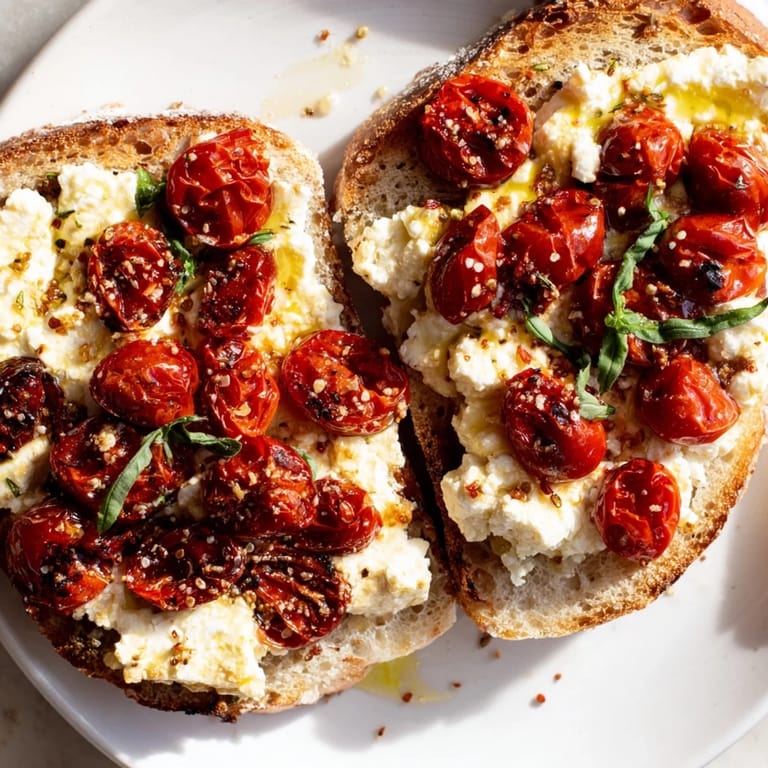
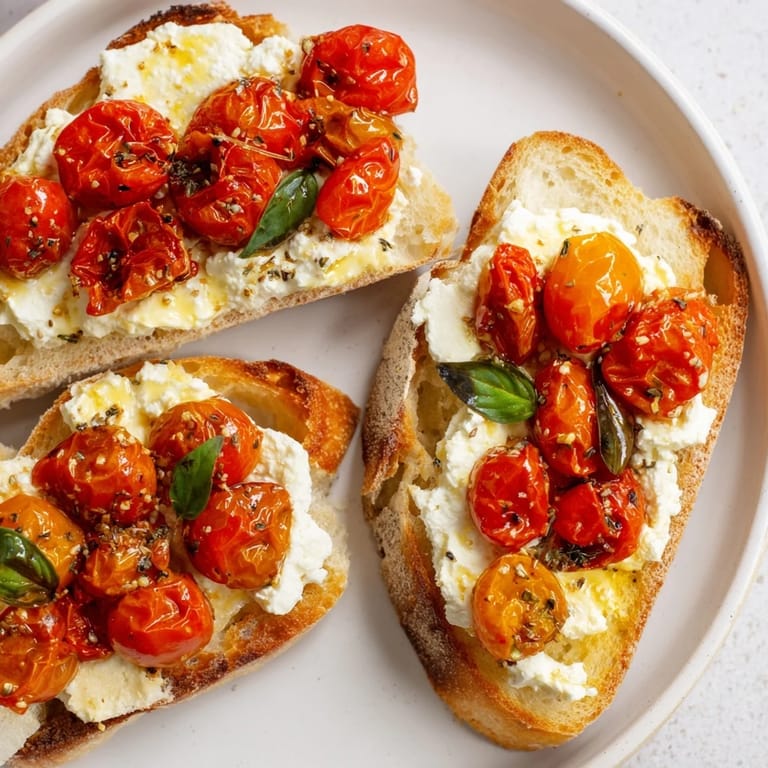
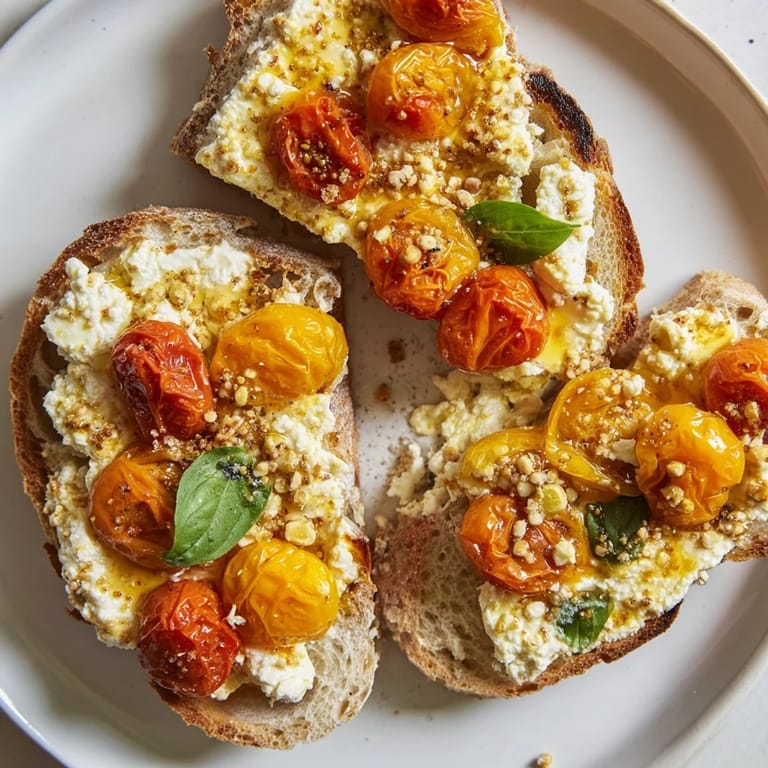
Save There's something about the smell of bread toasting in the oven that stops me mid-conversation every time. I discovered this dish on a lazy Sunday when I had guests arriving in an hour and my fridge held exactly three things worth eating. The feta caught my eye first—creamy, salty, waiting. I scattered some halved tomatoes on bread, topped it all with cheese, and slid it into the oven. When it emerged golden and bubbling, I realized I'd accidentally created something people would ask me to make again and again.
I remember making this for my neighbor who'd just moved in, and she texted me the recipe request before she'd even finished eating. There was something about handing her a warm toast that felt like saying welcome without actually saying it. Now whenever I make it, I think of that moment—how food can be a conversation starter when words feel hard to find.
Ingredients
- Crusty sourdough or country bread, 4 slices: The bread is your foundation, and it needs real structure to hold everything without getting soggy. Look for something with character, a crust that crackles a little when you cut it.
- Feta cheese, 150 g: Use a good quality feta that crumbles easily but doesn't taste aggressively salty. Block feta works better than pre-crumbled because it holds together as it melts.
- Cherry tomatoes, 250 g, halved: These little tomatoes burst with sweetness when they roast, and their juices pool into the bread in the best way. Choose ones that smell fragrant at the stem.
- Extra-virgin olive oil, 2 tbsp: This is where quality matters—the oil tastes like itself here, so don't skimp or use something harsh.
- Dried oregano, 1/2 tsp: Just enough to whisper Mediterranean flavors without overpowering the fresh basil that comes later.
- Salt and freshly ground black pepper: Season generously at each step; the tomatoes especially need encouragement to taste like themselves.
- Fresh basil leaves, a small handful, torn or sliced: Add this after baking so it stays bright and aromatic—none of that wilted, tired basil energy.
Tired of Takeout? 🥡
Get 10 meals you can make faster than delivery arrives. Seriously.
One email. No spam. Unsubscribe anytime.
Instructions
- Heat your oven and prepare the stage:
- Set your oven to 200°C and line a baking tray with parchment paper. While it's heating, arrange your bread slices on the tray—they should have breathing room, not touching or crowding.
- Season and roast the tomatoes:
- Toss your halved tomatoes with 1 tablespoon of olive oil, the oregano, a pinch of salt, and pepper in a bowl. You're coating them just enough to help them caramelize as they bake.
- Build your toasts:
- Scatter the seasoned tomatoes evenly across each bread slice, then crumble or slice the feta and distribute it over top. You want some cheese on every bite, so don't cluster it all in one spot.
- Finish with oil and bake:
- Drizzle the remaining olive oil across each toast, then slide the tray into the oven. Bake for 15–18 minutes until the bread is golden at the edges and the feta softens with just the tiniest brown spots starting to appear.
- Scatter basil and serve:
- Pull the tray out and let the toasts rest for a moment. Tear or slice the fresh basil and scatter it over each one, then serve while they're still warm and the cheese is at that perfect melting point.
 Save
Save I learned something watching my daughter eat one of these toasts in silence, just really paying attention to each bite. It was one of those rare moments when food made someone pause instead of rush, and I understood then why simple recipes matter so much.
Why This Works as a Meal
This isn't just a snack that pretends to be dinner—it genuinely bridges the gap between light and satisfying. The bread provides substance, the feta adds protein and fat, and the tomatoes bring brightness and nutrients. It's the kind of thing you can eat for lunch without feeling like you're dieting, or serve for dinner when you want something that feels effortless but still feels complete. I've learned that the best dishes are the ones that don't announce themselves as anything other than exactly what they are.
The Bread Matters More Than You Think
The crust is actually doing serious work here—it's protecting the inside from getting soggy while the tomatoes release their juices. Soft bread will absorb everything and collapse into mush halfway through baking. I once tried this with a fluffy white sandwich loaf thinking it would be fine, and it wasn't. Go back to a proper crusty bread with enough structure to handle moisture, and you'll understand why this makes such a difference. Sourdough is ideal because it's tangy and sturdy, but any good country bread with a real crust will work.
Variations That Expand Your Thinking
This recipe has a beautiful simplicity, but it also invites play. I've learned that good food lives in those margins where you can tinker without breaking anything fundamental. A drizzle of aged balsamic glaze adds a sweet-tart note that makes the dish feel somehow more sophisticated. A squeeze of lemon or a tiny pinch of red pepper flakes changes the entire mood. Some nights I add a handful of peppery arugula on top after baking, and it makes the whole thing feel like a salad happened to land on toast. The herbs can shift too—parsley instead of basil, or a mix of both. Even the cheese isn't locked down; I've used ricotta when I didn't have feta, or a sharp white cheddar, and each version told a different story.
- Balsamic glaze adds richness without changing the cooking time or technique.
- Fresh lemon juice squeezed over the finished toast brightens everything right before serving.
- Try adding peppery greens or a crack of red pepper flakes for an extra flavor dimension.
 Save
Save This is the kind of dish that reminds you why you cook at all. It's honest, it's generous, and it brings people together without requiring you to spend hours in the kitchen.
Recipe Guide
- → What type of bread works best for this dish?
Crusty sourdough or country bread provides the ideal texture and holds toppings well during baking. Multigrain or gluten-free alternatives can also be used.
- → Can I use fresh tomatoes instead of cherry tomatoes?
Cherry tomatoes are preferred for their sweetness and juiciness when roasted, but small grape or diced fresh tomatoes can be a substitute if roasted properly.
- → How do I know when the feta is perfectly baked?
The feta should soften and develop a light golden color on the edges, indicating it's warmed through and slightly caramelized.
- → Is it necessary to drizzle olive oil before baking?
Drizzling olive oil enhances flavor and helps the feta and tomatoes roast beautifully while keeping the bread crisp.
- → What herbs complement the flavors best?
Fresh basil leaves add a fragrant, sweet aroma and freshness, balancing the richness of feta and roasting tomatoes.