 Save
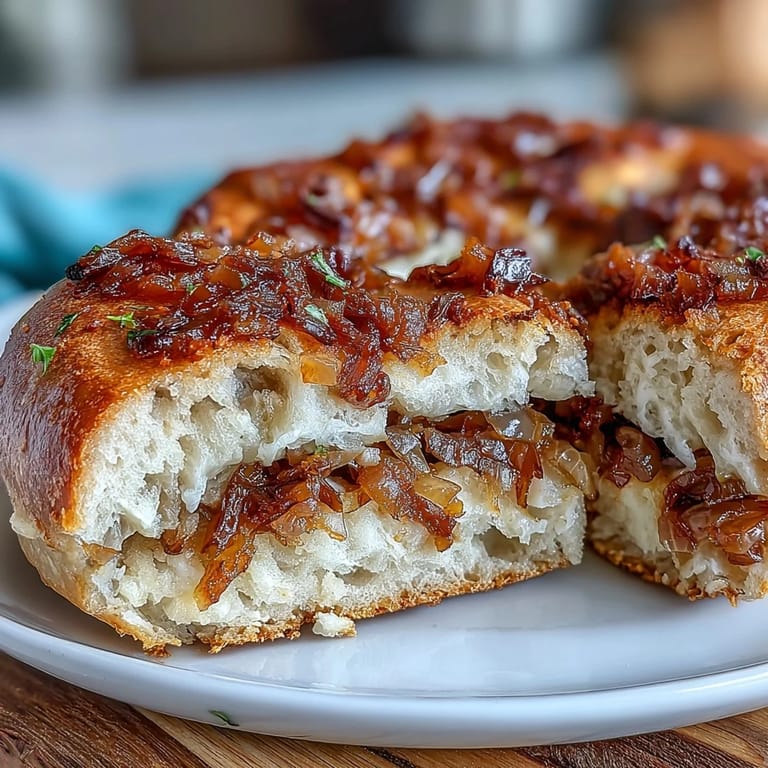
Save There's something almost magical about the moment when sourdough starter bubbles to life in a bagel dough—that first whiff of fermented tang mixing with caramelizing onions on the stove is when I knew these weren't just bagels, they were going to be something special. My kitchen filled with that yeasty, almost wine-like aroma one Saturday morning, and I couldn't resist stealing a warm one straight from the cooling rack before anyone else got home. The chewy interior, the crispy crust, and that generous pile of sweet golden onions on top—it became the breakfast I'd make whenever I wanted to feel like I was doing something impressive without the stress.
I made these for my sister's surprise brunch, and watching her bite into one and close her eyes in that satisfied way was worth every hour of fermentation and boiling. She asked for the recipe immediately, which never happens—she's the baker in our family. We've been texting bagel photos ever since, like we discovered something together.
Ingredients
- Active sourdough starter (100 g, 100% hydration): This is your flavor powerhouse—the longer fermentation creates that distinctive tang and complex taste that store-bought bagels just don't have. Make sure it's bubbly and at peak before mixing.
- Bread flour (400 g): Use this instead of all-purpose if you want that proper bagel chew—the higher protein content creates structure that bounces back when you bite into it.
- Whole wheat flour (50 g): Just enough to add nuttiness without overwhelming the crumb, plus it helps the dough brown beautifully in the oven.
- Sea salt (10 g for dough, 1/2 tsp for onions): Don't skip the salt in dough—it strengthens gluten and brings out the sourdough flavor. The extra pinch on onions draws out their natural sweetness.
- Granulated sugar (25 g): A small amount feeds the yeast and balances the sourness, creating complexity rather than sweetness.
- Lukewarm water (240 ml): Temperature matters here—too hot kills the starter, too cold and fermentation crawls. Around 30–35°C is perfect.
- Yellow onion (1 large, finely chopped): The size of your chop affects cooking time and how they meld with the bagel—fine pieces caramelize better and stay put during boiling.
- Olive oil or unsalted butter (1 tbsp): Butter gives richer flavor, oil is lighter—choose based on what you want the onions to taste like.
- Barley malt syrup (1 tbsp) or honey: This changes the game—barley malt gives that authentic New York bagel flavor, but honey works if that's what you have. Both affect crust browning slightly.
- Baking soda (1 tsp): Raises the boiling water's pH so the exterior sets quickly and browns gorgeously—don't use regular soda, you need the food-grade stuff.
Tired of Takeout? 🥡
Get 10 meals you can make faster than delivery arrives. Seriously.
One email. No spam. Unsubscribe anytime.
Instructions
- Caramelize your onions first:
- Heat your oil or butter over medium heat, add onions and salt, then let them do their thing for 8–10 minutes—you're looking for deep golden color and a jammy sweetness. Set them aside to cool completely so they don't make your dough too warm when you add them later.
- Mix the sourdough dough:
- Combine your bubbly starter, both flours, salt, sugar, and water in a large bowl—the dough will look rough and shaggy, which is exactly right. Don't worry about smoothness yet; you're just bringing everything together.
- Knead into a silky dough:
- Work the dough for 8–10 minutes by hand (or 6–8 in a stand mixer) until it becomes smooth, elastic, and springs back when you poke it. You'll feel when it shifts from rough to supple—that's your signal to move on.
- First rise with stretch-and-folds:
- Cover the bowl and let it rest at room temperature for 4 hours, but don't just leave it alone—every 30 minutes during the first 2 hours, wet your hand, grab one side of the dough, stretch it up and fold it over itself, then rotate the bowl and repeat. This builds strength without aggressive kneading and creates beautiful layered texture.
- Cold overnight fermentation:
- After the 4-hour rise, cover and refrigerate for 8–12 hours—this is where all that sourdough flavor develops. The cold slows yeast but bacteria keep working, creating tang and improving digestibility.
- Shape into bagels:
- Divide your dough into 8 equal pieces (a kitchen scale helps here), roll each into a smooth ball, then poke a hole in the center with your thumb and gently stretch it wider until you have a 2-inch diameter hole. The dough should be smooth on the outside and feel slightly tense but not stiff.
- Quick proof at room temperature:
- Place shaped bagels on parchment paper, cover loosely, and let them rise for 1–2 hours until they're slightly puffy and spring back slowly when poked. They shouldn't be as pillowy as bread dough—bagels want some density.
- Boil for the perfect exterior:
- Preheat oven to 220°C (425°F), bring water, barley malt syrup or honey, and baking soda to a rolling boil in a large pot, then boil bagels one or two at a time for exactly 1 minute per side. The boiling stops the rise and sets the crust so you get that signature dense, chewy exterior.
- Add onions and bake:
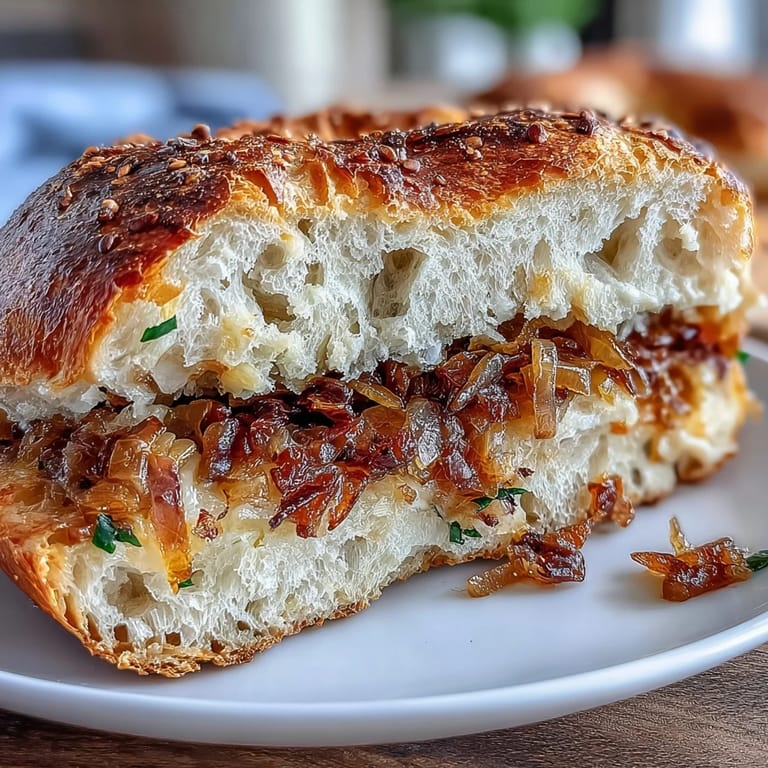
- While bagels are still damp from boiling, press your cooled caramelized onions generously onto the tops—the moisture helps them stick. Bake for 20–25 minutes until the tops are golden and the bagels sound hollow when tapped on the bottom.
- Cool before eating:
- Transfer to a wire rack and resist the urge to slice into a warm one for at least 10 minutes—the crumb needs to set. That wait is torture but worth it.
 Save
Save There was this moment during my third batch when my neighbor stopped by and the smell from my kitchen made her pause mid-sentence—that's when I realized these bagels had crossed from being a technique I was learning into something with real presence. Now whenever I make them, I always bake an extra one to leave on her doorstep.
Why Sourdough Changes Everything
The difference between sourdough bagels and regular yeast bagels isn't just flavor—it's a completely different fermentation timeline and depth. Sourdough relies on wild yeast and bacteria to develop complexity over hours, which means you get tang, better digestibility, and a crust that caramelizes differently. The slower rise also allows gluten to develop naturally, creating that perfect chewiness without aggressive kneading.
Shaping and Proofing Like a Pro
Shaping bagels feels awkward the first time, but it becomes meditative once you find your rhythm—each one should be smooth and tight on the outside, with a hole that's roughly 2 inches when stretched. The proof is shorter than bread because you want slight puffiness, not a puffy cloud; if they rise too much, they'll be pillowy instead of chewy, which defeats the whole purpose of a bagel.
The Secret Is in Your Onion Preparation
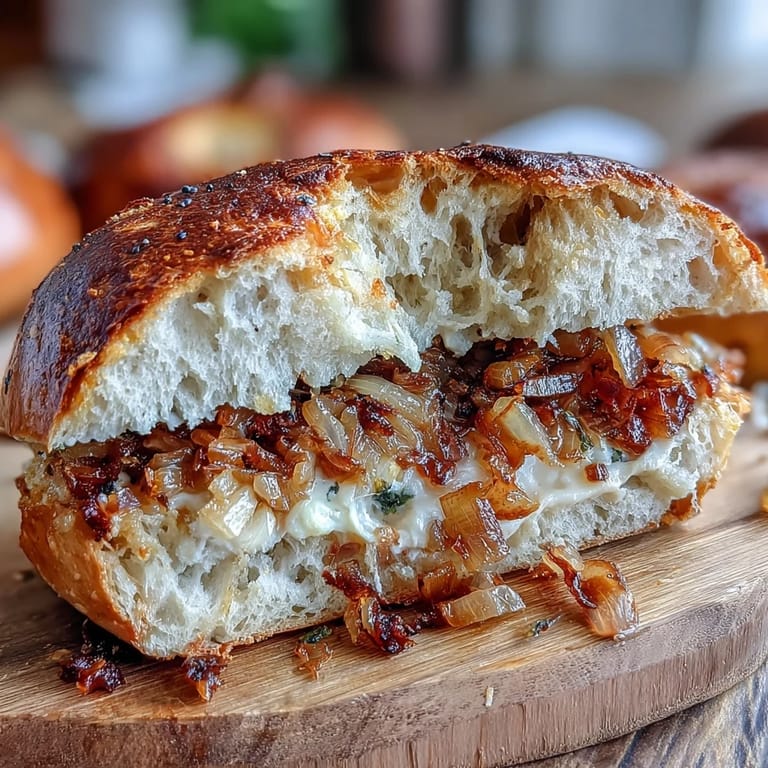
Those sautéed onions are where a good bagel becomes a great bagel—the trick is low and slow, letting the natural sugars caramelize until they're deep golden and jammy. Finely chopping them helps them cook evenly and stick to the damp bagel surface during boiling, so you don't lose half of them in the water. If you want extra dimension, you can add a pinch of garlic powder or fresh cracked pepper to the onions while they're still hot.
- Make the onions while your dough is doing its first rise—they'll cool by the time you need them.
- If you want to try variations, poppy seeds or sesame seeds sprinkled on top before baking add amazing texture and flavor contrast.
- Always press toppings onto damp bagels right after boiling, or they won't adhere properly during baking.
 Save
Save Once you've made these even once, you'll understand why people get emotional about bagels—there's something about the combination of chewy, tangy, and sweet that feels both comforting and celebratory. These bagels have a way of turning a regular Tuesday breakfast into an event.
Recipe Guide
- → What is the purpose of fermenting the dough overnight?
Overnight fermentation develops deeper flavor and improves the dough's texture, resulting in a tangy and chewy bite.
- → How do sautéed onions enhance the final product?
Sautéed onions add a sweet and aromatic topping, complementing the tangy sourdough base with richness and flavor.
- → Why boil the bagels before baking?
Boiling sets the crust and gives the bagels their classic chewy exterior and glossy finish after baking.
- → Can I use honey instead of barley malt syrup for boiling?
Yes, honey is a suitable substitute that still helps develop a golden crust and subtle sweetness.
- → What flour types are used in the dough and why?
Bread flour and whole wheat flour combine to provide structure, chewiness, and a slight nutty depth to the dough.