 Save
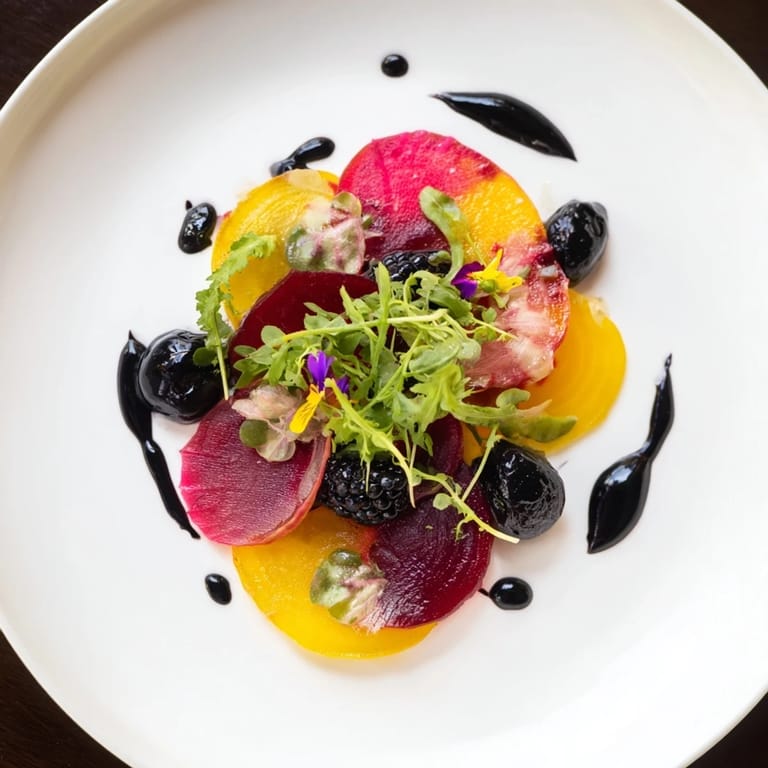
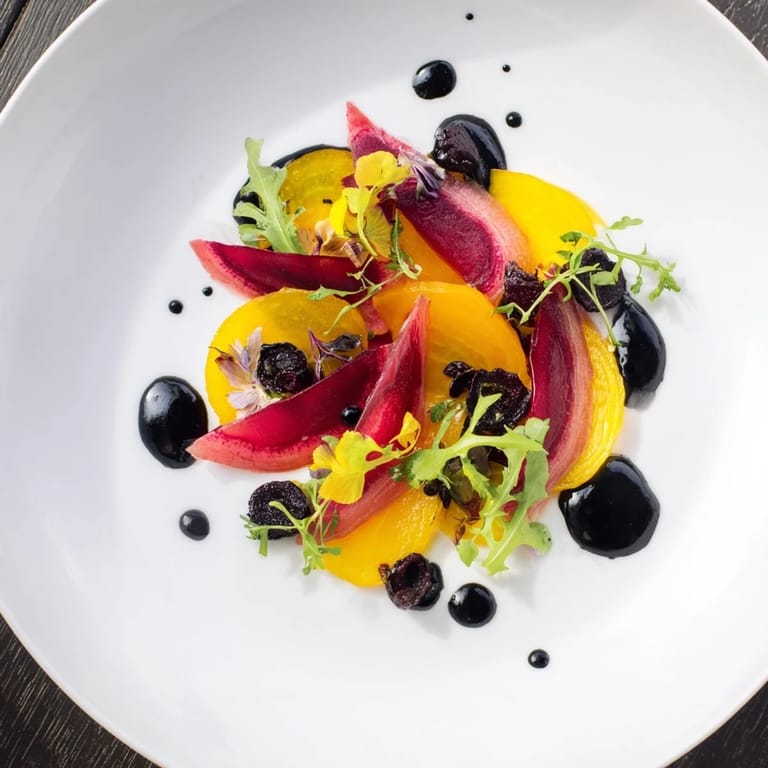
Save I discovered this dish while experimenting with a mandoline one quiet Sunday morning, trying to catch light through paper-thin vegetable slices. What started as pure play—layering golden beet against crimson, watching how shadows fell across the plate—became something I couldn't stop thinking about. There's a particular kind of magic in food that works as hard visually as it does on the palate, and this one does both effortlessly. It felt like painting with vegetables, except everything was edible and tasted like you'd actually tried.
I made this for a dinner party where everyone arrived stressed, and by the time I set down the platter, the conversation just... paused. People pulled out their phones before even sitting. That moment when food stops people mid-thought feels like the whole point of cooking, honestly. Nobody expected a salad starter to be the one they remembered three weeks later.
Ingredients
- Golden beet: Sliced paper-thin, these bring earthy sweetness and a warm glow that balances the sharper reds.
- Red beet: The dramatic counterpoint, almost burgundy when raw, creating natural contrast without any tricks.
- Baby arugula: Peppery and tender, it catches light and adds texture that keeps the plate from feeling too composed.
- Watermelon radish: The surprise element—pale outside, shocking magenta inside, it adds both visual depth and a crisp, subtle heat.
- Blackberries: They work as both shadow and accent, their dark purple creating silhouettes while their tartness cuts through richness.
- Black olives: The deepest shadows on the plate, briny and grounding, they make the bright elements sing harder.
- Black tahini: If you can find it, use it—otherwise regular tahini mixed with squid ink gives you that dark, earthy smear that anchors the whole composition.
- Extra virgin olive oil: Good quality matters here since it's doing the heavy lifting in your dressing.
- Lemon juice: Just enough acid to wake everything up without making it aggressively bright.
- Honey: A whisper of sweetness that bridges the bitter and the peppery.
- Microgreens: The finishing touch, they add unexpected height and a delicate intensity.
Tired of Takeout? 🥡
Get 10 meals you can make faster than delivery arrives. Seriously.
One email. No spam. Unsubscribe anytime.
Instructions
- Get your vegetables ready:
- Slice your beets on a mandoline if you have one—it's worth the investment just for how impossibly thin you can go. If using a knife, go slowly and let the blade do the work rather than sawing. The thinner they are, the more light passes through and the better the visual effect.
- Build your foundation:
- Lay golden and red beet slices in a semi-overlapping pattern, like roof tiles, alternating colors. This becomes your base, so take a breath and let it be a little imperfect—that's where personality lives.
- Layer in the brightness:
- Fan your watermelon radish slices across, then scatter arugula like you're being intentional but not precious about it. The randomness is what makes it feel alive rather than plated.
- Create the shadows:
- Tuck blackberries and olives into gaps and behind brighter elements, positioning them where they'll actually cast visual weight. Think of it as negative space that makes everything else pop.
- Mix your dressing:
- Whisk olive oil, lemon juice, honey, salt, and pepper together until emulsified. Taste it—it should make your mouth want more, not assault it.
- Add dark contrast:
- Spoon small amounts of black tahini around the plate and use the back of your spoon to smear it slightly, creating organic shadows rather than neat dots. This is where the drama actually happens.
- Final touches:
- Scatter microgreens and edible flowers if you have them, giving the plate a sense of completion without overdoing it. Drizzle your dressing just before serving so everything stays crisp.
 Save
Save What I didn't expect was how this dish became a conversation about color itself—how we eat with our eyes first and how carefully chosen contrasts make flavors taste sharper and more defined. That's when food stops being sustenance and becomes something closer to art you can taste.
Why This Works as a Starter
A great appetizer should intrigue without overwhelming, and this does exactly that. The beets are grounding and sweet, the arugula adds that green-bitter complexity, and the raw watermelon radish brings crispness that awakens your palate for what comes next. It's substantial enough to feel like you've been fed but light enough that you're genuinely hungry for the main course, not just politely interested.
The Art of Building Contrast
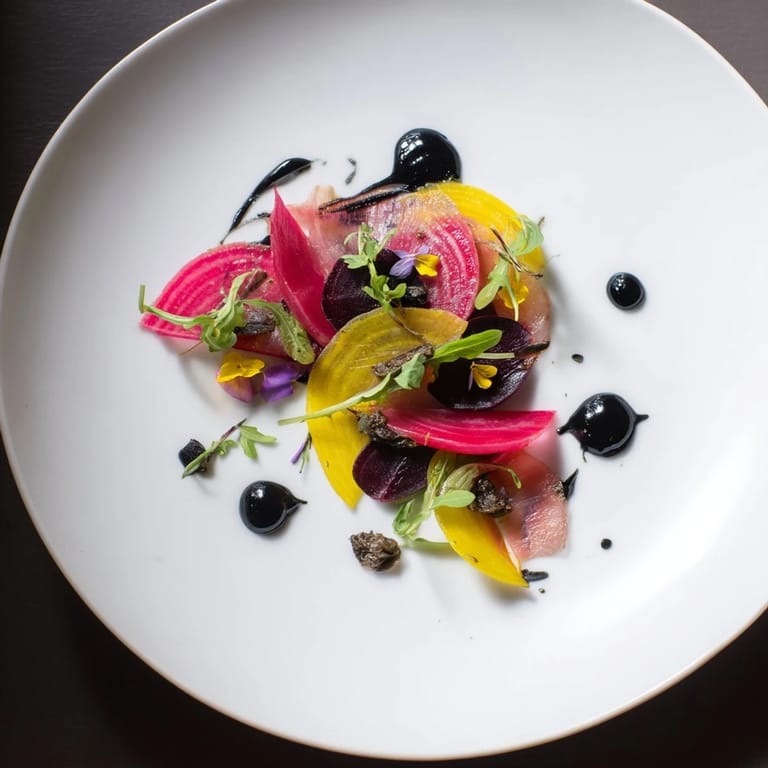
The reason this works isn't complicated—it's about understanding that visual contrast actually makes food taste better. When your eye catches the jump from pale golden beet to deep blackberry to bright magenta radish flesh, your brain is already preparing for complexity. You taste it before the food hits your tongue. That anticipation, that visual narrative you're following across the plate, makes every flavor more vivid than it would be on its own.
How to Make It Your Own
This template is forgiving if you understand what you're trying to do. Missing watermelon radish? Use shaved fennel or apple instead—something that creates that bright, crisp counterpoint. Can't find blackberries? Pomegranate seeds work, or even thin slices of dark beet for shadows. The pattern is what matters: light against dark, smooth against textured, sweet against sharp. Once you see how those elements play together, you can remix endlessly.
- If you're making this vegan, swap honey for a tiny amount of agave syrup in the dressing so it actually emulsifies properly.
- Black garlic or roasted purple carrots can add even more depth to your shadow elements if you want to go deeper into that direction.
- Serve this with something wine-like—a crisp Sauvignon Blanc cuts right through, or a light Pinot Noir if you're feeling earthier.
 Save
Save Cooking this reminds me that food doesn't have to choose between being beautiful and being delicious—the best meals satisfy both hungers at once. Make this when you want to impress people, but mostly make it because you want to spend 30 minutes playing with color and flavor until something clicks.
Recipe Guide
- → How can I achieve the thin slices of beets?
Use a mandoline slicer or a very sharp knife to slice the golden and red beets thinly, ensuring even thickness for layering.
- → What alternatives can replace honey for a vegan option?
Agave syrup or maple syrup can be used instead of honey to maintain sweetness without animal products.
- → How do blackberries and black olives contribute to the dish?
They add dark accents that create visual depth and contrast, enhancing the layered shadow effect in the presentation.
- → Can I prepare this ahead of time?
Slicing and dressing can be done shortly before serving to preserve freshness and vibrant colors.
- → What are suitable drink pairings?
Light wines such as Sauvignon Blanc or Pinot Noir complement the fresh and earthy flavors beautifully.
- → Are there any allergen concerns to keep in mind?
The dish contains sesame in tahini and may have olive pits if not fully pitted; check packaged ingredients for gluten traces.