 Save
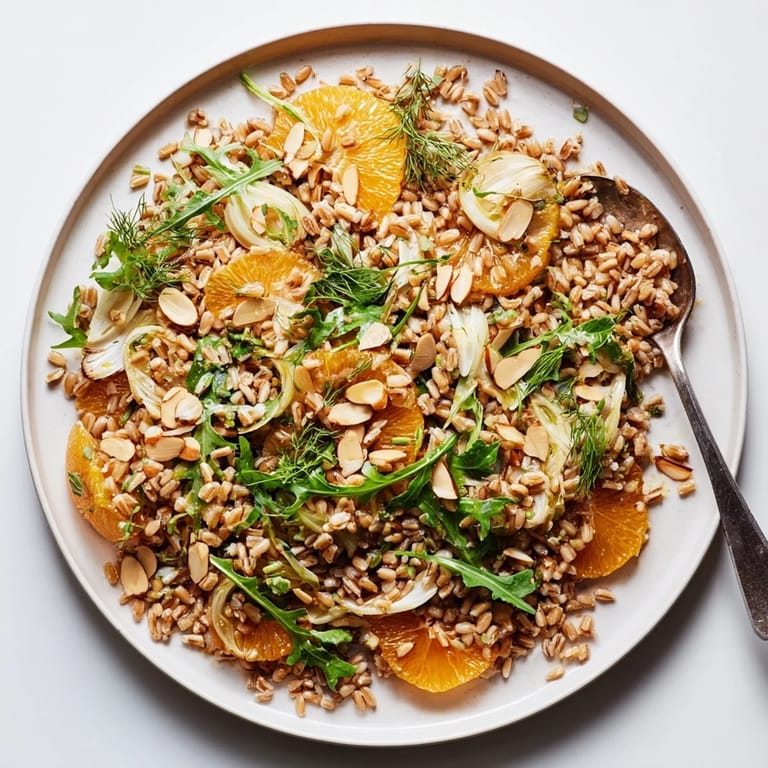
Save The first time I made this farro salad, I was trying to use up a bag of oranges that were sitting on my counter looking lonely. I'd never cooked with fennel before, honestly found its licorice scent a little intimidating, but something about the combination of citrus and crunch made sense in my head. My kitchen smelled like sunshine and warmth as the farro simmered, and when I finally took that first bite, I couldn't believe how something so simple could taste so complete.
I brought this to a friends potluck last spring, right when fennel was starting to show up at the farmers market everywhere. People kept asking me what the secret ingredient was, and I loved watching their faces when I told them it was just fennel and oranges—things they'd probably walked past a hundred times at the grocery store without a second thought. Now it's become my go-to when I need something that feels special but doesn't require me to actually try that hard.
Ingredients
- 1 cup uncooked whole grain farro: This ancient grain has this incredible nutty flavor and chewy texture that makes salads feel substantial, not like youre eating a bowl of air
- 3 cups water: Farro absorbs liquid like a sponge while it cooks, becoming tender but still holding onto that satisfying bite
- 1/2 teaspoon kosher salt: Salting the cooking water is the difference between bland farro and farro that actually tastes like something
- 1 medium fennel bulb: When you slice it thin, fennel adds this crisp, slightly sweet anise flavor that cuts through rich ingredients beautifully
- 2 large oranges: Peel and segment them carefully, catching any juice that escapes—it all goes into the dressing later
- 2 cups arugula or baby spinach: I prefer arugula for its peppery bite, but spinach works if you want something milder
- 2 tablespoons chopped fresh parsley: Brightens everything up and adds this fresh herbal note that ties the citrus together
- 1/2 cup sliced almonds: Toast them until they're golden and fragrant—this is not the step to skip or rush
- 3 tablespoons extra-virgin olive oil: Use the good stuff here since the dressing is simple and every ingredient shines through
- 1 tablespoon orange juice: Use any juice from segmenting your oranges, or squeeze a little extra
- 1 tablespoon lemon juice: Adds brightness and helps cut through the olive oil's richness
- 1 teaspoon honey or maple syrup: Just enough to round out the acidity without making the dressing sweet
- 1 teaspoon Dijon mustard: The secret that keeps your dressing emulsified and creamy without actually adding cream
- 1/4 teaspoon sea salt and black pepper: Season aggressively—cold salad needs more seasoning than you think
Tired of Takeout? 🥡
Get 10 meals you can make faster than delivery arrives. Seriously.
One email. No spam. Unsubscribe anytime.
Instructions
- Cook the farro:
- Rinse the farro under cold water until it runs clear, then combine it with the water and salt in a medium saucepan. Bring everything to a boil, then turn down the heat, cover, and let it simmer gently for about 25 to 30 minutes until the grains are tender but still have some chew. Drain any excess liquid and spread the farro on a baking sheet to cool while you prep everything else.
- Toast the almonds:
- Toss the almonds into a dry skillet over medium heat and stir them frequently for about 2 to 3 minutes. Watch closely because they go from perfectly golden to burnt in seconds—you'll know they're done when they smell nutty and fragrant.
- Prep the oranges and fennel:
- Trim the fennel bulb, slice it as thinly as you can, and save those frilly fronds for garnish later. Peel your oranges, cut out the segments, and catch any juice that escapes into a small bowl—every drop counts.
- Whisk together the dressing:
- In a small bowl or jar, combine the olive oil, orange juice, lemon juice, honey, mustard, salt, and pepper. Whisk until the mixture thickens slightly and stays emulsified—this should take about 30 seconds of vigorous whisking.
- Assemble the salad:
- In a large bowl, combine the cooled farro, sliced fennel, orange segments, arugula, and parsley. Pour the dressing over everything and toss gently until each ingredient is lightly coated. Fold in the toasted almonds at the end so they stay crunchy, then scatter those reserved fennel fronds over the top.
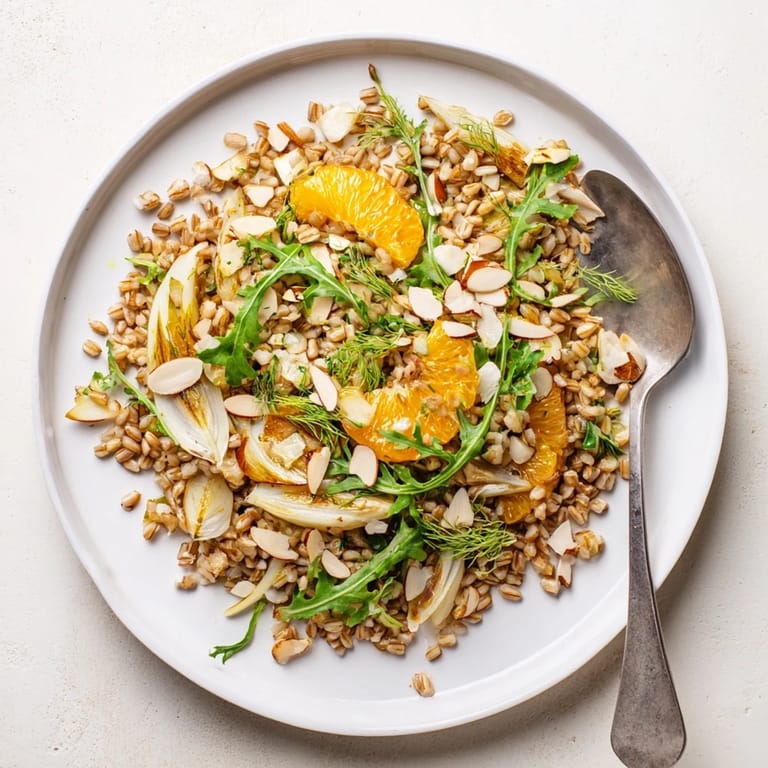 Save
Save This salad became my desk lunch staple for weeks after I first made it—something about having something this vibrant and satisfying waiting for me made the whole work week feel more manageable. My coworker actually asked for the recipe after seeing it on my desk three days in a row, which is basically the highest compliment a workplace lunch can receive.
Making It Your Own
I've learned that the basic formula—chewy grain, crisp vegetable, bright citrus, crunchy nuts—works with countless substitutions. Barley or wheat berries make excellent alternatives to farro, and sometimes I swap the almonds for pistachios or walnuts depending what's in my pantry. The key is keeping that balance of textures and flavors intact.
Serving Suggestions
This salad shines alongside grilled fish or roasted chicken, but it's substantial enough to stand alone as a light main course. I love serving it on a large platter for dinner parties, watching guests go back for seconds as they realize how many layers of flavor are hiding in what looks like a simple salad. It's become my go-to contribution to any gathering where I want to bring something that feels impressive but doesn't require last-minute fussing.
Make-Ahead Wisdom
The farro and dressing can both be made up to three days ahead and stored separately in the refrigerator. I actually prefer assembling the salad a few hours before serving—the fennel softens slightly, the oranges release more juice, and all the flavors get to know each other in ways that feel almost communal. Just hold off on adding the almonds and arugula until the last minute so they stay fresh and crisp.
- Add the almonds right before serving so they stay crunchy
- If making ahead, taste and adjust seasoning before serving as cold food needs more salt
- This salad travels beautifully but pack the dressing separately if taking it to go
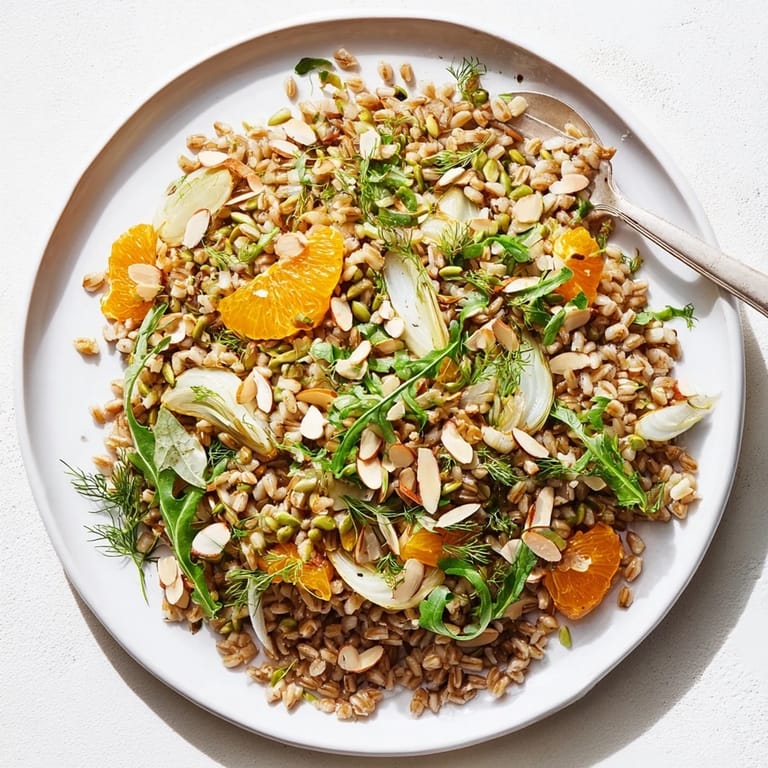 Save
Save There's something deeply satisfying about a salad that feels complete on its own, no side dish needed, no wishing you'd added something else. This farro salad is exactly that—bright, substantial, and perfectly balanced.
Recipe Guide
- → Is farro gluten-free?
Traditional farro contains gluten since it's a wheat product. For a gluten-free alternative, substitute with quinoa, buckwheat, or certified gluten-free grains while maintaining the same cooking method.
- → Can I make this ahead?
Absolutely. Prepare the farro up to 2 days in advance and store separately from the dressing. Combine everything just before serving to maintain the crisp texture of vegetables and nuts.
- → What can I add for protein?
Grilled chicken breast, chickpeas, white beans, or crumbled feta cheese work wonderfully. For a vegan protein boost, consider adding hemp seeds or cubed tofu.
- → How do I know when farro is cooked?
Farro should be tender but still maintain a pleasant chewy texture, similar to al dente pasta. Taste test after 25 minutes of simmering—it should be soft but not mushy.
- → Can I use different citrus fruits?
Blood oranges add beautiful color, grapefruit provides a bittersweet note, and mandarins offer sweetness. Mix varieties for a complex citrus profile that brightens the entire dish.
- → Should I serve this warm or cold?
Both ways work beautifully. Slightly warm farro absorbs the vinaigrette better, while chilled versions offer a refreshing crunch during warmer months. Personal preference rules here.