 Save
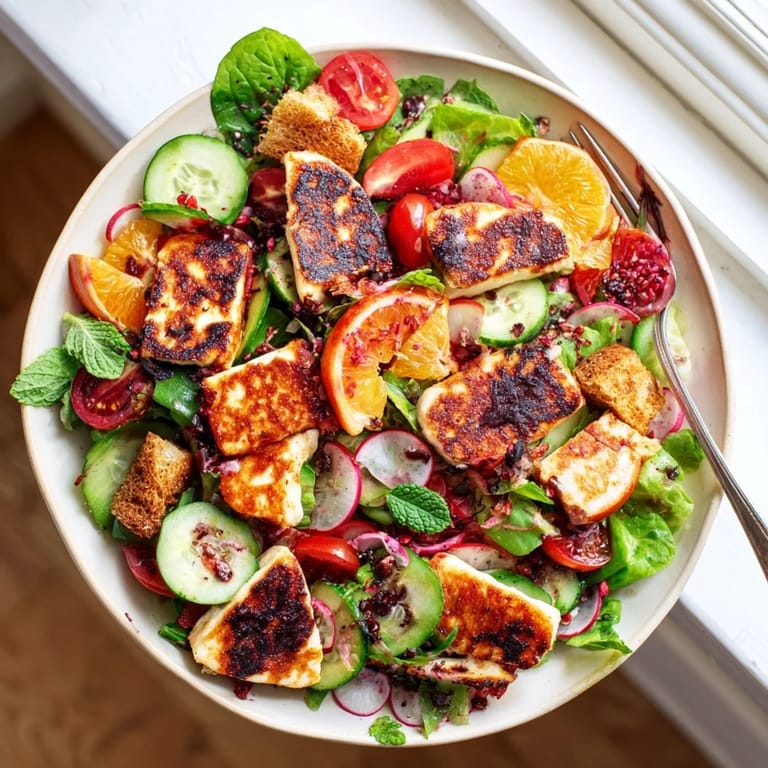
Save The first time I made this fattoush, my kitchen smelled like citrus and warm cheese, which turned out to be the most inviting combination imaginable. I had picked up blood oranges on impulse at the market, their ruby flesh peeking through the net bag, and half a halloumi block sitting in my fridge waiting for inspiration. Sometimes the best recipes happen when you let ingredients collide instead of following a rigid plan.
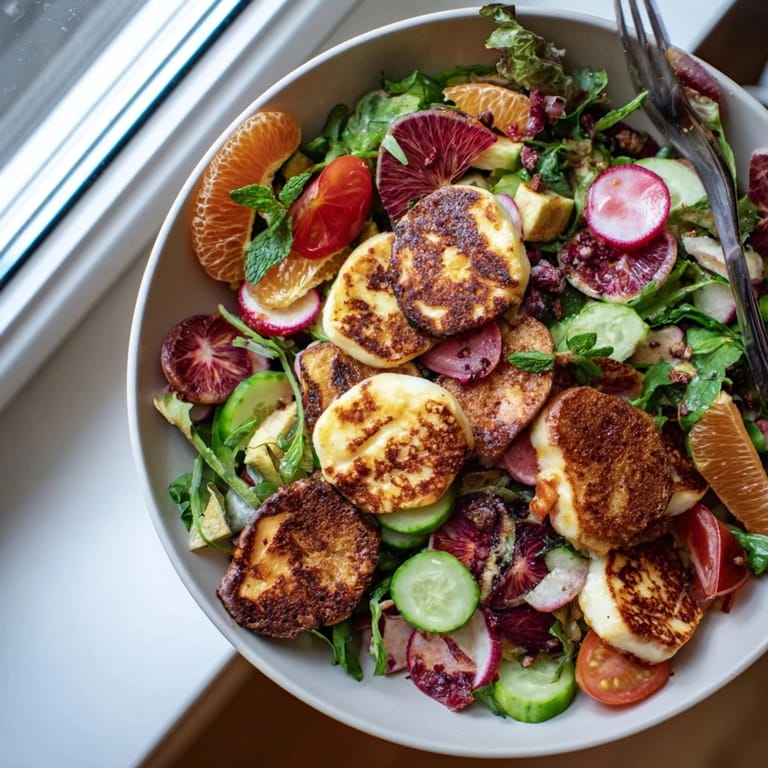
I served this at a small dinner gathering last winter when fresh produce felt uninspiring, and everyone literally stopped talking to take their first bite. The blood oranges looked so gorgeous against the greens that my friend took photos before anyone touched a fork. Sometimes food just makes a room feel more alive.
Ingredients
- 200 g halloumi cheese, sliced: Halloumi is the cheese that actually enjoys being fried, developing this gorgeous golden crust while staying creamy inside. Slice it about half a centimeter thick so you get maximum surface area for that crispy exterior.
- 2 blood oranges, peeled and sliced into rounds: Blood oranges have this gorgeous ruby color and slightly berry flavor that regular oranges cannot match. Slice them into thin wheels so they are easy to eat and show off their stunning color.
- 200 g mixed salad greens: Use whatever looks fresh at the market. I love combining peppery arugula, crisp romaine, and plenty of fresh herbs like parsley and mint for that authentic Levantine flavor.
- 1/2 cucumber, sliced: English or Persian cucumbers work best because they have thinner skin and fewer seeds. Cut them into half moons for pretty little bites throughout the salad.
- 200 g cherry tomatoes, halved: Cherry tomatoes are sweeter and juicier than larger varieties, which means little bursts of freshness in every forkful. Look for ones that feel heavy for their size.
- 4 radishes, thinly sliced: Radishes add this perfect peppery crunch and beautiful pink color. Use a mandoline if you have one, or just slice them as thin as you can with a sharp knife.
- 1 small red onion, thinly sliced: Red onion brings mild sharpness that balances the rich cheese and sweet citrus. Soak the slices in cold water for 10 minutes if you find raw onion too intense.
- 2 thick slices sourdough bread, cut into cubes: Sourdough gives you croutons with incredible flavor and a sturdy crunch that will not turn to mush. Day old bread actually works better than fresh.
- 2 tbsp olive oil: This coats the bread for even baking and helps those croutons turn perfectly golden. Use your best olive oil here since the flavor really shines through.
- Pinch of sea salt: Just enough to season the croutons so they taste like something, not just toasted bread. Flake salt adds nice texture too.
- 3 tbsp extra virgin olive oil: The base of your vinaigrette. Good olive oil makes all the difference in dressing quality and mouthfeel.
- 1 tbsp fresh lemon juice: Bright acidity that wakes up all the vegetables and cuts through the rich halloumi. Squeeze it right before you make the dressing.
- 1 tbsp red wine vinegar: Adds a gentle tang and depth that lemon alone cannot provide. Apple cider vinegar works in a pinch too.
- 1 tsp ground sumac: This is the secret weapon that makes fattoush taste authentic. Sumac brings this wonderful citrusy tang and gorgeous pink color.
- 1 tsp pomegranate molasses: Thick, tart, and slightly sweet, this adds complexity you will taste but cannot quite put your finger on. Look for it in Middle Eastern markets or well stocked grocery stores.
- 1/2 tsp salt: Essential to balance all the flavors and make the vegetables taste like their best selves. Adjust to your taste preference.
- 1/4 tsp black pepper: Freshly cracked pepper adds a gentle warmth that complements the sumac beautifully.
- 1 tbsp olive oil: For frying the halloumi until golden and gorgeous. You want enough oil so the cheese sizzles happily without sticking.
Tired of Takeout? 🥡
Get 10 meals you can make faster than delivery arrives. Seriously.
One email. No spam. Unsubscribe anytime.
Instructions
- Bake the croutons:
- Preheat your oven to 180°C (350°F) and toss those sourdough cubes with 2 tablespoons olive oil and a pinch of salt until every piece is coated. Spread them in a single layer on a baking sheet and bake for 8 to 10 minutes, turning once halfway through, until they are golden and crisp all over.
- Whisk the dressing:
- In a small bowl, combine 3 tablespoons olive oil, lemon juice, red wine vinegar, sumac, pomegranate molasses, salt, and pepper. Whisk until completely emulsified and slightly thickened, then set aside to let the flavors meld.
- Fry the halloumi:
- Heat 1 tablespoon olive oil in a nonstick skillet over medium heat until it shimmers slightly. Add your halloumi slices and cook for 1 to 2 minutes per side until deeply golden brown and squeaky fresh. Transfer to a plate and keep warm.
- Assemble the base:
- In a large salad bowl, combine your mixed greens, cucumber, cherry tomatoes, radish slices, and red onion. Toss gently to distribute everything evenly.
- Add the stars:
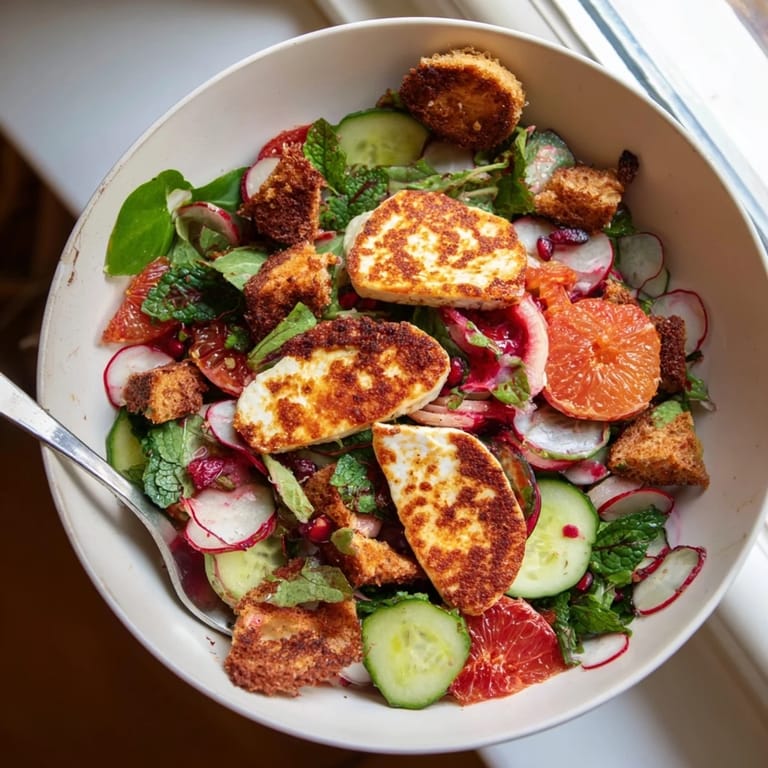
- Arrange those beautiful blood orange rounds and warm halloumi on top of the greens, then scatter your crispy sourdough croutons over everything. The contrast of warm cheese against cool salad is part of the magic.
- Finish and serve:
- Drizzle about half the dressing over the salad and toss gently so you do not break the halloumi or crush those precious croutons. Add more dressing if needed and serve immediately while the cheese is still warm.
 Save
Save This salad became my go to for impromptu dinners because it looks impressive but comes together in under half an hour. The colors alone make people feel cared for before they even take a bite.
Make Ahead Magic
You can prep all the vegetables and whisk the dressing up to a day in advance, just keep everything separate in the refrigerator. The croutons stay crispy for days in an airtight container, and halloumi fries up beautifully right before serving. This makes it perfect for entertaining when you want to minimize last minute stress.
Seasonal Swaps
In summer, add grilled stone fruit or swap blood oranges for regular oranges when they are not in season. Winter versions are gorgeous with pomegranate seeds and roasted root vegetables. The formula works as long as you keep the contrast of warm cheese against fresh vegetables and bright citrus.
Serving Suggestions
This makes a perfect light dinner on its own or serve it alongside grilled fish or roasted chicken for a more substantial meal. The flavors pair beautifully with Middle Eastern dishes like mujadara or simple roasted vegetables.
- Toast extra sourdough slices to serve alongside for soaking up any extra dressing
- Scatter fresh pomegranate seeds over the top for extra jewel like color and crunch
- Keep some croutons on the side for anyone who wants extra crunch
 Save
Save Every time I make this, someone asks for the recipe, which is always the best kind of feedback. Hope it brings some bright citrus warmth to your table too.
Recipe Guide
- → What makes fattoush different from regular salad?
Fattoush is a Levantine salad characterized by crispy fried or toasted bread pieces and a tangy sumac dressing. This version adds halloumi and blood oranges for extra protein and brightness.
- → Can I prepare the components ahead?
Yes. Bake croutons and whisk dressing up to 24 hours ahead. Fry halloumi just before serving for optimal texture. Keep vegetables separate and combine when ready to serve.
- → What can I use instead of halloumi?
Grilled tofu, vegan feta, or paneer work well for dairy-free options. Regular feta provides similar saltiness but won't achieve the same golden crust when pan-fried.
- → Why use blood oranges?
Blood oranges offer beautiful ruby color and sweeter, berry-like notes compared to regular oranges. If unavailable, navel oranges work but provide slightly less visual appeal.
- → How do I keep croutons crunchy?
Bake until completely golden and dry. Cool thoroughly before storing in an airtight container. Add to salad just before serving to maintain texture.
- → Is sumac essential for the dressing?
Sumac provides the signature tart, lemony flavor central to fattoush. You can substitute with additional lemon juice and a pinch of paprika for color, but authentic taste will differ.