 Save
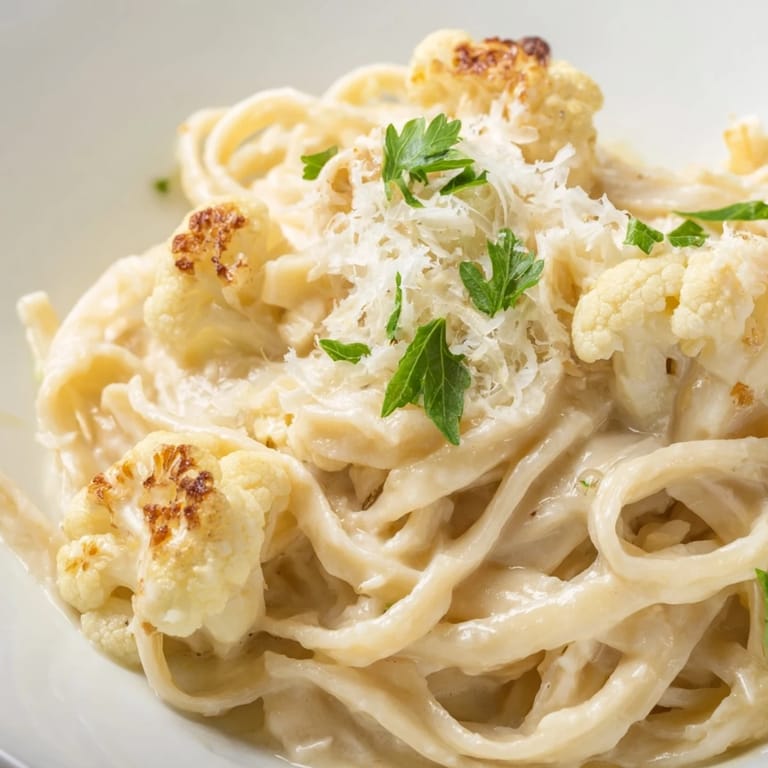
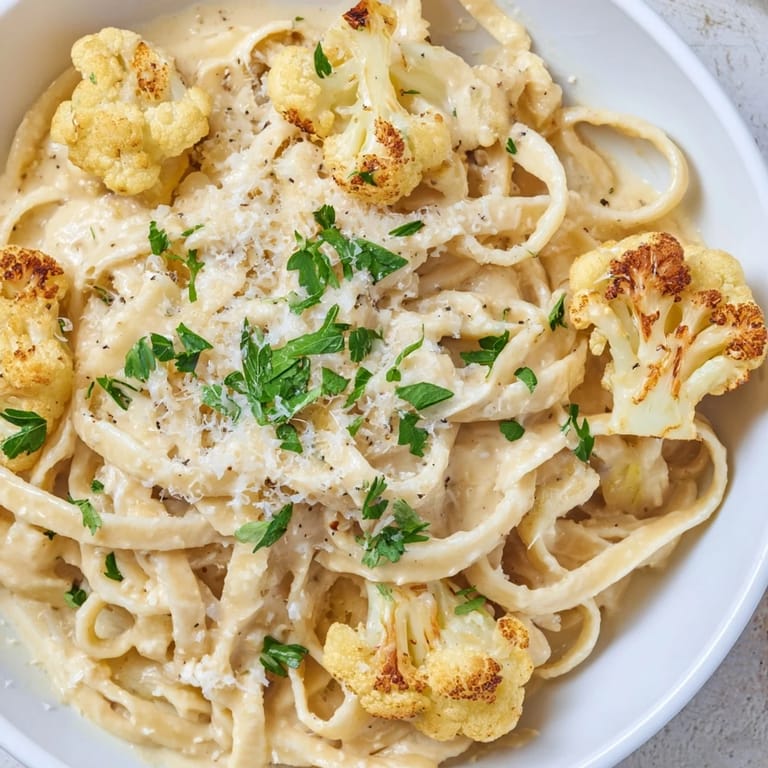
Save My neighbor handed me half a cauliflower over the fence one Saturday morning, insisting I try something new with it instead of just steaming. I wasn't sure what to do until I remembered a creamy pasta I'd had at a tiny cafe that tasted rich but somehow didn't leave me heavy. That afternoon, I roasted the cauliflower until it smelled nutty and sweet, blended it with Parmesan and garlic, and tossed it with fettuccine. It was silky, comforting, and surprisingly light.
I made this for my sister the night she came over exhausted from work, craving pasta but trying to eat lighter. She twirled the first forkful slowly, skeptical, then looked up surprised. By the time she finished her second helping, she was asking me to write down every step. That's when I knew this recipe had real staying power.
Ingredients
- Cauliflower: The star here, it becomes sweet and caramelized when roasted, creating a creamy base that mimics heavy cream without any guilt.
- Garlic: Roasting whole cloves mellows their sharpness into something buttery and almost sweet, blending invisibly into the sauce.
- Whole milk: Adds just enough richness to make the sauce silky, you can use less if you want it thicker or swap for unsweetened almond milk in a pinch.
- Parmesan cheese: The salty, nutty backbone of the sauce, use the real stuff and grate it fresh for the best melt and flavor.
- Unsalted butter: A little goes on the veggies before roasting, the rest goes into the blender to add body and a glossy finish.
- Fettuccine or pasta of choice: Wide noodles hold the sauce beautifully, but I've used penne and even gluten free spirals with great results.
- Ground nutmeg: Just a pinch warms the whole dish and adds a subtle depth people can't quite name but always notice.
- Salt and black pepper: Essential for bringing out the sweetness of the cauliflower and balancing the richness of the cheese.
- Fresh parsley and extra Parmesan: A bright finish that makes the plate look as good as it tastes.
Tired of Takeout? 🥡
Get 10 meals you can make faster than delivery arrives. Seriously.
One email. No spam. Unsubscribe anytime.
Instructions
- Get the oven ready:
- Preheat your oven to 425°F and line a baking sheet with parchment so nothing sticks. This high heat is what gives the cauliflower those golden, crispy edges.
- Prep and roast the vegetables:
- Toss the cauliflower florets and peeled garlic cloves with a tablespoon of butter, then spread them out in a single layer. Roast for 25 to 30 minutes, stirring halfway through, until everything is tender and caramelized.
- Cook the pasta:
- While the vegetables roast, boil your pasta in well salted water according to the package directions. Before draining, scoop out a cup of that starchy pasta water and set it aside.
- Blend the sauce:
- Add the roasted cauliflower and garlic to your blender along with the remaining butter, milk, Parmesan, nutmeg, salt, and pepper. Blend until completely smooth, adding a splash of reserved pasta water if it's too thick.
- Combine and heat:
- Pour the sauce into a large skillet over medium heat and let it warm until it just starts to simmer. Toss in the drained pasta and stir gently until every strand is coated.
- Serve it up:
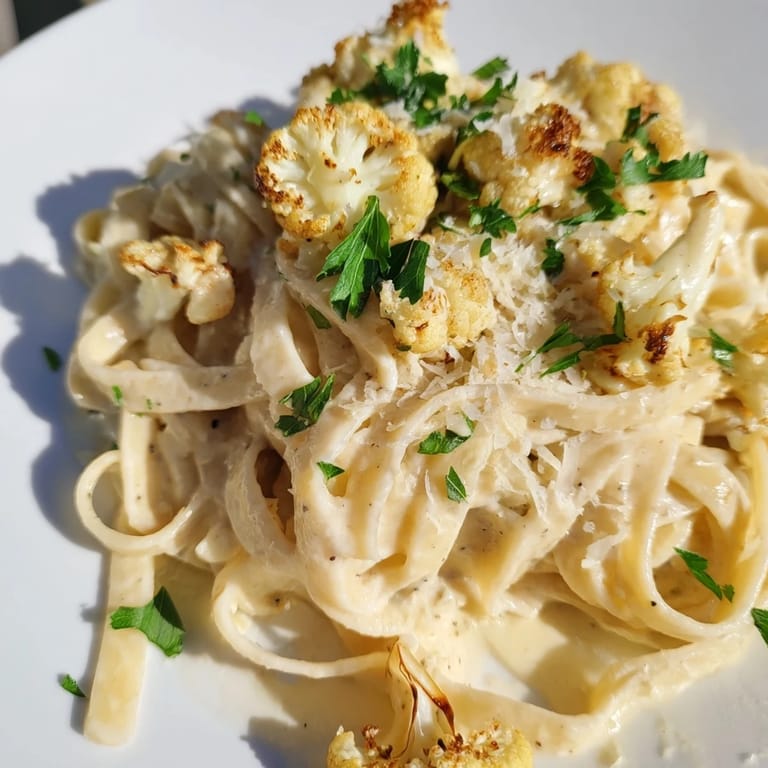
- Divide among bowls and finish with a sprinkle of fresh parsley and extra Parmesan. Serve it hot while the sauce is still glossy.
 Save
Save The first time I served this at a casual dinner, one of my friends scraped his plate clean and then asked if there was any sauce left in the pan. We stood in the kitchen passing the skillet back and forth with forks, laughing about how something this simple could taste this satisfying. It's become the dish I make when I want to feel like I'm treating people without spending hours in the kitchen.
Making It Your Own
A squeeze of fresh lemon juice stirred in at the end brightens the whole dish and cuts through the richness in a really lovely way. I've also added a pinch of red pepper flakes when I wanted a little heat, and it worked beautifully. If you want to make it dairy lighter, try unsweetened oat or cashew milk and a plant based Parmesan, the sauce won't be quite as rich but it's still creamy and delicious.
What to Serve Alongside
This pasta feels complete on its own, but a simple arugula salad with lemon vinaigrette adds a peppery contrast that balances the creaminess. Garlic bread is always a crowd pleaser, though honestly the dish is rich enough that you might not need it. A crisp white wine or sparkling water with a slice of lemon makes it feel like a real occasion.
Storing and Reheating
Leftovers keep well in the fridge for up to three days in an airtight container. The sauce will thicken as it cools, so when you reheat it on the stovetop, add a splash of milk or pasta water and stir gently over low heat until it loosens up. I don't recommend freezing this one, the texture of the sauce can get a little grainy once thawed.
- Reheat gently and add liquid a little at a time so the sauce stays smooth.
- If the pasta absorbed too much sauce overnight, toss it with a bit of butter before reheating.
- Garnish with fresh Parmesan and parsley again to make it feel freshly made.
 Save
Save This is the kind of recipe that makes you feel good about what you're eating without sacrificing any of the comfort you crave. I hope it becomes one of those dishes you turn to on busy weeknights and quiet weekends alike.
Recipe Guide
- → Can I make this ahead of time?
The sauce is best served fresh, but you can prepare components ahead. Roast the cauliflower and garlic up to 2 days prior, storing in the refrigerator. Blend the sauce just before serving for optimal creaminess and texture.
- → What pasta works best with this sauce?
Fettuccine is traditional and excellent for catching the creamy sauce. Pappardelle, tagliatelle, or even penne work wonderfully. Choose pasta with sufficient surface area to hold the sauce effectively.
- → How do I achieve the smoothest sauce?
Blend the roasted cauliflower thoroughly until completely smooth. Use the reserved pasta water to adjust consistency gradually. A high-powered blender produces the silkiest results compared to food processors.
- → Can I substitute the dairy ingredients?
Yes. Replace whole milk with unsweetened oat or almond milk for creaminess. Use dairy-free butter and nutritional yeast or cashew cream instead of Parmesan. The flavor profile shifts slightly but remains delicious.
- → What causes the sauce to break or separate?
Overheating causes separation. Keep the skillet on medium or medium-low heat, stirring constantly. If sauce becomes too thick, thin with reserved pasta water one tablespoon at a time rather than adding more liquid initially.
- → How should I store leftovers?
Store in an airtight container in the refrigerator for up to 3 days. Reheat gently over low heat, adding a splash of milk to restore creaminess. The sauce may thicken upon cooling; this is normal.