 Save
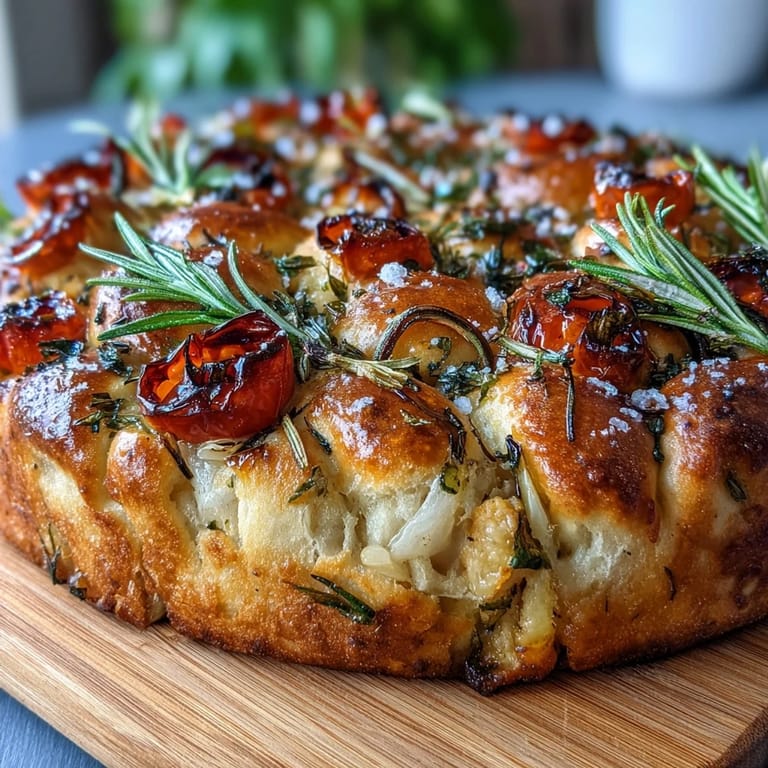
Save My sister called me in a panic two weeks before her baby shower, asking if I could bring something that looked as special as it tasted. I stood in my kitchen thinking about how bread could tell a story, and suddenly I pictured it—a canvas of vegetables arranged like a garden in bloom. That evening, I sketched flower patterns on scrap paper while my dough rose, and by the time I pulled it from the oven, golden and fragrant, I knew I'd found something worth repeating.
I'll never forget watching my niece's face when she saw the focaccia displayed on the dessert table—she pointed at the bell pepper petals and carrot ribbon stems like she'd discovered edible artwork. Her friends were passing slices around before I'd even finished cutting, and someone asked for the recipe before dessert was served. That's when I realized this bread had become more than just food; it was conversation, connection, and a little bit of garden magic on a plate.
Ingredients
- Bread flour (500g): Use quality bread flour with higher protein content so your dough develops elasticity and holds its structure when stretched thin without tearing.
- Instant yeast (2 tsp): Keep it fresh from the fridge and activate it properly with warm water to ensure the dough rises evenly and doubles in time.
- Lukewarm water (325 ml): Test it on your inner wrist—it should feel warm but never hot, or you'll kill the yeast before it starts working.
- Extra-virgin olive oil (60 ml plus more for brushing): This is where flavor lives; don't skimp on quality because the oil coats every crumb and becomes part of the bread's character.
- Red and yellow bell peppers: Slice them paper-thin so they soften slightly during baking and become almost silky while maintaining their bright color.
- Cherry tomatoes: Halving them prevents them from releasing too much liquid into the dough, which would make it soggy.
- Zucchini and carrot ribbons: Use a mandoline or vegetable peeler to create thin, flexible slices that bend and layer beautifully without crinkling.
- Asparagus spears: Cutting them lengthwise creates elegant stems and prevents them from rolling around while you're arranging the design.
- Fresh herbs (rosemary, thyme, basil, parsley, chives, dill): Choose a mix so you have delicate leaves for detail work and sturdy stems to anchor your floral arrangements.
- Flaky sea salt: Sprinkle it right before baking so it stays crispy and doesn't dissolve into the oil.
Tired of Takeout? 🥡
Get 10 meals you can make faster than delivery arrives. Seriously.
One email. No spam. Unsubscribe anytime.
Instructions
- Mix your dough base:
- Combine flour, yeast, sugar, and salt in a large bowl, then create a well and pour in your water and oil. Stir until everything comes together in a shaggy, sticky mass—it should look rough and unpolished at this stage.
- Knead until silky:
- Turn it onto a lightly floured surface and work it for 8 to 10 minutes, folding it back over itself until it becomes smooth and elastic and springs back when you poke it. If you're using a stand mixer, the dough hook will do this in 5 to 7 minutes while you prep your vegetables.
- First rise in warmth:
- Oil a bowl lightly, nestle your dough inside, cover it with a damp cloth, and let it sit in a warm spot (a turned-off oven with the light on works beautifully) until it's roughly doubled in size, about 1 to 2 hours. You'll know it's ready when a gentle poke leaves a slight indent that doesn't bounce back immediately.
- Prep your canvas:
- While the dough rises, preheat your oven to 220°C and line a baking sheet with parchment paper drizzled with olive oil. Slice all your vegetables thin and uniform so they cook evenly and layer neatly into your design.
- Stretch and dimple:
- Stretch and dimple:
- Punch down your risen dough to release the air, then transfer it to the oiled baking sheet. Gently stretch and press it to fill the pan, using your fingertips to create little dimples all over the surface—these pockets trap oil and herbs and become crispy during baking.
- Brush with liquid gold:
- Generously brush the entire surface with olive oil so every part will turn golden and the dough stays moist while it bakes.
- Create your garden:
- This is where patience meets creativity—arrange your vegetables and herbs into flower and leaf patterns, working from the center outward or following a sketch if it helps. Think of bell pepper rings as petals, asparagus as stems, carrot ribbons as curled petals, and fresh herb leaves as foliage; edible flowers become the fine details that make people gasp.
- Season and rest:
- Sprinkle flaky sea salt and freshly ground black pepper across the entire surface, then let it rest uncovered for 10 to 15 minutes so the dough can relax and the vegetables begin to release their moisture.
- Bake until golden:
- Slide it into your preheated oven and bake for 22 to 25 minutes, rotating the pan halfway through so the edges brown evenly. You'll know it's perfect when the surface is deep golden brown and the bottom sounds hollow when you tap it.
- Cool and serve:
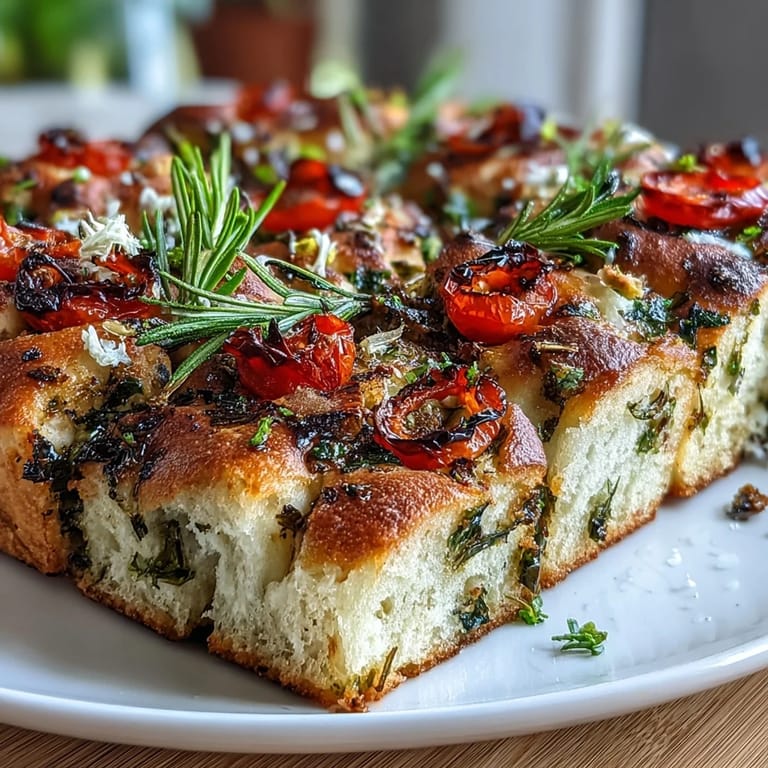
- Let it rest on a wire rack for 10 minutes so the crumb sets, then slice it into generous squares and serve while it's still warm enough to taste the herbal oils.
 Save
Save There's a moment, about halfway through baking, when the kitchen fills with the smell of roasted vegetables and warm olive oil, and you know you've made something worth the effort. I caught myself hovering at the oven window like a child, watching the dough rise and the peppers soften, and I realized this recipe had become a meditation as much as a meal.
Vegetable Selection and Prep
The magic of this focaccia lies in choosing vegetables that are not only colorful but also cook at roughly the same rate. Thinner slices mean they soften and caramelize without turning to mush, while thicker cuts will still be crunchy in the center. I learned this the hard way when I used thick zucchini rounds and they stayed almost raw while the bell peppers melted into sweet jam. Now I use a mandoline for everything—it's faster, more consistent, and creates those delicate, beautiful slices that make the whole thing look intentional.
Infusing Your Oil for Extra Magic
One evening I whisked lemon zest into my brushing oil, and the brightness that came through in the baked focaccia was like a revelation. The acid from the lemon cuts through the richness of the olive oil and makes each vegetable taste fresher and more vibrant. You can also steep a few garlic cloves in warm oil for an hour before using it, or scatter fresh garlic slivers across the dough just before the vegetable arrangement—they'll turn sweet and mellow in the oven and add another layer of flavor that guests always ask about.
Storage and Serving Suggestions
This focaccia is at its absolute best the same day you make it, while the vegetables are still slightly crisp and the dough is tender and fragrant. If you have leftovers (and you might, since the look often tempts people to take more than they eat), wrap them gently in foil and reheat in a 180°C oven for about 10 minutes until they're warm through and the crust re-crisps slightly. It pairs beautifully with sparkling lemonade at a baby shower or with a crisp white wine at a spring dinner party, and it's sturdy enough to pack into a picnic basket if you're bringing it somewhere special.
- Slice it into generous squares rather than thin strips so people feel like they're getting a substantial piece of art.
- If you're making this ahead for an event, arrange the vegetables just before baking so they don't weep moisture onto the dough.
- Leftovers freeze reasonably well wrapped tightly in plastic, though the vegetables soften further upon thawing.
 Save
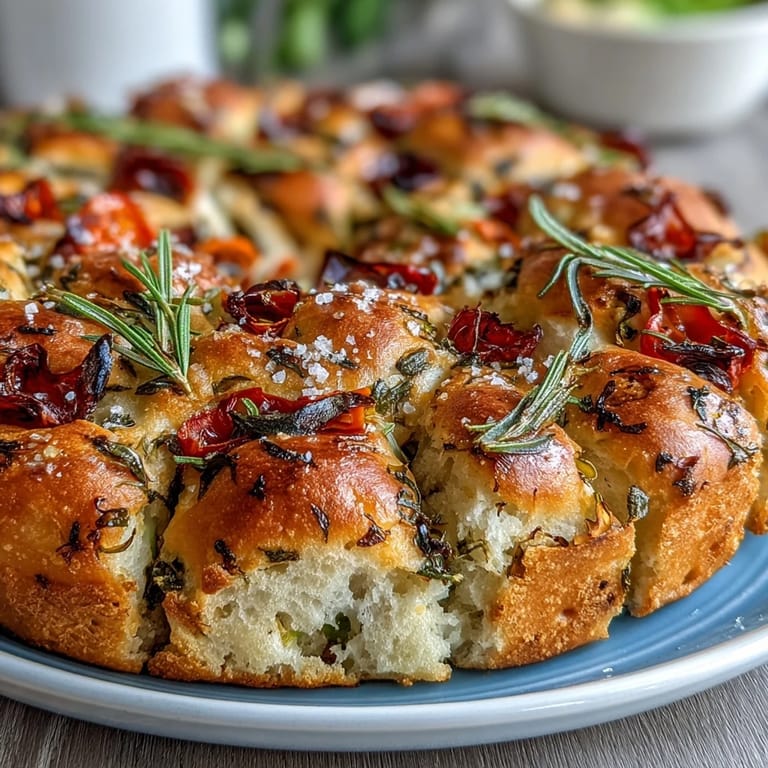
Save This focaccia taught me that home cooking doesn't have to choose between delicious and beautiful—the best dishes do both, and do them with grace. Every time you make it, the garden you create will be different, shaped by what's fresh and what moves you that day.
Recipe Guide
- → How do I shape the focaccia to get the floral design?
Use thinly sliced vegetables such as bell peppers cut into rings for flower petals, cherry tomatoes as centers, and asparagus or herbs for stems. Arrange them artistically on the dough before baking.
- → Can I prepare the dough in advance?
The dough can be mixed ahead and refrigerated after the first rise for up to 24 hours. Allow it to come back to room temperature before shaping and decorating.
- → What herbs work best for the topping?
Fresh rosemary, thyme, basil, parsley, chives, and dill complement the vegetables well and add fragrant layers to the focaccia.
- → Is it necessary to use edible flowers for decoration?
Edible flowers are optional but add a lovely visual touch and subtle flavors. You can substitute with additional herbs or vegetables if preferred.
- → How should I store leftovers?
Store cooled focaccia wrapped tightly in plastic wrap or an airtight container at room temperature for up to 2 days. Reheat briefly in the oven to restore crispness.