 Save
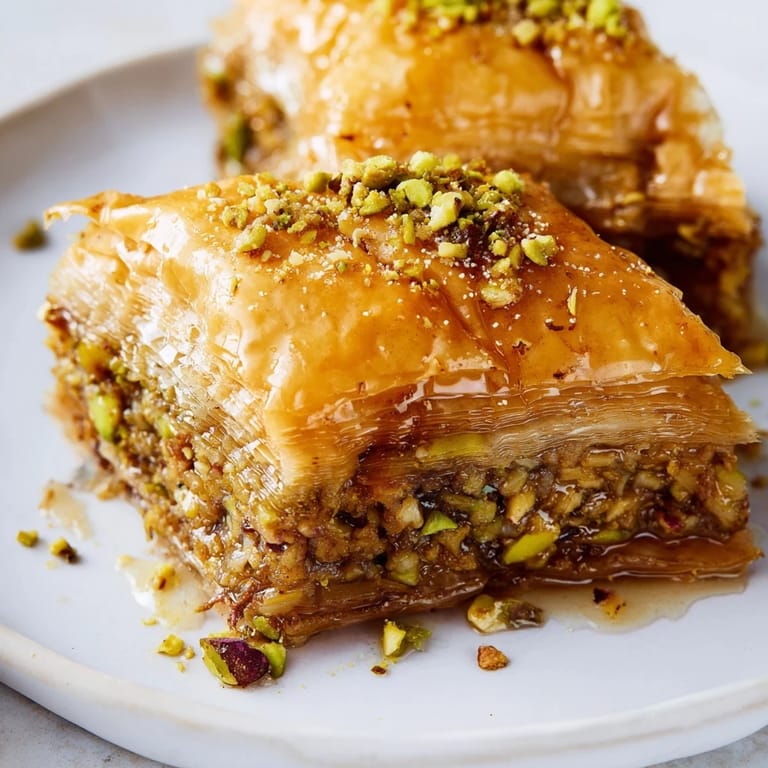
Save My aunt's kitchen in Istanbul smelled like melting butter and toasted hazelnuts the first time she showed me how to make baklava, and I watched her hands move with such certainty through those delicate phyllo sheets that I thought it must be impossible to learn. Years later, standing in my own kitchen layering crispy dough with a mixture of pistachios and hazelnuts, I realized it wasn't magic—it was just patience, good butter, and knowing exactly when to pour that hot honey syrup onto the hot pastry so it soaks in like it's meant to be there. This baklava became my quiet ritual, the dessert I make when I want to slow down and remember that some things really do taste better when you take your time.
I made this for a dinner party last winter, nervous that the phyllo would tear or the honey wouldn't set right, but my hands remembered what my aunt had taught me, and when I pulled the pan from the oven, golden and crackling, my friends went quiet in that way that tells you something is actually special. One of them asked for the recipe, and I realized I'd never written it down—I just knew it in my bones by then.
Ingredients
- Phyllo dough: Thawed phyllo is non-negotiable; frozen sheets will shatter and fight you the whole way, so give them time to reach room temperature.
- Unsalted butter: Use real butter, melted and still warm when you're brushing, because cold butter won't bind the layers the way they need to be bound.
- Hazelnuts: Finely chopped but not powdered—you want little pieces that crunch between your teeth, not disappear into dust.
- Pistachios: The green ones matter here, not just for color but for that subtle earthiness that makes people wonder what makes this different from other baklava.
- Granulated sugar: In both the filling and syrup, sweetening from the inside and the outside.
- Ground cinnamon: Optional but honestly not really—it whispers warmth into every bite.
- Honey: Use honey you actually like because it's the final voice in this dessert.
- Lemon juice: Just enough to keep the honey from being cloying, a trick that changed everything for me.
Tired of Takeout? 🥡
Get 10 meals you can make faster than delivery arrives. Seriously.
One email. No spam. Unsubscribe anytime.
Instructions
- Heat your pan and butter it generously:
- Get your oven to 180°C and brush that baking pan with butter like you're protecting it—this is your foundation, and a dry pan will betray you.
- Build your phyllo base:
- Lay down 4 sheets of phyllo, brushing each one as you go so they stick together without any gaps trying to open up while they bake.
- Mix your nut treasure:
- Combine hazelnuts, pistachios, sugar, and cinnamon in a bowl, tossing everything together so the sweet and spice distribute evenly.
- Layer with intention:
- Spread one-third of the nut mixture over your phyllo base, then repeat with another layer of 4 buttered sheets, another third of nuts, then finish with the last 4 phyllo sheets on top.
- Cut before baking:
- Using a sharp knife, score the whole thing into diamonds or squares now, while the phyllo is still pliable—trying to cut it after baking will shatter it into regret.
- Bake until golden:
- 35 to 40 minutes in the oven, watching until the top turns the color of honey itself, crisp and burnished and ready.
- Make your syrup while it bakes:
- Combine water, honey, sugar, and lemon juice in a saucepan, bring it to a boil, then let it simmer for 10 minutes so the flavors marry together.
- The crucial moment:
- The second the baklava comes out of the oven, pour that hot syrup over the hot pastry—this is when the magic happens, when the layers drink in the sweetness and everything becomes one.
- Cool with patience:
- Let it cool completely before you even think about lifting a piece, because rushing this will leave you with a mess and a lesson.
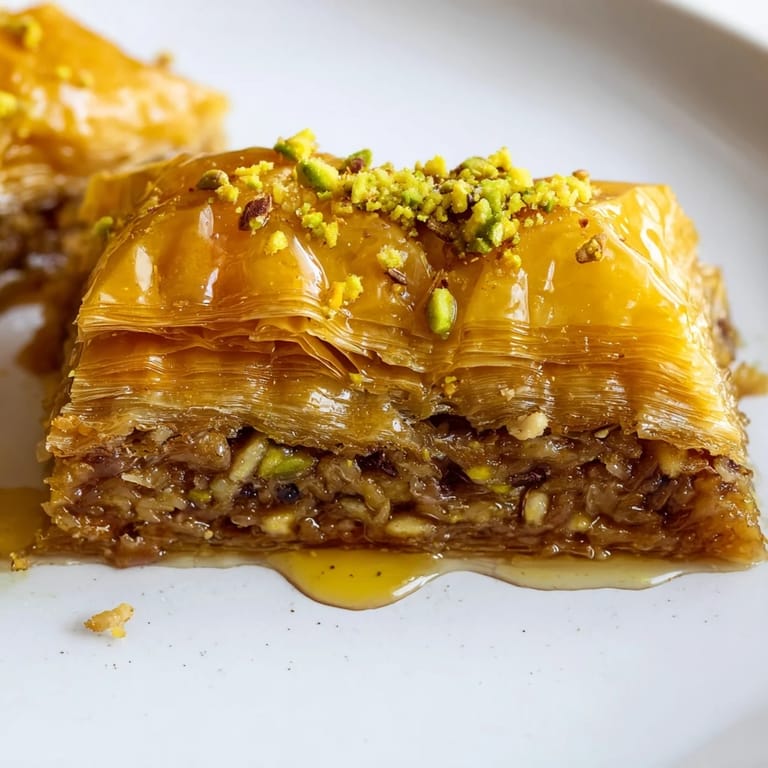 Save
Save My sister called me once to say she'd made this baklava for her daughter's school bake sale, and a teacher had asked if she could make it every week because the kids were fighting over the pieces. That made me happier than any compliment about my own cooking ever could—this dessert had become hers, and now it was becoming theirs.
The Phyllo Philosophy
Phyllo dough has a reputation for being temperamental, but I think it's just honest—it shows you immediately when you're not paying attention, when you're rushing, when you've forgotten to butter a layer. This isn't a flaw; it's feedback. Work with it slowly, brush every surface, keep what you're not using covered, and phyllo becomes cooperative in a way that's almost surprising. I've learned to find a rhythm with it, the same rhythm my aunt used, the same one that makes your hands remember what your mind might forget.
Storing and Sharing
Baklava actually gets better over a day or two as the flavors settle and mellow into something deeper. Store it in an airtight container at room temperature, and it will keep for up to five days, though it rarely lasts that long in a house where people know what's in the cupboard. I've learned that baklava is meant to be shared—it's too perfect, too elegant, to keep to yourself.
Small Variations That Matter
If hazelnuts aren't calling to you, walnuts work beautifully and bring their own deeper richness to the filling. Some people toast the nuts first, which adds another layer of flavor if you have the time and the patience. The cinnamon is optional in the ingredient list but not really in the spirit of the thing—it's what makes this taste like Istanbul instead of anywhere else.
- Chill the finished baklava before cutting if you want cleaner pieces, though the slightly rough edges taste just as good.
- Make the honey syrup while the baklava bakes so everything comes together hot and ready at the same moment.
- If you're doubling the recipe, just keep everything proportional and give yourself enough oven space so the layers can bake evenly.
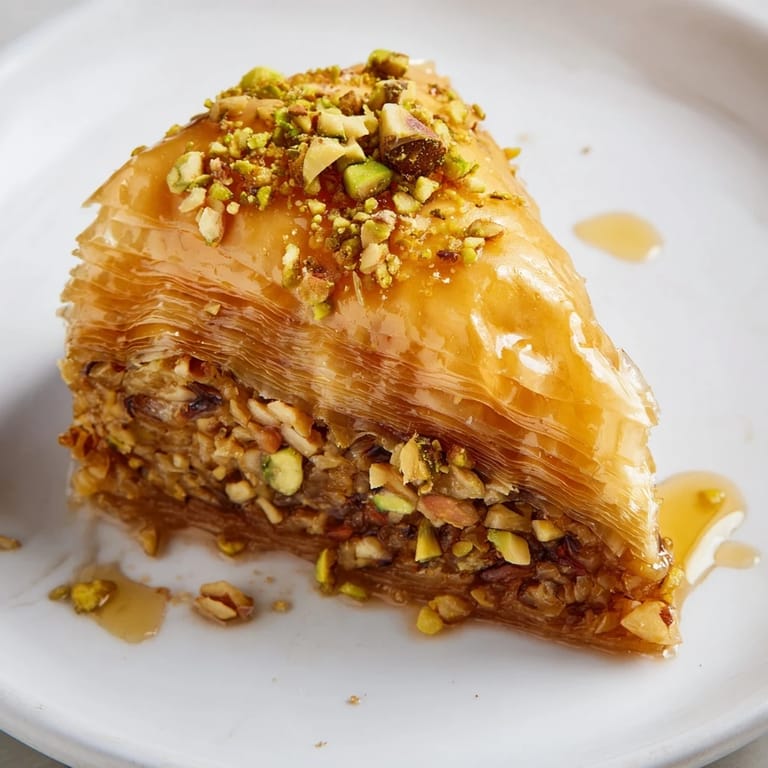 Save
Save Making baklava is like having a conversation with someone who knows you well—there's a rhythm to it, a trust that builds with each layer. I think of my aunt every time I make it, but I also think of everyone who will eat it, and how this small golden rectangle of pastry and nuts and honey might become a memory for them too.
Recipe Guide
- → What type of nuts are used in this baklava?
Hazelnuts and pistachios are finely chopped and layered in the pastry to provide texture and flavor.
- → How is the honey syrup prepared?
The syrup is made by boiling water, honey, sugar, and lemon juice together, then simmering to thicken before pouring over the baked pastry.
- → Why is the pastry brushed with butter?
Brushing phyllo sheets with melted butter ensures crispiness and a golden finish when baked.
- → Can the nuts be substituted?
Yes, walnuts can replace hazelnuts for a different nutty flavor without altering the texture significantly.
- → How should the baklava be stored?
Store the cooled baklava in an airtight container at room temperature for up to five days to maintain freshness.