 Save
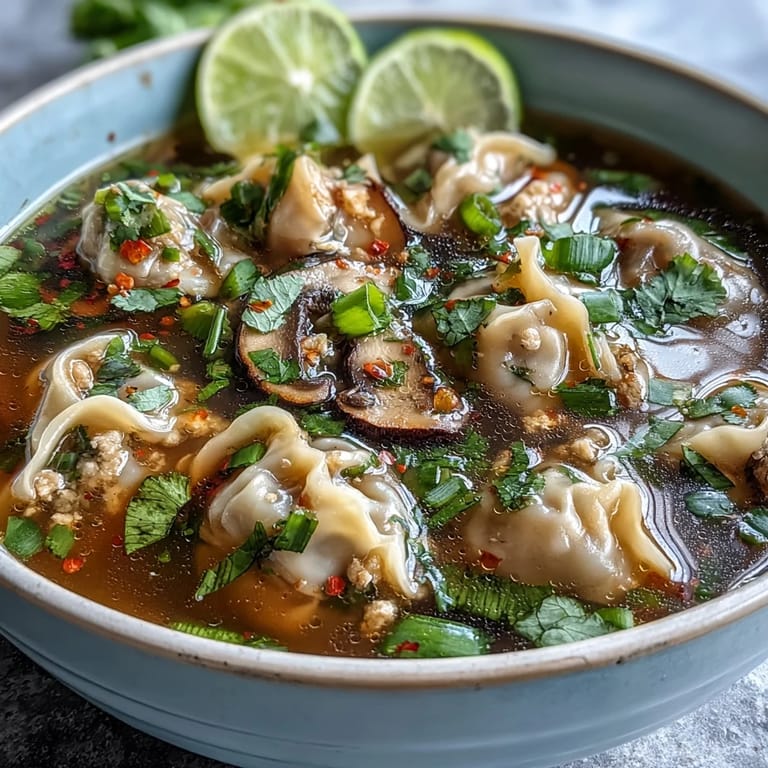
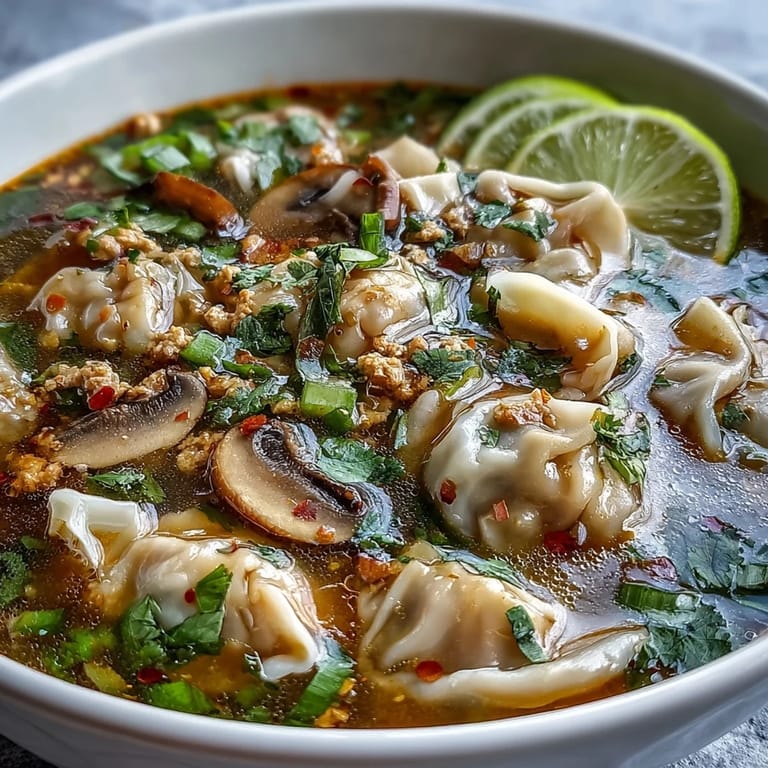
Save The first time I tasted tom yum wonton soup wasn't at a restaurant—it was in my friend Maya's tiny apartment kitchen on a rainy Tuesday when she insisted on teaching me how to fold wontons by hand. She'd grown up eating her grandmother's Chinese dumplings and had fallen in love with Thai tom yum during a backpacking trip through Bangkok, so naturally she decided to merge them into one bowl. Watching the steam rise from that pot, seeing the wontons bob to the surface like little treasures, I understood why she'd spent two hours perfecting this recipe. The broth was impossibly fragrant, hitting that perfect balance of hot, sour, salty, and sweet that makes you want to sip it straight from the spoon.
I made this soup for my book club last winter, and something magical happened—everyone went silent for the first minute, just focused on tasting. Then the conversation shifted from whatever we were supposed to discuss to everyone asking for the recipe, sharing their own wonton memories, comparing notes on chili preferences. My neighbor mentioned she'd never had fresh ginger before, and that sparked this whole tangent about growing herbs on windowsills. Food has this quiet power to connect people, and this soup seemed to unlock something in the room that evening.
Ingredients
- Ground pork or chicken (200 g): This is your wonton's backbone—the protein that makes the filling substantial and satisfying; I prefer pork because it stays juicy and the fat content helps bind everything together beautifully.
- Soy sauce (1 tbsp): The umami anchor that makes people close their eyes when they bite into a wonton; don't skip it, it's what your taste buds have been craving.
- Sesame oil (1 tsp): Just a small amount creates that toasted, fragrant note that separates homemade wontons from frozen ones; a little goes a long way here.
- Ginger and garlic (1 tsp grated, 1 clove minced): These warm spices wake up your filling and make it sing; I always use fresh and never the jarred stuff.
- Spring onion (1, finely chopped): The brightness that keeps the wonton filling from feeling heavy; it's a small detail that changes everything.
- White pepper (1/4 tsp): More subtle than black pepper, it adds heat without competing with the other flavors in the broth.
- Wonton wrappers (20): These delicate squares come in the refrigerated section and are worth seeking out because they seal properly and cook in minutes without becoming chewy.
- Chicken stock (1.5 liters, low-sodium): The canvas for your tom yum—low-sodium means you control the salt and can taste everything else clearly.
- Lemongrass (3 stalks, trimmed and smashed): This is the soul of tom yum, releasing its bright, lemony oils into the broth; smashing it with the side of your knife helps it infuse faster.
- Kaffir lime leaves (4, torn): Citrusy and floral at once, they're what transforms regular broth into something aromatic and Thai; tearing them helps them release their oils.
- Galangal (4 slices): A cousin to ginger but earthier and more complex; if you can't find it, regular ginger works but the dish loses some of its distinctive character.
- Red chilies (2, sliced): The heat that builds gradually rather than hitting all at once; leave the seeds in if you like serious spice, remove them for gentler warmth.
- Mushrooms (200 g, sliced): Shiitake adds more flavor depth than button mushrooms, but either works; they absorb the broth beautifully and add substance.
- Tomatoes (2 medium, quartered): They break down and release acidity that brightens everything; fresh ones matter because canned can be too intense.
- Fish sauce (3 tbsp): I know it smells challenging in the bottle, but trust me—it's the secret ingredient that makes people ask what that incredible umami note is; it doesn't taste fishy once diluted in the broth.
- Lime juice (2 tbsp, plus more to taste): Fresh lime is non-negotiable here; bottled never captures that sharp, living quality that makes tom yum what it is.
- Sugar (1 tsp): Just a pinch to balance the heat and sourness; it shouldn't taste sweet, just rounded.
- Baby bok choy or spinach (100 g): These wilt in seconds and add color and a gentle earthiness that complements the spice.
- Shrimp (100 g peeled, optional): If you include them, get good quality ones because they cook so fast that mediocre shrimp won't improve in the broth.
- Fresh coriander (for garnish): The herbal finish that ties everything together; it should be the last thing you add so it stays bright.
- Spring onions (sliced, for garnish): Their sharpness cuts through the richness and adds textural contrast.
- Lime wedges (for serving): Let people adjust the tang to their preference; everyone's tolerance for sourness is different.
- Chili oil (optional): This is for people who want to push the heat further; it's optional but honestly transforms the experience for chili lovers.
Tired of Takeout? 🥡
Get 10 meals you can make faster than delivery arrives. Seriously.
One email. No spam. Unsubscribe anytime.
Instructions
- Make Your Wonton Filling:
- Combine your ground pork with soy sauce, sesame oil, minced ginger, garlic, and spring onion in a bowl—the mixture should smell incredible and feel just moist enough to hold together. This filling is forgiving; if you want it more tender, add a teaspoon of water; if it feels too loose, a pinch more white pepper helps.
- Wrap the Wontons:
- Place about a teaspoon of filling in the center of each wrapper (you want them full but not bursting), wet the edges lightly with your finger, then fold and seal—I prefer the triangle fold because it's quicker and looks less fussy. Keep finished wontons under a damp cloth so they don't dry out while you're folding the rest.
- Infuse Your Broth:
- Bring chicken stock to a gentle simmer and immediately add your lemongrass (give it a good smash first to crack the stalks), torn kaffir lime leaves, galangal slices, and sliced red chilies—let this bubble away for about ten minutes so all those fragrant aromatics really marry into the liquid. Your kitchen should smell incredible by now.
- Build the Broth Layers:
- Add sliced mushrooms and tomato quarters, then simmer for about five minutes until they soften slightly and release their essence into the broth. This is where the magic happens—the vegetables break down just enough to add body without becoming mushy.
- Season and Adjust:
- Fish sauce, lime juice, and sugar go in now—stir gently and taste carefully, because this is your chance to dial in the balance. Add more lime if you want tanginess, more fish sauce for umami depth, or more sugar if the heat and sourness feel too aggressive.
- Cook the Wontons and Shrimp:
- Gently lower your wontons into the simmering broth (they should sink at first, then float to the surface in about four to five minutes when they're done), and add shrimp if you're using them—they'll turn pink almost immediately. Don't leave them in longer than that or they'll toughen up.
- Finish with Greens:
- Toss in your bok choy or spinach and let it wilt for just one minute—you want it tender but still with a slight texture, not completely disintegrated into the broth.
- Serve and Garnish:
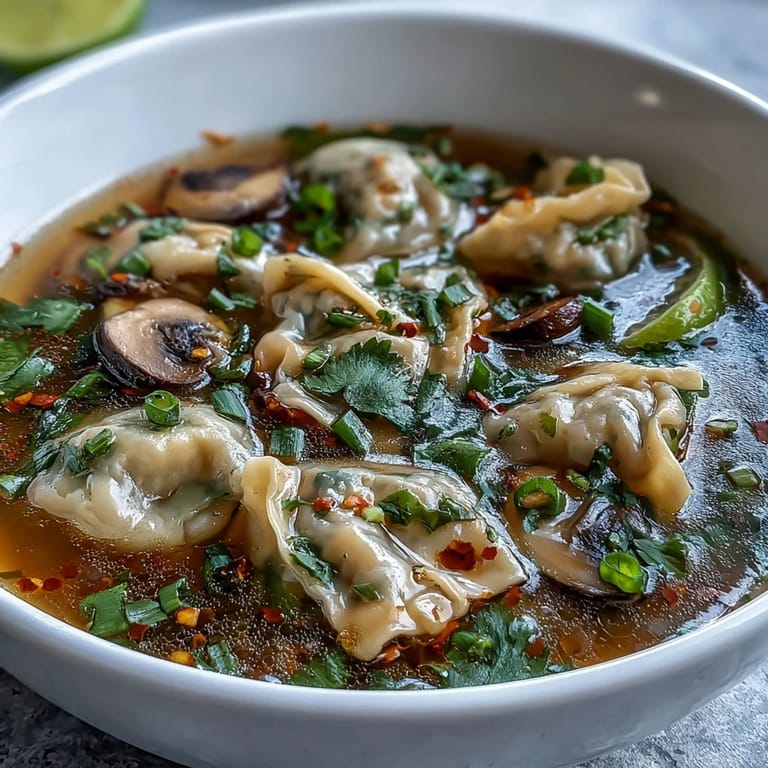
- Ladle soup into bowls with equal wontons and broth, then top with fresh coriander, sliced spring onions, a lime wedge on the side, and a drizzle of chili oil if anyone wants extra heat. Let people finish their own bowls with lime and heat so everyone gets exactly what they want.
 Save
Save My neighbor came over one evening while I was making this soup, and her teenage daughter wandered into the kitchen drawn by the smell. She'd been having a rough day at school, but watching her face light up when she tasted that first spoonful—the surprise of hot and sour and aromatic all at once—reminded me that food is sometimes the only language that translates feelings properly. She asked me to teach her how to fold wontons after that, and now she makes them herself.
The Wonton Folding Meditation
Rolling and folding wontons is repetitive work, the kind that lets your mind wander while your hands develop a rhythm. I used to think it was tedious until someone told me to stop treating it like a chore and start treating it like meditation—watching each wrapper transform, feeling the slight resistance of the dough, letting your fingers learn the motion until you don't have to think anymore. There's something deeply satisfying about making something with your hands that's going to nourish someone, even if that someone is just you on a quiet evening.
Why Fresh Aromatics Actually Transform This Dish
The difference between this soup made with fresh lemongrass and one made with bottled lemongrass juice is staggering—it's the difference between smelling a flower and reading a description of one. When you smash fresh lemongrass stalks, you're releasing volatile oils that can't be preserved in a bottle; they're alive and bright and fleeting, and that's exactly what you want in your broth. I learned this the hard way by trying to save time once, and the resulting soup tasted flat despite having all the right ingredients.
Temperature, Timing, and Texture
One detail that changed my soup completely was stopping the infusion at exactly ten minutes instead of letting it go longer—I'd assumed more time would mean more flavor, but I realized the delicate aromatics were actually breaking down and becoming bitter and harsh. Now I use a timer and remove those fragrant solids exactly when I said I would, which means my broth stays bright and balanced rather than muddled. Also, serving the soup immediately in heated bowls makes such a difference because the temperature helps all those flavors open up and sing together.
- Always preheat your serving bowls with hot water so the temperature stays stable from kitchen to mouth.
- If you're making this ahead, store the broth and wontons separately and reheat gently just before serving.
- Taste everything just before serving because flavors shift slightly once things cool even a little bit.
 Save
Save This soup has become my answer to almost everything—a bad day, a boring Tuesday, when someone's coming over and I want to impress them without spending hours. It asks so little and gives so much.
Recipe Guide
- → Can I make this soup vegetarian?
Yes, substitute ground pork with crumbled tofu, use vegetable stock instead of chicken stock, and replace fish sauce with soy sauce or tamari. Omit shrimp or add extra vegetables for protein.
- → How spicy is this soup?
The heat level is adjustable. Start with 2 sliced chilies for medium spice, or reduce to 1 for milder flavor. You can always add more fresh chilies or chili oil as garnish to increase heat.
- → Can I freeze leftover wontons?
Absolutely. Arrange uncooked wontons on a baking sheet, freeze until solid, then transfer to a freezer bag. They'll keep for up to 3 months. Cook directly from frozen, adding 1-2 minutes to boiling time.
- → What can I serve with this soup?
Steamed jasmine rice makes an excellent accompaniment for a heartier meal. You could also serve with crispy spring rolls or a simple Asian-style cucumber salad to balance the spicy broth.
- → How do I store leftovers?
Store broth and wontons separately in airtight containers in the refrigerator for up to 3 days. Reheat broth gently and add wontons just before serving to prevent them from becoming mushy.
- → Can I use store-bought wontons?
Yes, frozen store-bought wontons work well in a pinch. Look for pork or shrimp dumplings and add them during the last 4-5 minutes of cooking, following package instructions for timing.