 Save
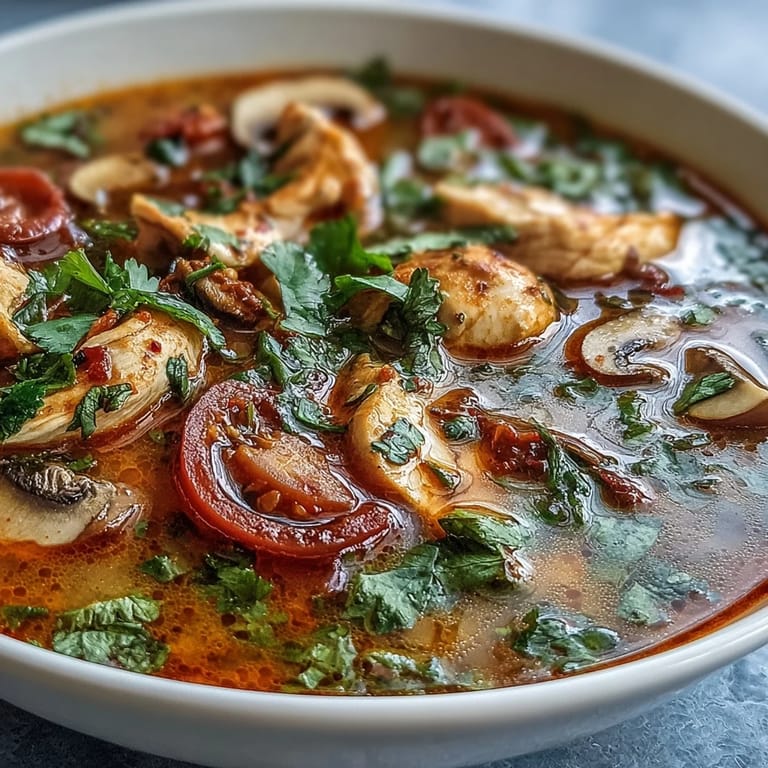
Save I discovered Tom Yum Gai on a humid Bangkok afternoon, sitting at a makeshift stall where a grandmother was ladling this golden, fragrant broth into bowls with the ease of someone who'd made it ten thousand times. The first spoonful hit like a symphony—bright lime cutting through heat, that earthy galangal note, the way the chicken surrendered on my tongue. Years later, I still chase that exact moment every time I make it at home.
My partner once watched me make this for dinner guests and asked why I was being so careful with the lemongrass and galangal, why I smashed them instead of just tossing them in. I couldn't quite explain it until he tasted the broth and understood—those crushed aromatics aren't just ingredients, they're the whole conversation happening in the pot.
Ingredients
- Chicken breast or thighs: Thighs stay more tender than breast, but either works; slice them thin so they cook through in minutes without turning rubbery.
- Lemongrass: This is the soul of the soup, so don't skip it or substitute dried; smash it to release those citrusy oils.
- Kaffir lime leaves: Their floral bitterness is unmistakable and worth hunting down in an Asian market or online.
- Galangal: Sharper and more peppery than ginger, it gives Tom Yum its signature bite, but ginger works if you're stuck.
- Thai bird's eye chiles: Small but mighty; start with fewer and add more if your crowd loves heat.
- Mushrooms: Oyster mushrooms absorb the broth beautifully, but button mushrooms are fine too.
- Nam prik pao: This roasted chili paste is what transforms simple broth into Tom Yum; it's worth keeping a jar on hand.
- Fish sauce: Yes, it smells intense, but trust it; it adds umami depth that makes everything sing.
- Lime juice: Fresh is non-negotiable—bottled juice won't give you that bright, alive finish.
Tired of Takeout? 🥡
Get 10 meals you can make faster than delivery arrives. Seriously.
One email. No spam. Unsubscribe anytime.
Instructions
- Wake up the broth:
- Bring your stock to a boil, then add the lemongrass, kaffir lime leaves, galangal, and smashed chiles. Let them sit there for 5 minutes—your kitchen will smell incredible, and those aromatics are infusing the entire pot with their personality.
- Cook the chicken gently:
- Slide in your chicken slices and give them 3 to 4 minutes, just until they're opaque and cooked through. Skim away any foam that rises to the surface; it keeps your broth clean and clear.
- Build the vegetables:
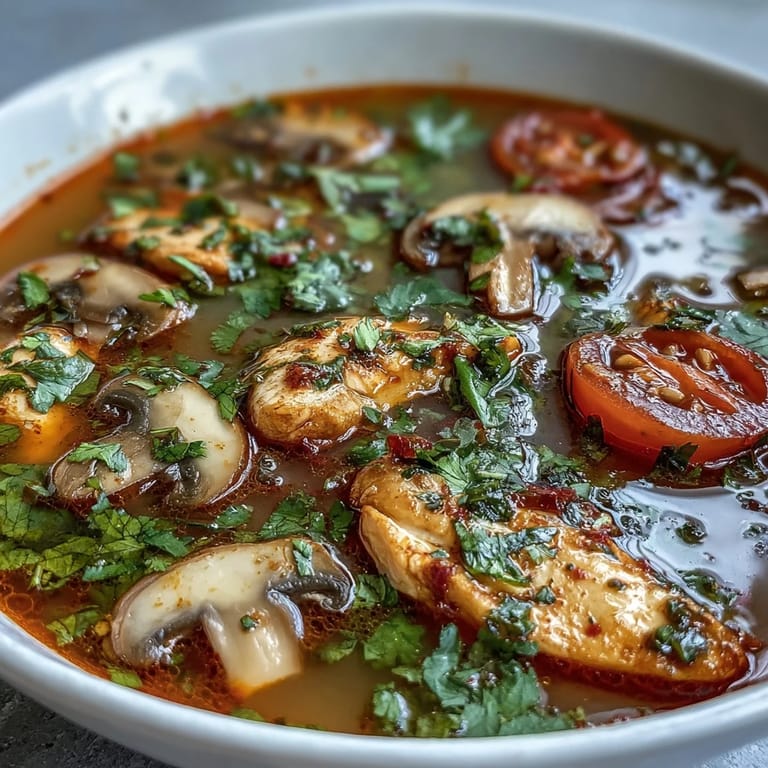
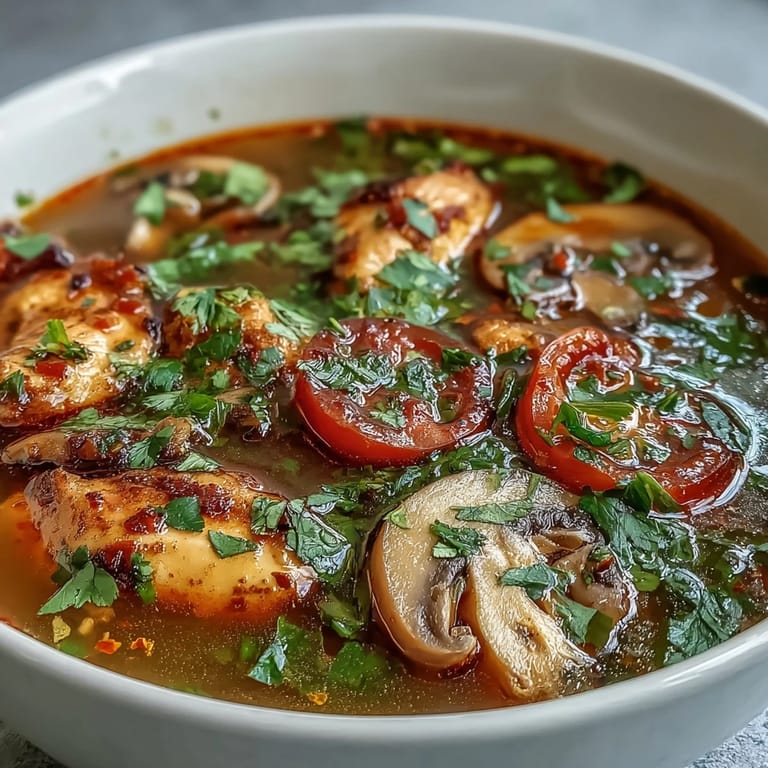
- Add mushrooms, tomatoes, and onion all at once, then let them simmer for another 3 to 4 minutes. You want them tender but still holding their shape, not surrendering into mush.
- Season with intention:
- Stir in the nam prik pao, fish sauce, sugar, and salt, letting everything blend for 2 minutes. This is when you taste and adjust—more salt? Another squeeze of lime? Make it yours.
- Finish with brightness:
- Take it off heat and add your fresh lime juice, stirring gently. Taste one more time and don't be shy about tweaking the balance.
- Serve at its peak:
- Ladle into bowls while it's still steaming, scatter cilantro and fresh chiles on top, and hand around lime wedges for people to squeeze in as they wish.
 Save
Save There's a quiet moment right before serving when the soup is done but hasn't hit the bowls yet—when the aromatics have given everything they have and the flavors have settled into harmony. That's when I know it's going to be good, when someone across the table is going to pause mid-spoonful and ask for the recipe.
The Soul of Thai Aromatics
Lemongrass and galangal aren't just flavoring agents in Thai cooking; they're storytelling tools that set Tom Yum apart from every other soup. The moment you smash them, you're releasing oils that have nowhere to go but into your broth, and that's when the magic happens. I learned this by being too gentle with them once, thinking I'd preserve their texture, and ending up with a flat, one-note soup that taught me a valuable lesson about respect for ingredients.
Fish Sauce: The Umami Secret
The first time I made Tom Yum for someone who'd never had it, they asked what was making it taste so savory and complex. Fish sauce is easy to dismiss by smell alone, but in context, it's the thing that makes every other flavor pop louder and clearer. Think of it as the bass line in a song—you might not consciously hear it, but without it, something crucial is missing.
Making It Your Own
The beauty of Tom Yum is that it's forgiving enough to bend to your preferences while staying true to itself. I've made it creamier with a splash of coconut milk, spicier for friends who live for heat, and even swapped the chicken for shrimp when I wanted something lighter. The framework is strong enough to hold your changes.
- Add 1 tablespoon of evaporated milk or coconut milk if you want a richer, slightly creamier version.
- Substitute shrimp for chicken to make Tom Yum Goong, using the same cooking time and method.
- Keep extra lime wedges on the table so people can adjust the sourness to their own taste.
 Save
Save This soup has a way of making even a weeknight dinner feel like an occasion, turning an ordinary Tuesday into something worth savoring. Make it for people you care about, and watch how quickly they'll start asking when you're making it again.
Recipe Guide
- → What makes Tom Yum Gai different from other Thai soups?
Tom Yum Gai features a distinct spicy-sour flavor profile created by fresh chiles, lime juice, and aromatic herbs like lemongrass, galangal, and kaffir lime leaves. The addition of nam prik pao (roasted chili paste) adds depth and richness that sets it apart from clear broths.
- → Can I adjust the spice level?
Absolutely. Start with fewer chiles and taste as you go. The heat comes from Thai birds eye chiles, which are quite potent. You can also remove the seeds for milder heat, or add more chiles if you prefer it fiery.
- → What's the best substitute for galangal?
Fresh ginger makes an acceptable substitute, though it lacks the piney, citrusy notes of galangal. Use slightly more ginger than the galangal called for, as its flavor is milder. Dried galangal slices can also work in a pinch.
- → Is nam prik pao essential?
While not strictly necessary, nam prik pao contributes significant depth and a subtle sweetness that balances the sour and spicy elements. You can make it without, but the flavor profile will be simpler and less complex.
- → Can I make this ahead of time?
The broth base can be prepared a day in advance, but add the chicken, vegetables, and lime juice just before serving. Reheating may cause the chicken to toughen and vegetables to become mushy.
- → What protein alternatives work well?
Shrimp creates the classic Tom Yum Goong, while tofu works beautifully for a vegetarian version. Both cook quickly and absorb the aromatic broth effectively.