 Save
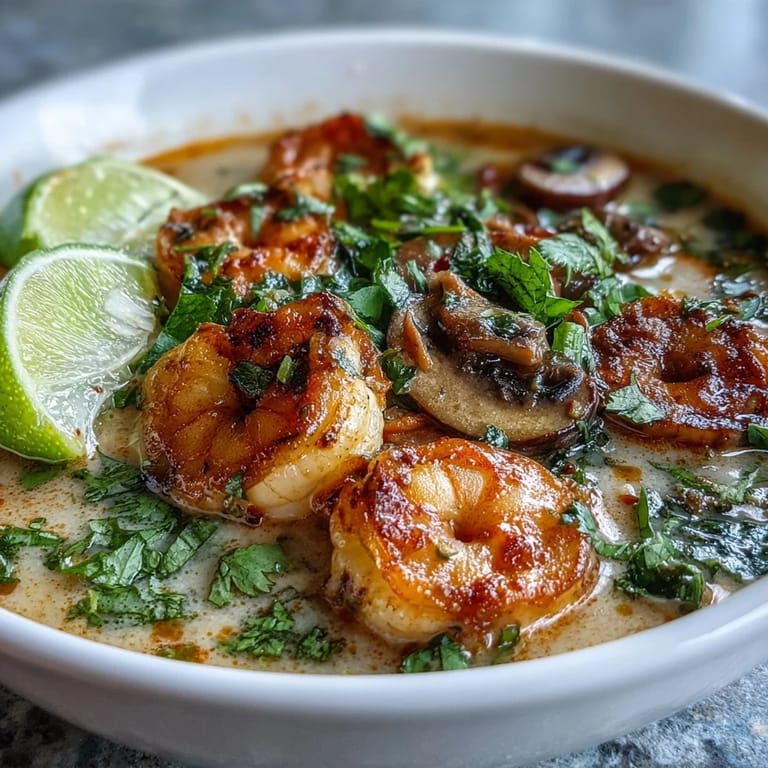
Save My first real encounter with this soup happened on a rainy Bangkok evening when a street vendor handed me a steaming bowl and wouldn't let me leave until I'd tasted it properly. The coconut milk was so rich it coated my lips, while the shrimp curled perfectly pink against the aromatic broth, and I realized right then that some dishes don't need to be complicated to be absolutely unforgettable. Now whenever I make it at home, I chase that same feeling of warmth and comfort in a single bowl.
I made this for my partner after he'd had a brutal week at work, and watching his expression shift from exhausted to genuinely relaxed with that first spoonful felt like magic. He asked for seconds immediately and then asked if we could have it again the next night, which is how I knew I'd found something special to keep in rotation.
Ingredients
- Large raw shrimp (350 g): Look for shrimp that smell briny and fresh, not fishy, as this tells you they're actually good quality and will cook up tender rather than rubbery.
- Lemongrass (2 stalks): This is the soul of the soup, so don't skip it or substitute with lemon juice, which loses the complexity and floral notes that make Thai curry paste really sing.
- Kaffir lime leaves (4 leaves): These add a citrusy perfume that can't be replicated, though if you genuinely can't find them, a strip of regular lime zest works in a pinch.
- Garlic and ginger (3 cloves and 1 thumb-sized piece): Fresh is non-negotiable here because the heat brings out their volatile oils, creating that aromatic foundation everything else builds on.
- Mushrooms (100 g): I use button or cremini mushrooms because they stay intact and slightly chewy rather than falling apart into the broth.
- Coconut milk (400 ml): Full-fat is essential, as it creates that luxurious mouthfeel and helps balance the heat from the curry paste.
- Thai red curry paste (2 tbsp): This ingredient carries so much flavor that it's worth buying a good brand, as cheaper versions can taste dusty and one-dimensional.
- Fish sauce (2 tbsp): Yes, it smells like low tide in a harbor, but it adds umami depth that transforms the entire soup into something complex and crave-worthy.
- Lime juice (1 tbsp): Fresh lime is crucial here, as bottled juice tastes flat and tinny against the rich coconut and spicy curry paste.
- Fresh cilantro and green onions: These garnishes aren't just decoration, they brighten everything and add a fresh herbaceous layer that ties the dish together.
Tired of Takeout? 🥡
Get 10 meals you can make faster than delivery arrives. Seriously.
One email. No spam. Unsubscribe anytime.
Instructions
- Build your aromatic base:
- Heat oil in your large pot over medium heat and add the onion, garlic, lemongrass, ginger, and chili, letting them sauté for 2 to 3 minutes until the kitchen fills with that unmistakable Thai curry aroma. You'll know it's ready when you can smell the ginger beneath everything else and the onions have turned translucent.
- Bloom the curry paste:
- Stir in the red curry paste and cook for just 1 minute, which opens up all its hidden flavors and prevents it from tasting raw and bitter. This is the moment the aroma shifts and deepens, signaling that your paste is ready to welcome the coconut milk.
- Create the creamy broth:
- Pour in the coconut milk and broth, add kaffir lime leaves if you have them, and bring everything to a gentle simmer rather than a rolling boil. Gentle heat preserves the coconut's silky texture and prevents the broth from breaking or separating.
- Cook the mushrooms:
- Let the mushrooms simmer for about 5 minutes until they're just tender but still have a slight bite to them. If you overcook them here, they'll turn into mush by the time you finish the soup.
- Add the shrimp:
- Drop in your shrimp and cook for 2 to 3 minutes, watching for them to turn from translucent gray to opaque pink, which signals they're perfectly cooked through. Overcooked shrimp becomes tough and rubbery, so pull them off the heat the moment they change color.
- Season to taste:
- Stir in fish sauce, sugar, and lime juice, then taste and adjust boldly because seasoning is where this soup goes from good to unforgettable. Most people need a bit more lime juice than they think, so add it gradually and keep tasting as you go.
- Remove the solids:
- Fish out the lemongrass, ginger slices, and lime leaves so they don't interfere with the eating experience, though it's okay if a few small bits remain. These pieces have already given their flavor to the broth, so they're not needed anymore.
- Serve and garnish:
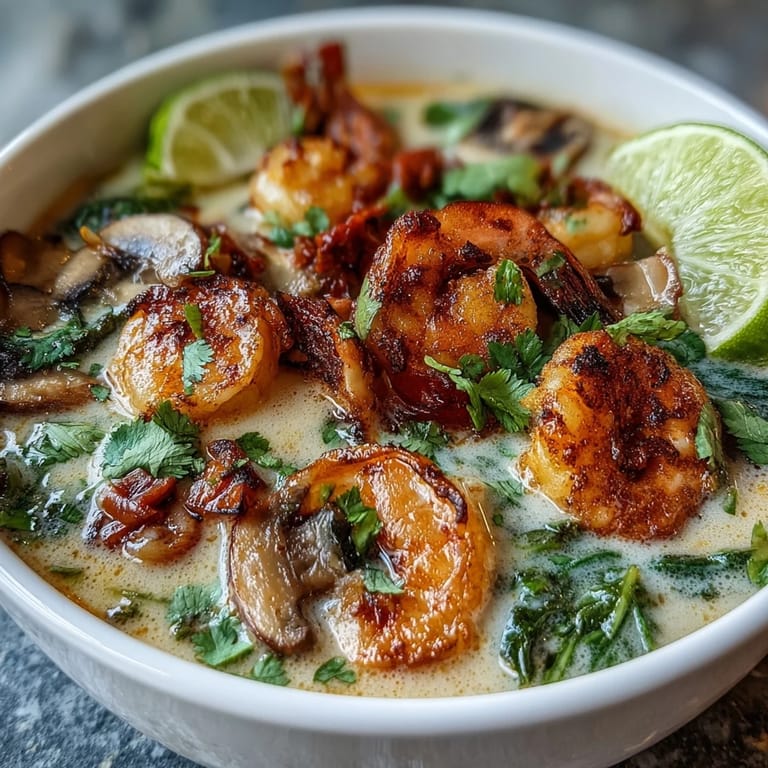
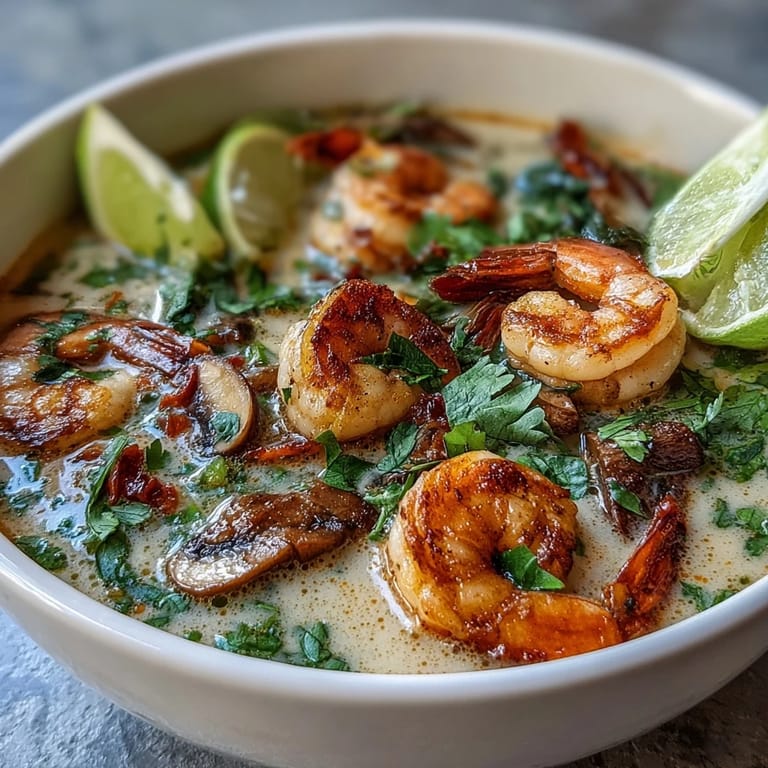
- Ladle the soup into bowls and crown each one with cilantro, green onions, and a wedge of lime, which guests can squeeze in to taste. The lime wedge is essential because it lets people control the final brightness of their own bowl.
 Save
Save My mom tried this soup skeptically because she thought anything with fish sauce couldn't possibly be good, and then she went quiet for a moment and asked if she could have the recipe. That's when I knew the flavors had converted her, and now she makes it when her friends come over and gets all the credit.
The Magic of Aromatics in Thai Cooking
Thai cooking is fundamentally about building layers of aroma and flavor, and this soup teaches you that lesson immediately. When you sauté those lemongrass, ginger, and garlic together, you're creating a flavor foundation so strong that the coconut milk and shrimp almost become supporting players rather than the main event, which is why taking those first few minutes to get the aromatics right changes everything.
Texture Balance and Why It Matters
A great soup isn't just about liquid and flavor, it's about having things to chew on and texture variation in every spoonful. The mushrooms give you something substantial, the shrimp provide a tender meatiness, and even the garnish of cilantro and green onion adds a crisp herbaceous bite that makes each bowl interesting rather than monotonous. Without this thinking, you'd have a delicious broth with nothing to interact with.
Customizing Your Soup Without Losing the Soul
While the core of this soup is non-negotiable, the vegetables and proteins around it are absolutely flexible based on what you have and what you love. I've made it with baby corn and sliced bell pepper, and I've made it with bamboo shoots and snap peas, and each version tastes completely different while still tasting unmistakably like itself.
- For a vegetarian version, press blocks of firm tofu and cube them, then use soy sauce instead of fish sauce to maintain that umami backbone.
- Add baby corn, sliced bell pepper, or bamboo shoots during the broth simmering stage so they cook through without turning mushy.
- Jasmine rice is the traditional companion, but honestly, this soup is hearty enough to eat on its own as a light meal.
 Save
Save This soup has become my go-to when I want to cook something that feels restaurant-quality but doesn't require any special skills or fussy techniques. Every time I make it, someone asks for the recipe, and I always hand it over knowing that once they taste it, they'll understand why it's such a keeper.
Recipe Guide
- → Can I make this soup vegetarian?
Yes, substitute shrimp with firm tofu cubes and replace fish sauce with soy sauce or a vegetarian fish sauce alternative. The cooking time remains the same, though you may want to press the tofu first for better texture.
- → How spicy is this soup?
The heat level depends on your red curry paste brand and whether you include the optional fresh chili. Most Thai red curry pastes provide moderate heat. Start with less curry paste if you're sensitive to spice, or add extra chili slices if you love it fiery.
- → Can I use frozen shrimp?
Absolutely. Thaw frozen shrimp completely and pat them dry before adding to the soup. Avoid overcooking since frozen shrimp can become tough faster—2 minutes should be plenty once they turn pink.
- → What can I substitute for kaffir lime leaves?
If unavailable, add extra lime zest to the broth or use bay leaves as a last resort. The flavor profile will shift slightly, but the soup will still be delicious. Some specialty grocers carry dried kaffir lime leaves which work well too.
- → How long does the soup keep?
Store cooled soup in an airtight container for up to 3 days. The shrimp may become slightly rubbery when reheated, so consider storing them separately and adding fresh ones when reheating. The broth actually develops more flavor overnight.
- → Can I make this soup ahead?
Prepare the broth base through step 4 up to 24 hours in advance. Reheat gently, then add shrimp and finish with seasonings just before serving. This prevents the shrimp from overcooking and maintains the best texture.