 Save
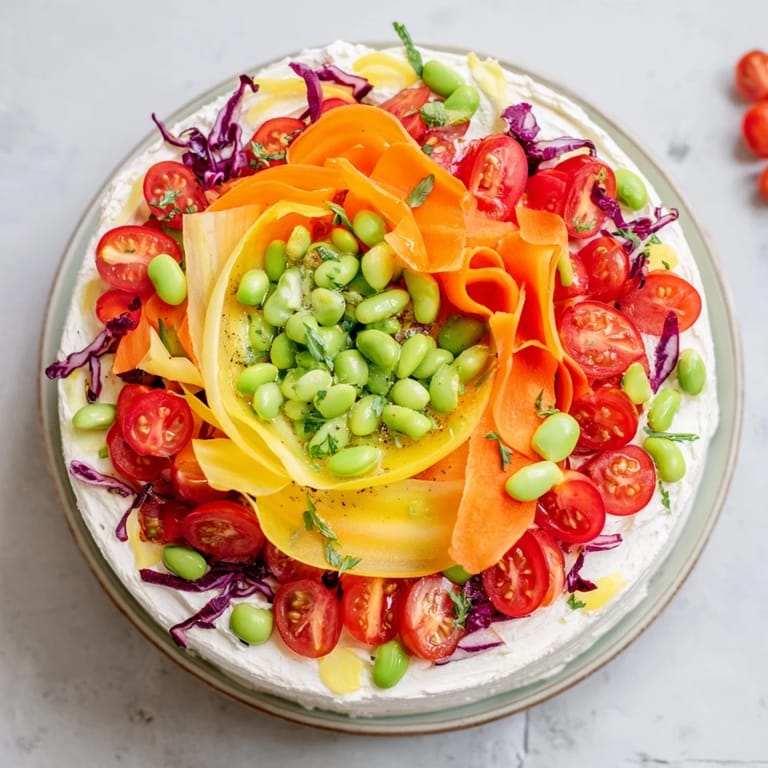
Save I was arranging vegetables on a plate one afternoon when my nephew walked into the kitchen and stopped mid-step, mesmerized. He wasn't looking at me—he was looking at the rainbow of colors I'd accidentally lined up while prepping. That moment sparked something: what if we made a salad that was intentionally this striking, layered like light breaking through a prism? The Prism Burst was born from that conversation, a dish that proves vegetables can be both nutritious and genuinely beautiful to look at.
I made this for a potluck where everyone had been instructed to bring something 'simple,' and I watched the relief wash over people's faces when they saw something they could actually eat without anxiety. One guest told me later that their kid—who normally picks at salad—asked for seconds, and I realized then that presentation isn't shallow; it's part of how food speaks to us.
Ingredients
- Ricotta cheese: This is your anchor, the creamy white center that everything radiates from—Greek yogurt works too if you want something lighter, though ricotta has a richness that feels more intentional.
- Extra-virgin olive oil: Use the good stuff here since you'll taste it directly in the base and the dressing.
- Lemon zest: A small grater makes this easy, and that bright citrus note prevents the whole thing from feeling heavy.
- Cherry tomatoes: Halve them lengthwise so they nestle together nicely in your red stripe.
- Bell peppers (red, orange, and yellow): Slice them thin enough to bend slightly without breaking—they should feel delicate when you arrange them.
- Carrots: A box grater on the large holes gives you manageable shreds that won't roll around.
- Sweet corn: Fresh or frozen works equally well; just make sure it's fully thawed and drained if frozen.
- Cucumber: English cucumbers have thinner skins and fewer seeds, so they're less watery and more pleasant to eat raw.
- Edamame: Frozen edamame is your friend—just thaw and shell them, and they bring a wonderful pop of color and protein.
- Fresh herbs: Whatever you have on hand, but parsley and mint add brightness that complements the vegetables.
- Blueberries: These are delicate, so arrange them last to avoid bruising.
- Purple cabbage: It's technically more blue than pure blue, but it's the closest thing to true blue you'll find in the produce section.
- Red grapes: Halve them so they sit flat and catch light beautifully.
- Radishes: They add a subtle peppery crunch and a pink-purple hue that bridges blue and violet.
- Honey or agave syrup: Just enough to balance the lemon juice without sweetening the whole salad.
Tired of Takeout? 🥡
Get 10 meals you can make faster than delivery arrives. Seriously.
One email. No spam. Unsubscribe anytime.
Instructions
- Make your white base:
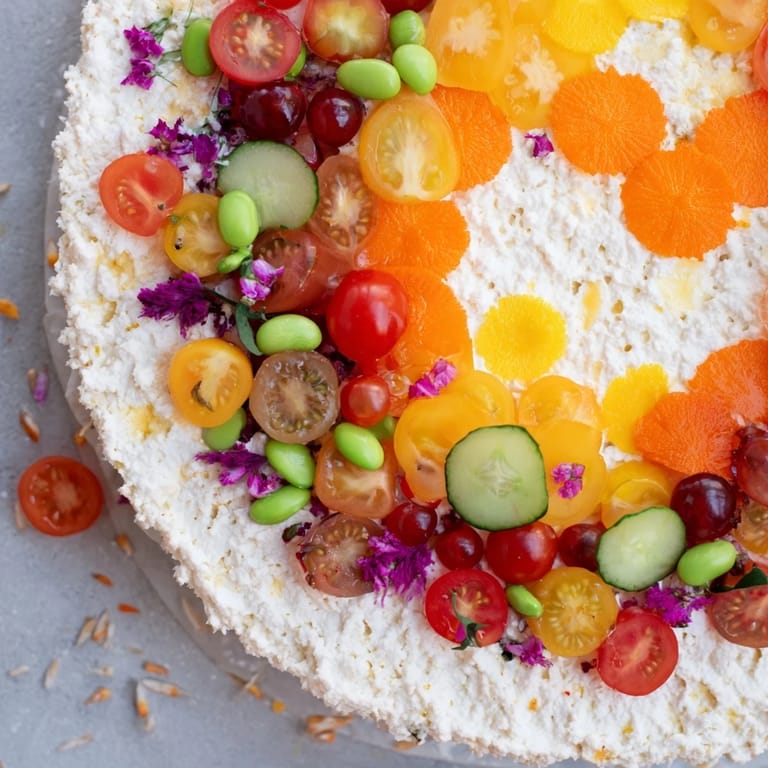
- Combine the ricotta, olive oil, lemon zest, salt, and pepper in a small bowl and mix until smooth and creamy. Spoon it onto the center of your platter and gently spread it into a small circle about 3 inches across—this is your focal point, so take your time and make it look intentional.
- Prep your colors:
- Arrange each color group into its own small bowl before you start building. This prevents you from getting flustered and accidentally mixing them together on the platter.
- Fan out your prism:
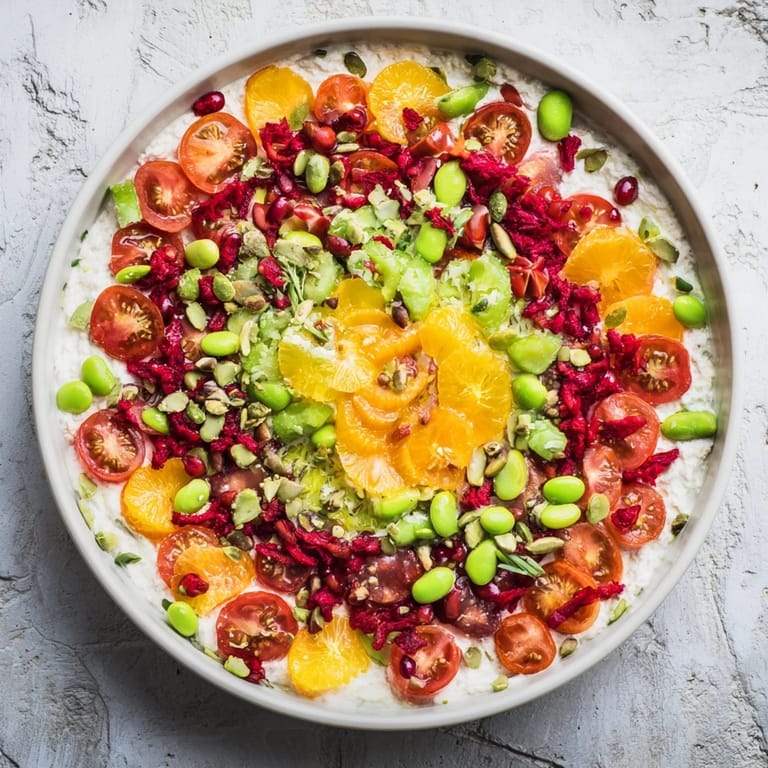
- Starting at the ricotta center, arrange the red layer in a fan shape radiating outward, keeping the colors in clear stripes. Work your way through orange, yellow, green, blue, and finally violet, each stripe about 1.5 to 2 inches wide. Use your hands or the back of a spoon to keep everything neat and separated.
- Make your dressing:
- Whisk together the olive oil, lemon juice, honey, salt, and pepper until emulsified. The honey helps bind it all together and keeps the oil from separating.
- Dress and serve:
- Drizzle the dressing lightly over the entire salad just before serving, or serve it on the side if you're bringing this somewhere and want it to stay pristine during transport. Finish with a sprinkle of fresh herbs and black pepper if you want a final flourish.
 Save
Save My sister brought her partner to dinner not long after I perfected this recipe, and I remember watching them photograph it from three different angles before eating. That's when I understood that a salad this beautiful stops being just food—it becomes a moment, something worth remembering.
The Art of Arrangement
The geometry matters more than you'd think. When you fan each color out from the center, you're not just organizing vegetables; you're creating visual rhythm. I've found that consistent stripe widths make the whole thing feel intentional rather than haphazard. Stand back and look at your work from above as you build—your eye will tell you if something feels off balance before your hands do.
Playing with the Color Palette
Not all produce is equally colorful, and that's okay. If your red peppers look pale or your blue vegetables aren't quite blue enough, lean into what actually looks good on your platter rather than forcing the spectrum. I've added pink radishes to bridge gaps, swapped in purple beets, and once used pomegranate seeds where blueberries would have been. The prism isn't a strict rule—it's a framework you can bend.
Variations and Extras
This salad is flexible enough to work with whatever is in season and whatever dietary preferences matter to you. Some people add toasted seeds for crunch, microgreens for even more color intensity, or edible flowers if they're feeling celebratory. Once I added beets because a friend was visiting and they were her favorite, and it shifted the entire mood of the dish—darker, earthier, somehow more sophisticated.
- Toasted pumpkin or sunflower seeds add texture and keep the salad substantial enough to work as a light lunch.
- Swap the ricotta for vegan cream cheese to make this entirely plant-based and still keep that creamy white center.
- Add microgreens on top right before serving for an extra layer of freshness and visual drama.
 Save
Save Make this salad when you want to remind yourself—and the people around you—that cooking can be both simple and joyful. It's proof that the most memorable meals don't always require hours in the kitchen.
Recipe Guide
- → What is the base of the Prism Burst salad?
The base is a creamy mixture of ricotta cheese combined with olive oil, lemon zest, salt, and pepper, spread centrally on the platter.
- → How are the colorful layers arranged?
The vegetables and fruits are arranged in color groups fanning outward from the central white base, creating a prism-like visual effect.
- → Can I substitute the ricotta cheese?
Yes, Greek yogurt can be used for a lighter option, or vegan cream cheese for a dairy-free alternative.
- → What dressing is used for the salad?
A simple dressing of olive oil, lemon juice, honey or agave syrup, with salt and pepper, is whisked and drizzled over the layers.
- → Are there suggestions to enhance texture or flavor?
Toasted nuts or seeds and fresh herbs or edible flowers can be added to boost texture and visual appeal.
- → Is this salad suitable for gluten-free diets?
Yes, all ingredients are naturally gluten-free, making the salad appropriate for gluten-sensitive individuals.