 Save
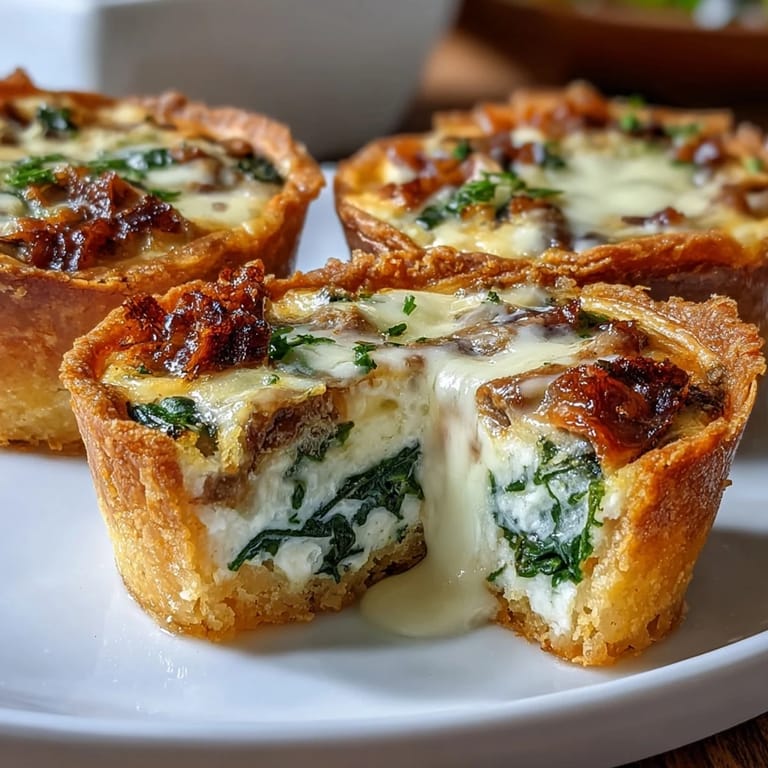
Save There's something almost magical about opening the oven to find eighteen perfect little golden cups of custardy goodness, each one topped with a different filling—it happened to me on a rainy spring afternoon when I was trying to impress three friends who were suddenly free for brunch. I'd bought that ready-made pastry on a whim, thinking it might save time, and somehow ended up with this trio concept that felt both fancy and completely doable. The spinach, mushroom, and ham versions meant everyone had something they loved, and the house smelled like butter and nutmeg for hours afterward.
My neighbor knocked on the door during those last ten minutes of baking and caught me peering through the oven window like a kid watching a magic trick, and instead of being awkward about it, she ended up staying for coffee and stealing three of the quiches—one of each kind. Watching someone taste something you've made and see their face light up is honestly why I keep cooking, and these little things have become my secret weapon for looking effortlessly put-together.
Ingredients
- Ready-made shortcrust pastry (250 g, about 1 sheet): This is your time-saver, and using it doesn't mean you're cutting corners—professional cooks do this all the time, especially when the filling is where the real love goes.
- Eggs (4 large): These are your binding magic; make sure they're at room temperature if possible, as they whisk more smoothly and create a silkier custard.
- Heavy cream and whole milk (150 ml each): The combination gives you richness without being heavy, and whole milk keeps the texture lighter than using all cream.
- Salt, black pepper, and nutmeg: That pinch of nutmeg is the secret—it's so subtle that people can't quite identify it, but they always say the quiches taste restaurant-quality.
- Fresh baby spinach (60 g, chopped): Baby spinach wilts faster and tastes sweeter than mature spinach, and you'll need less of it because the leaves are tender.
- Feta cheese (30 g, crumbled): I've swapped this with goat cheese before, which gives a creamier bite, but feta's tanginess cuts through the richness perfectly.
- Cremini or button mushrooms (80 g, finely chopped): Cremini mushrooms have slightly more umami than buttons, but both work beautifully—the key is chopping them fine so they distribute evenly.
- Gruyère cheese (20 g, grated): Don't skip this for cheddar unless you must; Gruyère melts smoother and has a nuttiness that complements mushrooms in ways cheddar can't quite match.
- Cooked ham (50 g, diced): Use good quality ham if you can; the flavor difference is noticeable in such small, delicate quiches.
- Swiss cheese (30 g, grated): Its mild flavor lets the ham shine without competing, and it melts into the custard beautifully.
Tired of Takeout? 🥡
Get 10 meals you can make faster than delivery arrives. Seriously.
One email. No spam. Unsubscribe anytime.
Instructions
- Heat and prep:
- Preheat your oven to 180°C and lightly grease those mini muffin tin wells—I use a pastry brush with softened butter, which helps you see exactly where you've greased. Getting the tin ready first means you're not fumbling around later when your hands are covered in pastry.
- Line the tins with pastry:
- Roll out the pastry on a lightly floured surface until it's about 3 mm thick, then use a round cutter (I use a 6–7 cm one, or even a drinking glass works) to cut circles. Gently press each round into a muffin tin well, letting it come up the sides naturally without stretching—if you stretch it, it'll shrink back during baking and leave gaps.
- Chill while you work:
- Pop those lined tins in the fridge for 10 minutes while you prep the fillings; this prevents the pastry from shrinking and helps it stay crisp. It's a small step that makes a real difference in the final texture.
- Make the custard base:
- In a mixing bowl, whisk together eggs, cream, milk, salt, pepper, and that pinch of nutmeg until the mixture is smooth and uniform. Don't overbeat; you're not making a mousse, just combining everything evenly.
- Sauté the spinach filling:
- Heat olive oil in a small skillet, add minced garlic, and let it become fragrant—it takes maybe 30 seconds—then add the spinach and let it wilt down, which happens faster than you'd think. Once it's cooled slightly, fold in the crumbled feta and taste for seasoning; you might not need much salt since feta is already salty.
- Cook the mushroom filling:
- Melt butter in the same skillet (no need to wash it), add minced shallot, then the finely chopped mushrooms, and let them cook down until golden and any liquid has evaporated, about 5 minutes. The mushrooms will release moisture first, then it'll cook off, and that's when they start to brown and get truly delicious—that's your signal to add the Gruyère.
- Assemble the ham filling:
- Simply combine diced ham, grated Swiss cheese, and sliced spring onion in a bowl; no cooking needed. The spring onion's slight bite is perfect against the ham's saltiness and the cheese's mildness.
- Fill the pastry shells:
- Remove the chilled tins from the fridge and divide each filling among 6 shells, distributing them evenly across the tin. This keeps them all baking at the same rate and looks beautiful when they come out.
- Pour the custard carefully:
- Pour the egg mixture over each filled shell until it just reaches the rim—and I mean just, because they puff up during baking and you don't want any spillage. I use a small ladle or measuring cup with a spout for this, as it gives you control.
- Bake to golden perfection:
- Slide them into the oven and bake for 20–25 minutes until they're puffed, golden on top, and set in the center (a slight jiggle is fine, but they shouldn't be liquid). You'll know they're done when they smell impossibly good and a toothpick inserted into the custard comes out clean.
- Cool and serve:
- Let them rest in the tin for about 5 minutes so they set slightly and become easier to remove, then gently run a small knife around each one and pop it out. They're wonderful warm, but honestly, they're just as delicious at room temperature, which is why they're perfect for spring gatherings.
 Save
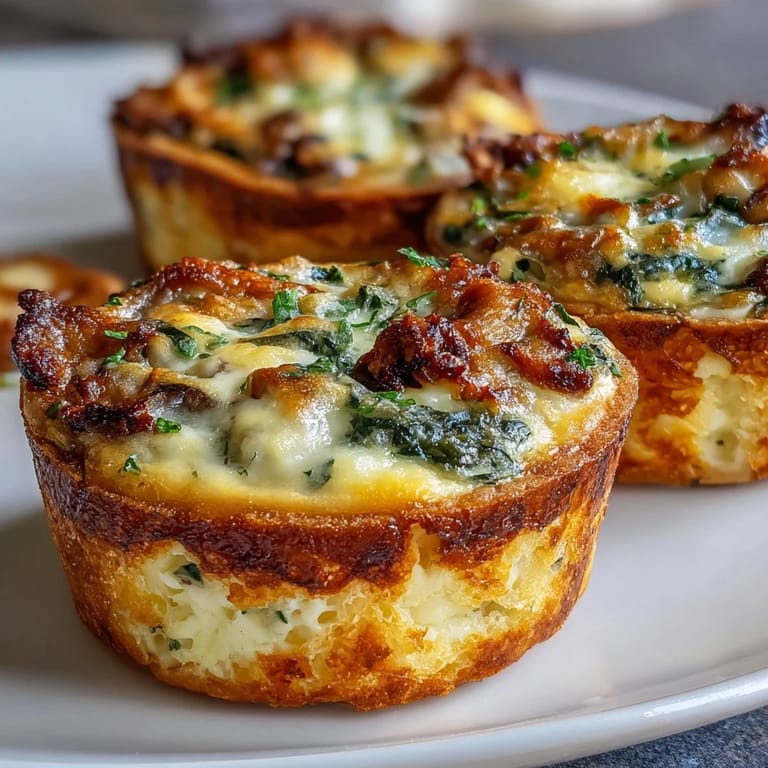
Save I'll never forget the quietness that fell over the table when three people reached for their second quiche—there's something about homemade food that creates this genuine moment where everyone stops talking and just experiences the flavors. That's when these little things stopped being just appetizers and became something that made people feel looked after.
Make-Ahead and Storage Wisdom
One of the best things about this recipe is how forgiving it is timing-wise. You can assemble the quiches completely (up to just before baking) the night before, cover them with plastic wrap, and pop them straight into a preheated oven in the morning—no thawing needed, just add a couple of minutes to the baking time. Leftovers keep in an airtight container in the fridge for three days, and they reheat beautifully in a 160°C oven for about 8 minutes until warmed through; reheating brings back that just-baked texture that makes people wonder if you made them fresh that morning.
Flavor Swaps and Personal Touches
The beauty of this trio format is that it invites experimentation without pressure. I've made versions with sun-dried tomatoes and basil instead of spinach, caramelized onions instead of mushrooms, and even a smoked salmon version with dill that felt fancy enough for a wedding shower. The custard base stays exactly the same, so once you understand the technique, you can fill these with pretty much anything your garden or pantry offers—herbs, roasted vegetables, different cheeses, even leftover roasted chicken if you're feeling creative.
The Science of Crispy Pastry
Getting crispy pastry in a quiche is a game of timing and temperature. The pastry needs to partially bake before the wet custard hits it, which is why some recipes call for blind baking, but I've found that using a muffin tin actually helps because the sides of the tin conduct heat directly to the pastry and help it cook faster. If you find your bottoms are still a bit soft even after baking, try placing your muffin tin on a preheated baking sheet before adding the quiches—that extra heat from below makes all the difference.
- Let the filled quiches sit at room temperature for about 10 minutes before baking; this helps them bake more evenly.
- If the tops are browning too quickly, loosely tent them with foil for the last 5 minutes of baking.
- Always remove them from the muffin tin while still slightly warm—they'll hold their shape better and be easier to get out.
 Save
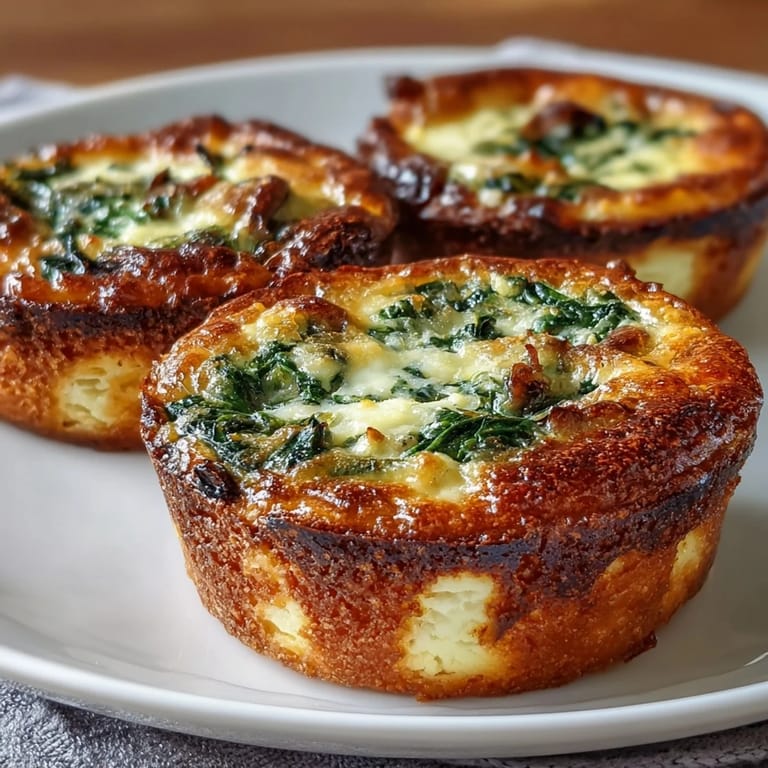
Save These little quiches have a way of making any gathering feel intentional and special, which is really what good food does best. Whether you're serving them at a spring brunch, packing them for a picnic, or just wanting something satisfying for dinner, they remind you that elegant doesn't have to mean complicated.
Recipe Guide
- → What pastry works best for these mini quiches?
Shortcrust pastry is ideal, providing a crisp, buttery base that holds fillings well without becoming soggy.
- → Can I prepare the fillings ahead of time?
Yes, fillings like spinach, mushroom, and ham mixtures can be made in advance and refrigerated until assembly.
- → How do I achieve a smooth egg custard?
Whisk eggs thoroughly with cream, milk, and seasoning until fully blended and smooth before pouring over the fillings.
- → What’s the best way to cook the spinach filling?
Sauté garlic with fresh baby spinach briefly until wilted, then mix in crumbled feta for a creamy texture.
- → Can I substitute the cheeses used?
Absolutely, you can swap feta with goat cheese or Gruyère with cheddar without compromising flavor.