 Save
Save I'll never forget the spring when my sister challenged me to make something festive enough to get even my skeptical nephew excited about eating vegetables. That St. Patrick's Day, I spent an afternoon in the kitchen arranging cucumber slices and cheese into four-leaf clovers, and watching his eyes light up when I placed one on his plate—suddenly, this little green creation wasn't just a snack, it was luck you could eat. Now, whenever someone asks for a playful dish that doubles as a conversation starter, I reach for this one.
There's something special about serving these at a potluck and watching people smile before they even taste anything. I made a whole platter for my friend's garden party last spring, and I caught three different people taking photos of their clover before eating it. That's when I knew I'd stumbled onto something that bridges the gap between real food and pure joy.
Ingredients
- Cucumbers (16 round slices, about 1/4-inch thick): These form the leaves and provide a cool, crisp foundation. The key is slicing them uniform in thickness so they stack evenly—I've learned that using a mandoline makes this almost effortless, though a sharp knife works just fine if you take your time.
- Cheddar cheese (16 thin round slices): Use a small round cookie cutter to match the cucumber size, or you can freehand it with a knife. The sharpness of aged cheddar adds a pleasant bite that keeps this from feeling too vegetable-heavy.
- Green grapes or cherry tomatoes (4 small, halved for the center): These become the heart of your clover. I prefer grapes for their sweetness and how they catch the light, but cherry tomatoes work beautifully if that's what you have on hand.
- Celery sticks or pretzel rods (four 3-inch pieces for the stem): This choice matters more than you'd think—celery keeps it vegetable-focused and makes it naturally gluten-free, while pretzel rods add a satisfying crunch and saltiness. Choose based on your guests and the vibe you're going for.
- Cream cheese or hummus (2 tablespoons for assembly): This is your secret glue. A tiny dab holds everything together without being visible, and it adds richness without overwhelming the delicate flavors.
- Fresh herbs—parsley or dill, finely chopped (for garnish): This is what makes people lean in close and say, 'Oh, it's fancy.' The herbs add color, aroma, and a whisper of freshness that ties everything together.
Tired of Takeout? 🥡
Get 10 meals you can make faster than delivery arrives. Seriously.
One email. No spam. Unsubscribe anytime.
Instructions
- Gather and prepare:
- Before you start arranging, have everything prepped and ready on your workspace. Slice those cucumbers to an even 1/4-inch thickness—consistency is what makes this look intentional and beautiful. Cut your cheese rounds to match the cucumbers as closely as you can, halve your grapes or tomatoes, and cut your celery or pretzel stems. This is the meditative part where you set yourself up for success.
- Create the clover base:
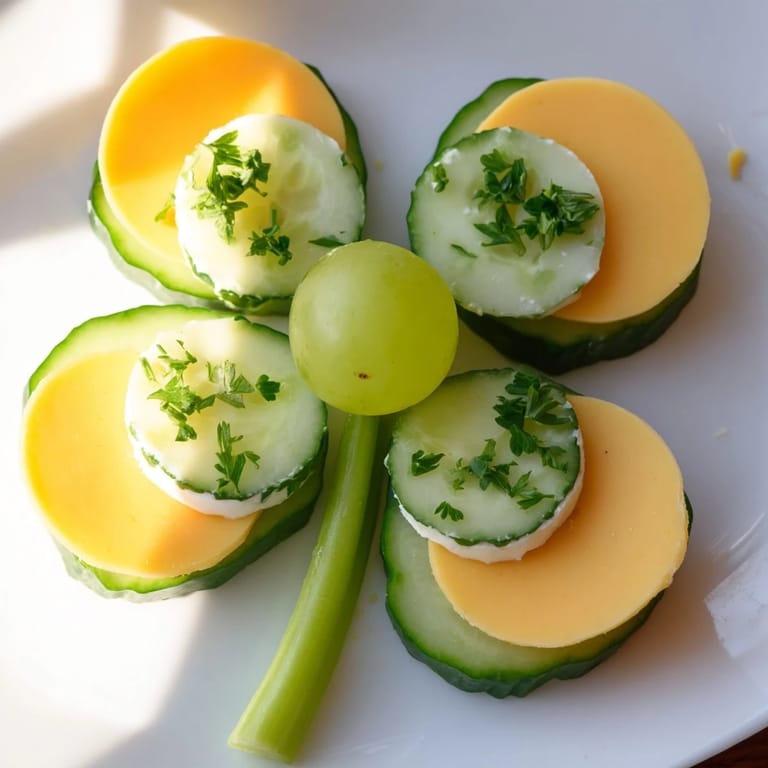
- On your serving plate, arrange four cucumber slices in a clover-leaf pattern, letting their edges overlap slightly at the center. Imagine you're drawing a four-leaf clover with your ingredients—this overlap is what creates the illusion of a real leaf shape.
- Dress the leaves:
- Gently place a cheddar cheese round on top of each cucumber slice. Press it down just slightly so it nestles into place. The cheese both anchors the leaf and adds that pop of golden color.
- Plant the heart:
- At the center where all four leaves meet, place your grape or cherry tomato half. This is your focal point—step back and look at it. Does it feel balanced? Adjust if needed.
- Add the stem:
- Position your celery stick or pretzel rod as the stem, tucking one end slightly under where the clover leaves overlap. This makes the whole thing feel grounded and complete.
- Secure and embellish:
- If any piece feels loose, use just a tiny dab of cream cheese or hummus as an invisible adhesive. Sprinkle with your chopped fresh herbs for color and that final touch of sophistication. Step back and admire your work.
- Multiply the magic:
- Repeat these steps for each clover snack. Once you've made the first one, the rhythm becomes almost meditative—your hands know what to do.
 Save
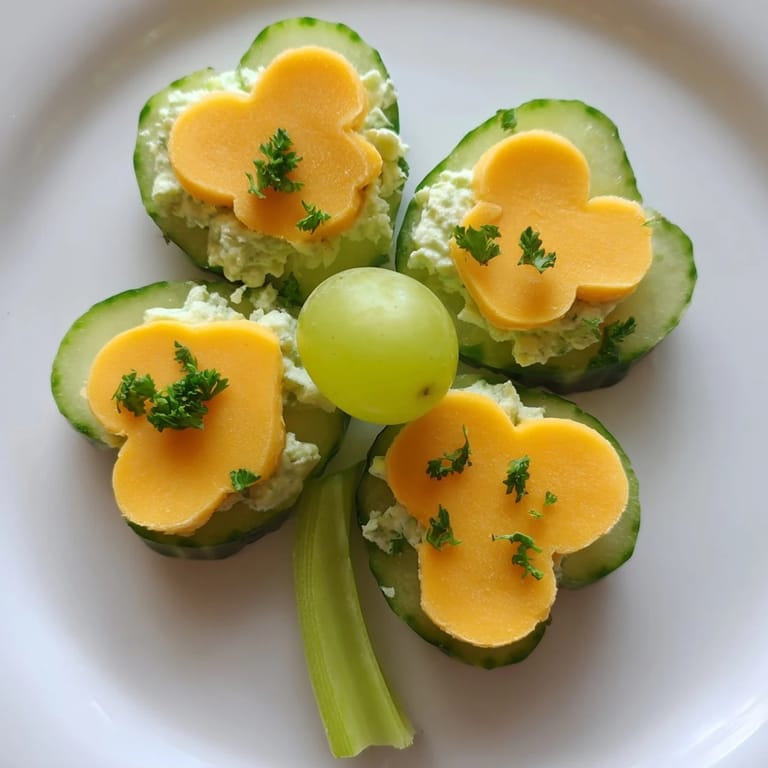
Save The moment that changed everything was when my eight-year-old niece asked if she could help me make these for her school lunch. Suddenly it wasn't just about impressing people—it was about sharing a small ritual, her tiny hands carefully arranging the pieces, feeling so proud to bring something she'd made to school. That's when I realized this recipe is really about giving people permission to play with their food and call it dinner.
Timing and Preparation
These clovers come together in about 15 minutes once your ingredients are prepped, which means you can have them ready faster than you can order takeout. There's no cooking involved, so this works year-round—when your oven is full during the holidays, when it's too hot to turn on the stove in summer, or when you're short on time but big on presentation. The best part is that you can prep all your components ahead of time and assemble them just before serving, so they're at their crispest and most vibrant.
Making It Your Own
This recipe invites personalization in the most wonderful way. Turkey or ham rounds can replace the cheese if you want to add protein. Roasted red pepper strips can become elegant leaves for a more sophisticated crowd. Cherry tomatoes instead of grapes shift the whole flavor profile toward savory. I've even made a version with sliced apple and a tiny dab of almond butter for a sweet twist that surprised everyone. The structure stays the same, but the flavors tell your story.
Perfect for Any Occasion
These little clovers have shown up at more occasions than I expected when I first invented them. They grace St. Patrick's Day tables with authentic green charm, but they're also perfect for spring garden parties, kids' lunchboxes, baby showers, or any time you want a snack that's both nourishing and joyful. They work for vegetarian guests, gluten-free diets (when you use celery instead of pretzel stems), and they're naturally free from common allergens if you're careful with your choices. Best of all, they take a moment that could be routine and turn it into something memorable.
- Make them an hour or two ahead and store them loosely covered in the refrigerator—the vegetables stay crisp and everything stays fresh
- If you're bringing these to a potluck, assemble them right there for maximum impact and guaranteed freshness
- Double or triple the recipe without thinking twice—the assembly is meditative and scales beautifully
 Save
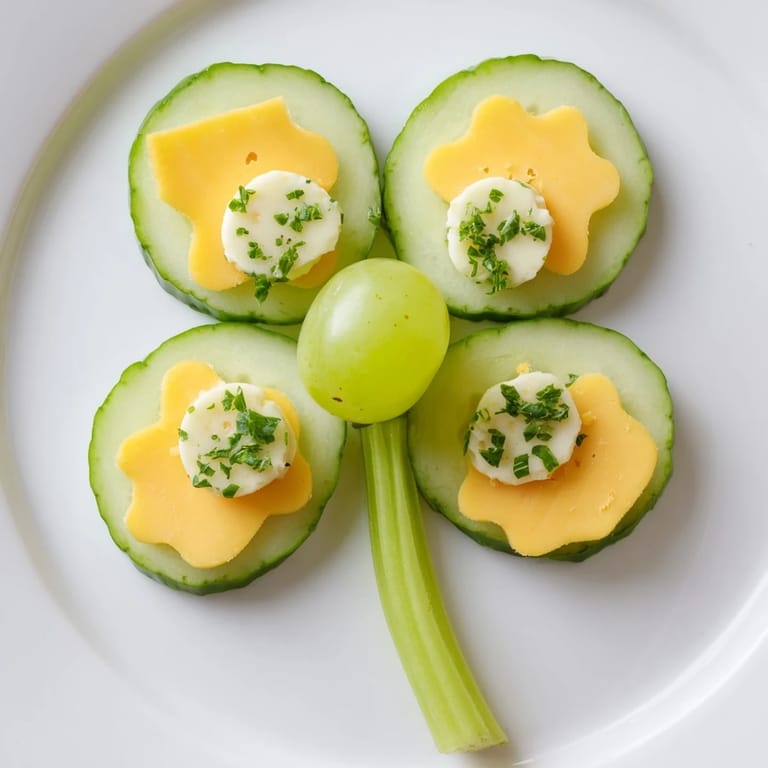
Save These four-leaf clovers taught me that sometimes the most meaningful dishes are the ones that make people smile before they taste a single bite. They're proof that you don't need complicated techniques or exotic ingredients to create something truly special.
Recipe Guide
- → What ingredients create the clover leaves?
Crisp cucumber slices paired with thin cheddar cheese rounds form the signature clover leaves.
- → How is the center of the clover made?
The center features small green grapes or cherry tomato halves placed where the four leaves meet.
- → What options can be used for the stem?
Celery sticks or thin pretzel rods serve as the edible stem, adding crunch and structure.
- → How can the snack components be held together?
A small amount of cream cheese or hummus acts as a natural adhesive to keep the layers intact.
- → Are there gluten-free alternatives for this snack?
Using celery sticks instead of pretzel rods ensures the snack remains gluten-free.
- → What garnishes enhance the flavor and appearance?
Freshly chopped parsley or dill sprinkled on top adds color and a subtle herbal note.