 Save
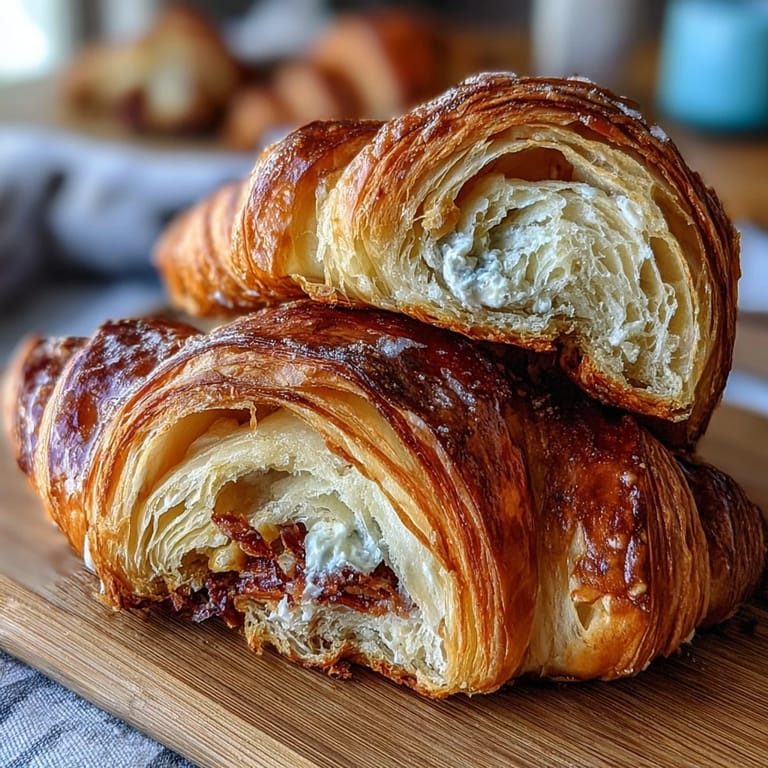
Save There's a particular Saturday morning when my kitchen smelled like nothing short of magic—butter, fermented dough, and possibility all swirling together while croissants baked golden in the oven. I'd been intimidated by croissants for years, convinced they required some French baker's gene I simply didn't inherit, until a friend casually mentioned she'd been making them at home using sourdough starter. That detail changed everything. Suddenly, the lamination process felt less like an impossible culinary feat and more like a rewarding weekend project, especially with the tangy depth that sourdough brings to every flaky, buttery layer.
I made these for my book club one evening, thinking I'd impress everyone with some complicated French technique I'd somehow mastered. Instead, what struck me most was watching my neighbor take that first bite and literally close her eyes, and then ask if I could teach her the next time. That's when I realized these croissants had crossed from being a personal achievement into something that brings people together—a reason to gather, to slow down, to appreciate something warm and handmade.
Ingredients
- Bread flour (500 g): The protein content here matters more than you'd think—it gives your dough enough structure to survive all that rolling and folding without tearing, and I learned the hard way that cake flour won't quite work the same way.
- Active sourdough starter (100 g at 100% hydration): This is the star ingredient that sets these apart, bringing complexity and a gentle tang that develops beautifully over the overnight rise.
- Cold whole milk (240 ml): Keep it cold from the fridge; warm milk will start activating your dough too early and mess with the timing of everything that follows.
- Unsalted butter (280 g total): The 30 g in the dough helps with texture, but those 250 g in the butter block are what create the distinctive layers—cold butter is non-negotiable here.
- Granulated sugar (60 g): Just enough to feed the starter and add subtle sweetness without making these taste like dessert pastries.
- Fine sea salt (10 g): Strengthens the gluten network and balances the sourdough's tang.
- Egg wash (1 egg and 1 tbsp milk): Creates that glossy, golden-brown finish that makes people reach for a second croissant.
Tired of Takeout? 🥡
Get 10 meals you can make faster than delivery arrives. Seriously.
One email. No spam. Unsubscribe anytime.
Instructions
- Mix the dough base:
- Combine flour, sugar, and salt in a large bowl, then add cold milk, your starter, and softened butter. Mix until shaggy, then knead for about eight minutes until you have a smooth, elastic dough that springs back when you poke it. The sourdough starter will make it slightly stickier than regular dough, but that's exactly right.
- First chill:
- Shape the dough into a rectangle, wrap it tightly in plastic, and slide it into the fridge for at least two hours. This resting period relaxes the gluten and makes rolling easier later.
- Prepare the butter block:
- While the dough chills, place your cold 250 g butter between two sheets of parchment paper and pound it with a rolling pin until it's pliable but still cold. Shape it into a 20 x 15 cm rectangle, then refrigerate until it's firm but not rock-hard—you want it to roll without breaking or sliding around.
- Laminate the first time:
- Roll your chilled dough to 40 x 20 cm on a lightly floured surface. Place the butter block on one half, fold the other half over it, and press the edges to seal. The butter is now encased inside, which is the whole point.
- First turn:
- Turn the dough 90 degrees and roll it out to 60 x 20 cm. Fold it into thirds like a letter—bottom third up, then top third down—wrap it, and chill for one hour.
- Second and third turns:
- Repeat the rolling, folding, and one-hour chilling two more times. By the third fold, you'll feel the difference in the dough's texture—it becomes silkier and more responsive. This repetition is what creates those countless delicate layers.
- Overnight rest:
- After your final fold, wrap the dough and refrigerate overnight, eight to twelve hours. This isn't just convenient timing; it's when the sourdough flavor deepens and the dough becomes easier to shape.
- Shape the croissants:
- The next morning, roll your chilled dough to 60 x 30 cm at about 5 mm thickness. Using a sharp knife, cut it into twelve long triangles—I find it helpful to cut it in half lengthwise first, then cut each strip into six triangles. Starting from the wide end of each triangle, roll tightly toward the point, then curve the ends slightly to create that classic crescent shape, tucking the pointed end underneath so it doesn't unroll during baking.
- Proof:
- Place shaped croissants on parchment-lined baking sheets, cover loosely with plastic wrap, and let them rise at room temperature until puffy and roughly doubled, about two to three hours. You'll know they're ready when they jiggle slightly when you gently shake the pan.
- Egg wash and bake:
- Preheat your oven to 200°C (400°F). Whisk together one egg and one tablespoon milk, then brush each croissant lightly—don't oversaturate or they won't crisp properly. Bake for eighteen to twenty-two minutes until golden brown and visibly crisp. The kitchen will smell incredible; this is your signal to turn off the timer and just watch them.
 Save
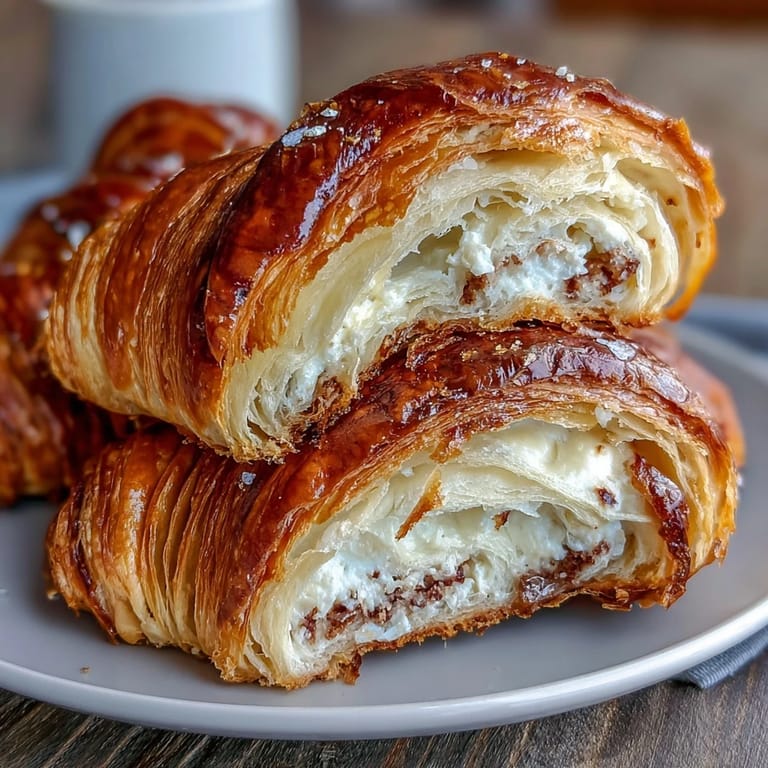
Save There was a morning when a neighbor knocked on my door at seven, drawn by the smell alone, and we ended up sharing a still-warm croissant with coffee while the sun came up. That simple moment—butter on their chin, genuine surprise at how good homemade pastry could be—made every fold and chill worthwhile.
The Sourdough Advantage
Using sourdough starter instead of commercial yeast gives these croissants a depth you simply can't achieve any other way. The fermentation develops organic acids and subtle flavors that make each bite more interesting, while the slow rise means you're not fighting against rapid yeast activity during your lamination work. My first attempt without sourdough felt flat by comparison—good butter, good layers, but something intangible was missing.
Timing and Temperature Matter
I've learned that croissants are as much about temperature management as they are about technique. Cold dough, cold butter, cool kitchen air—they all work together to keep that butter from disappearing into the flour. On hot days, I chill my rolling pin and work surface beforehand, and I take breaks between folds to let everything relax in the fridge. On one particularly warm afternoon, I rushed the process and ended up with croissants that were delicious but missing those dramatic, visible layers—a visual reminder that patience creates texture.
Storage and Serving Suggestions
These are best eaten the day they're baked, still warm enough to release steam when you bite through the exterior. But life happens, and sometimes you need to bake ahead—fully baked croissants freeze beautifully for up to two weeks, and a quick five-minute warm-up in a 180°C oven restores most of their original crispness and flakiness.
- Pair warm croissants with strong coffee or hot chocolate to balance the buttery richness with something bold.
- For a savory twist that surprised me, try filling them with gruyère and fresh thyme before rolling, or ham and Dijon mustard for a fully realized breakfast sandwich.
- Store leftovers in an airtight container and refresh them gently rather than eating them cold, which flattens their texture.
 Save
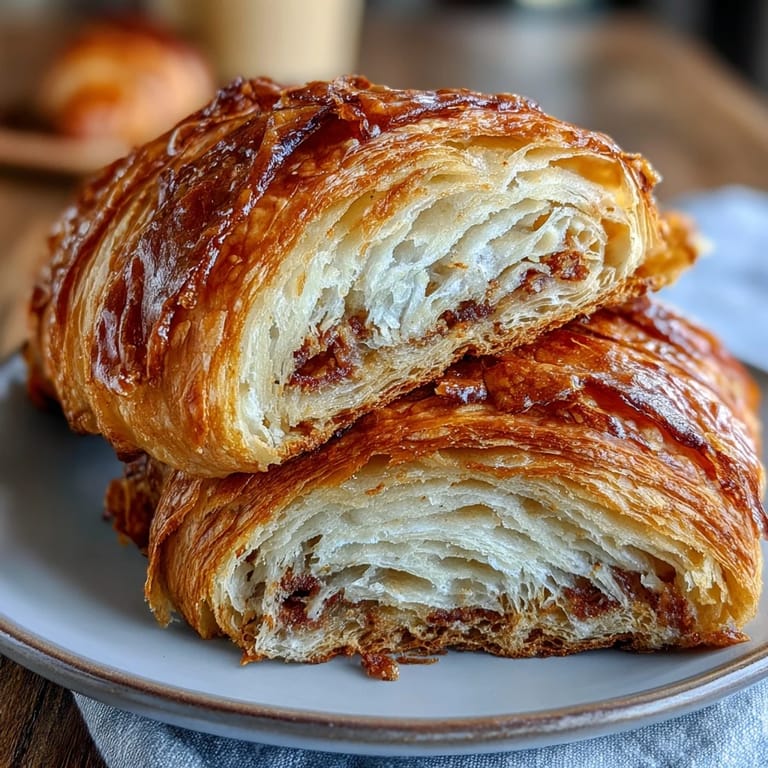
Save Making croissants at home feels less like following a recipe and more like joining a tradition that bakers have refined for centuries. Once you've made them once, you'll find yourself planning the next batch before these ones have even cooled.
Recipe Guide
- → How does sourdough affect the croissant flavor?
Sourdough starter imparts a subtle tanginess and depth to the dough, enhancing complexity and aroma while contributing to a tender crumb.
- → Why is overnight chilling important?
Chilling slows fermentation and firms the dough and butter, allowing multiple folds to create flaky, distinct layers in the final pastry.
- → Can I substitute butter in the dough?
Butter is essential for flavor and texture; substituting may affect flakiness and richness. Unsalted butter is recommended for control over salt levels.
- → What is the best way to shape croissants?
Roll dough into thin rectangles, cut into triangles, then roll from the wide base to form crescents with tips tucked underneath for baking stability.
- → How do I know when croissants are properly baked?
Look for a deep golden-brown color with a crisp crust; croissants should feel light and airy inside when cooled slightly.
- → Can croissants be frozen after baking?
Yes, cooling completely before freezing preserves flakiness; reheat gently to restore crispness before serving.