 Save
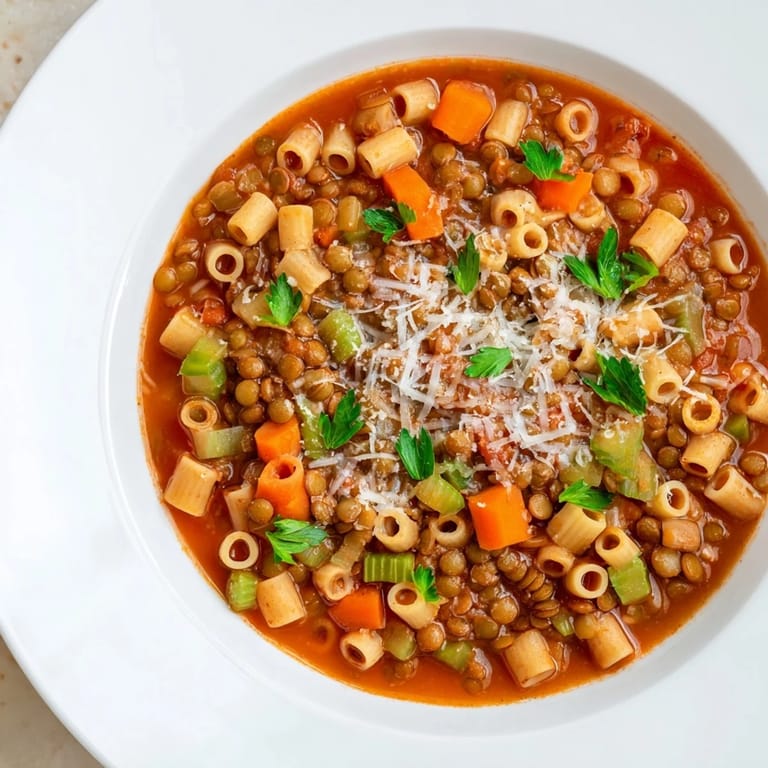
Save There's something deeply grounding about a pot of soup that costs less than a coffee but tastes like comfort. I discovered this ditalini and lentil soup on a Tuesday afternoon when my pantry was nearly bare, but I had a bag of brown lentils and a box of small pasta tucked in the back. What started as making do with what I had became something I now make deliberately, again and again, because it's exactly what a good soup should be: humble, nourishing, and somehow better the second day.
I made this for my neighbor last winter when she was under the weather, and watching her face light up at the first spoonful reminded me that the best recipes are the ones you can make without thinking twice. There was no fancy presentation, just a warm bowl handed over the fence with crusty bread, and somehow that mattered more than any plating technique ever could.
Ingredients
- Olive oil: Don't skip it or substitute vegetable oil—you want that fruity, savory base that makes the vegetables golden.
- Yellow onion, carrots, and celery: This holy trinity is non-negotiable; together they're the soul of the soup, so chop them consistently for even cooking.
- Garlic: Fresh minced garlic makes all the difference; that one minute of cooking releases its sweetness into the pot.
- Brown lentils: They're sturdier than red lentils and won't dissolve into mush, which is exactly what you want here.
- Ditalini pasta: These small tubes grab the broth beautifully, but small shells or orzo work just as well if that's what you have.
- Vegetable broth: Low-sodium lets you control the salt and prevents the soup from becoming too intense by the end.
- Canned diced tomatoes: Honestly, use what you have on hand—fresh tomatoes work too, but canned is reliable and always worth keeping around.
- Tomato paste: This concentrated richness is what transforms simple broth into something that tastes like it simmered for hours.
- Dried thyme and oregano: These Italian herbs are the backbone; dried actually works better here than fresh because they release their flavor gradually into the liquid.
- Bay leaf: One leaf adds depth without announcing itself—remove it before serving so no one bites down on it.
- Red pepper flakes: Optional, but a pinch adds a whisper of heat that makes the other flavors pop.
- Parsley and Parmesan: The parsley is a fresh finish that brightens the whole bowl, and Parmesan is optional but worth the small indulgence.
Tired of Takeout? 🥡
Get 10 meals you can make faster than delivery arrives. Seriously.
One email. No spam. Unsubscribe anytime.
Instructions
- Build your flavor base:
- Heat the olive oil in your pot over medium heat, then add the onion, carrots, and celery. You're looking for them to soften and turn golden at the edges, about 6 to 8 minutes—don't rush this step, because it's where the magic starts. Stir occasionally and listen for that gentle sizzle that tells you things are cooking properly.
- Wake up the garlic:
- Once the vegetables are soft, stir in the minced garlic and give it exactly one minute. You'll smell it transform from raw and sharp to mellow and sweet—that's your signal to move on.
- Build the broth:
- Add the rinsed lentils, canned tomatoes with their juice, tomato paste, thyme, oregano, bay leaf, and red pepper flakes if you're using it. Stir everything together so the tomato paste dissolves evenly, then pour in the vegetable broth. The pot should smell incredible at this point.
- Let it simmer gently:
- Bring everything to a boil, then lower the heat and cover the pot. Let it bubble gently for about 20 minutes until the lentils are just tender but not falling apart. You should be able to crush one easily between two spoons when it's ready.
- Add the pasta:
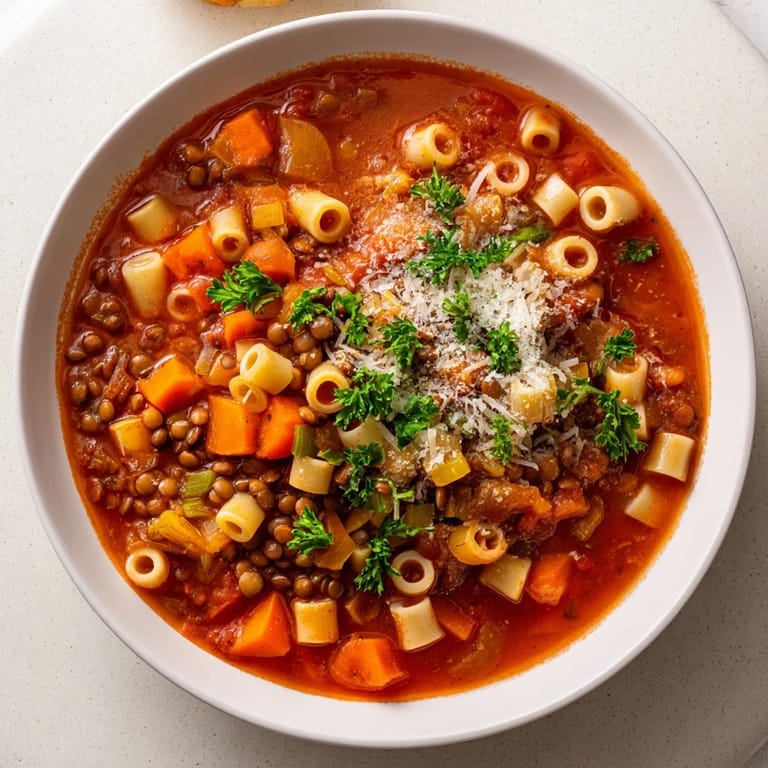
- Uncover the pot and stir in the ditalini pasta. The soup will thicken slightly as the pasta hydrates, which is exactly what you want. Simmer uncovered for 8 to 10 minutes, stirring occasionally, until the pasta is soft and the lentils are completely cooked through.
- Taste and finish:
- Fish out the bay leaf, then taste. Add salt and black pepper generously—this is the moment to make it yours. Some days I want it peppery and bold, other days more subtle.
 Save
Save There was an evening when my daughter asked to help make this soup, and she insisted on stirring the pot every two minutes because she was convinced it needed constant attention. Watching her face as she tasted it afterward, already planning to make it again soon, I realized this soup had quietly become part of our family story.
Variations and Additions
The beauty of this soup is that it bends to what you have in your kitchen. In fall, I sometimes add chopped kale or spinach in the last five minutes, watching it wilt into the warm broth and turn the whole pot an earthy green. Other times I'll throw in a handful of diced zucchini or bell pepper when the vegetables first go in, or stir in a splash of red wine right before the broth for a deeper complexity. Even switching the pasta shape changes how the soup feels on your spoon—orzo makes it more elegant, small shells make it feel nursery-cozy. The recipe doesn't care; it only wants you to taste it and adjust until it's perfect for you.
Serving and Pairing
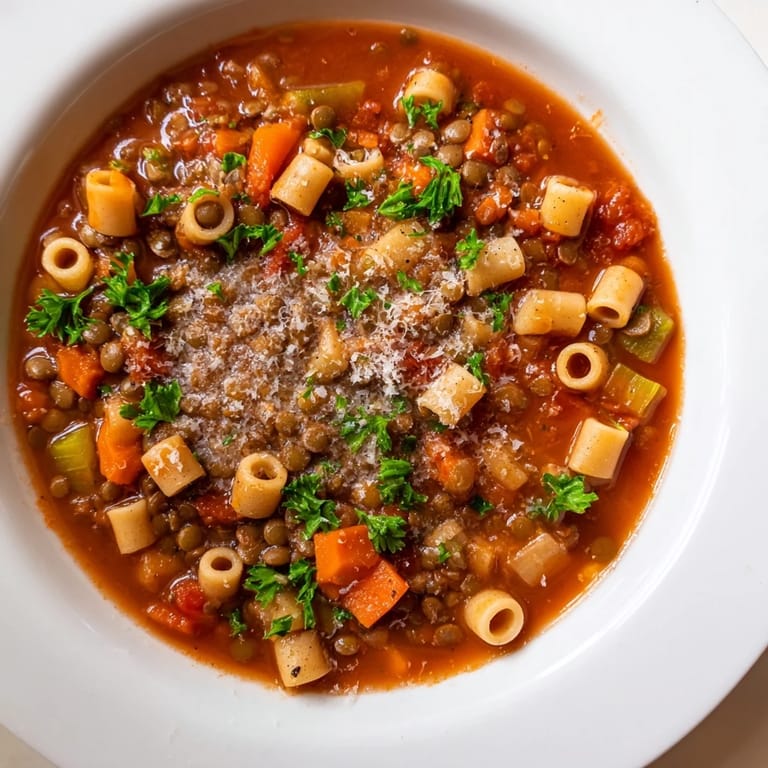
I always serve this soup in the widest, deepest bowls I can find, because half the pleasure is lifting a spoonful and seeing the lentils and pasta swimming together in that russet broth. Crusty bread is non-negotiable—something with enough structure to wipe the bottom of the bowl clean. A generous grating of Parmesan makes it richer, or you can skip it entirely and let the soup stand on its own simple merit. Sometimes I'll add a drizzle of good olive oil across the top, not for flavor so much as for that small luxury of seeing it swirl into the heat.
Storage and Make-Ahead Tips
This soup is one of those rare dishes that genuinely tastes better the next day, once the flavors have had time to become friends with each other. Store it in the fridge for up to five days, and it freezes beautifully for a month—I portion mine into containers so I can grab a single bowl's worth on mornings when I need something warm and filling before the day gets loud. Reheat gently on the stove with a splash of water if it's thickened too much in storage.
- Refrigerated, it keeps for up to five days; frozen, it's good for about a month.
- Reheat on the stovetop rather than the microwave to bring the flavors back to life.
- Add fresh parsley or a drizzle of olive oil just before serving to brighten a reheated bowl.
 Save
Save Make this soup when you need something real, something that costs almost nothing but tastes like you cared. It's the kind of dish that proves the simplest ingredients, cooked with patience and a little attention, are often exactly enough.