 Save
Save There's something almost defiant about throwing together a tin of tuna and a can of chickpeas on a Tuesday night when the fridge feels bare and you're hungry for something real. I discovered this salad not through careful planning but through necessity and curiosity, wondering if two humble proteins could actually hold their own together. The first time I made it, the brightness of fresh lemon and the earthiness of chickpeas surprised me—it felt less like a pantry rescue and more like stumbling onto something I'd been craving without knowing it.
I made this for a friend who'd just moved into a new apartment with minimal kitchen equipment, and watching her face light up when she tasted it—realizing she could make something this good with literally nothing but a bowl and a knife—that's when I knew this recipe belonged in regular rotation. She's made it probably fifty times since, and I think of her every time I reach for the olive oil.
Ingredients
- Quality tuna in olive oil (5 oz can): The oil isn't waste—it carries flavor and keeps the salad from feeling dry, so drain it but don't feel guilty about what it brings.
- Chickpeas (15 oz can): These need a rinse under cold water to shed the starchy liquid, which makes a real difference in texture and prevents the salad from getting gluey.
- Red onion (1/4 small, finely diced): Finely is the key word here; thick chunks turn bitter and dominating, while thin pieces dissolve into brightness.
- Cherry tomatoes (1/2 cup, halved): Halving them releases their juice slowly into the salad, adding subtle sweetness without making everything soggy if you eat it within a reasonable timeframe.
- Fresh parsley (1/4 cup, chopped): This isn't decoration—it's green freshness that makes the whole salad taste alive instead of canned.
- Extra-virgin olive oil (3 tbsp): This is where your money matters; cheap olive oil tastes thin and metallic, while good oil becomes the backbone of the whole dish.
- Fresh lemon juice (1 tbsp): Bottled lemon juice has a tinny aftertaste that ruins the balance, so squeeze a fresh lemon even if your hands get sticky.
- Dijon mustard (1 tsp): A tiny amount emulsifies the dressing and adds a gentle tanginess that makes both proteins taste better than they should.
- Sea salt and black pepper: Taste as you go because canned tuna varies wildly in saltiness depending on the brand.
- Smoked paprika (1/4 tsp, optional): If you add this, you get a gentle warmth and a hint of something smoky that makes people ask what your secret ingredient is.
- Lemon zest (from 1/2 lemon): The zest sprinkled on top at the end is where the magic happens—it looks intentional and tastes bright in a way juice alone can't deliver.
Tired of Takeout? 🥡
Get 10 meals you can make faster than delivery arrives. Seriously.
One email. No spam. Unsubscribe anytime.
Instructions
- Combine your proteins and vegetables:
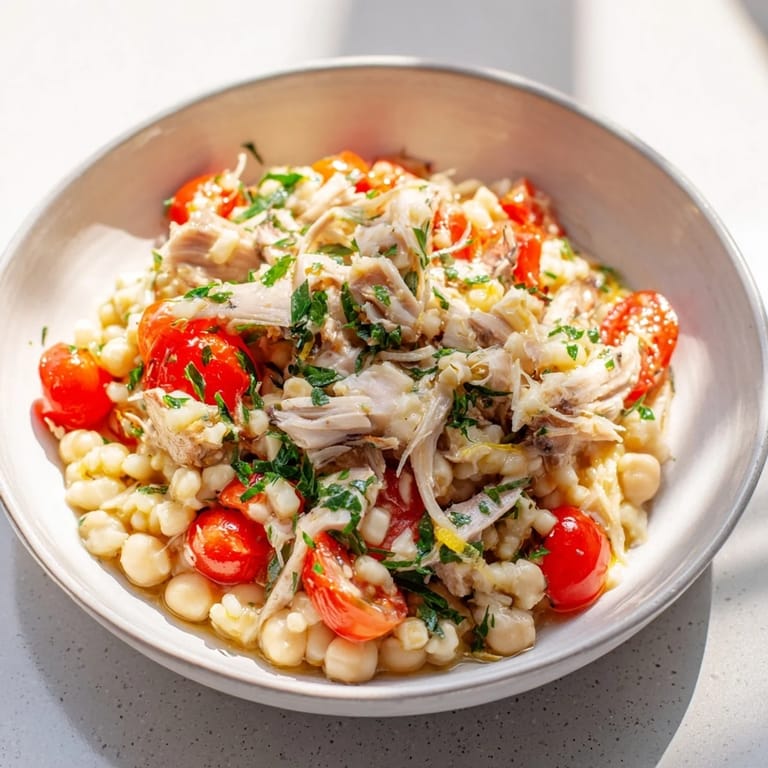
- In a large bowl, add the drained tuna, rinsed chickpeas, finely diced red onion, halved cherry tomatoes, and chopped parsley together. You want everything sitting in the same bowl, getting acquainted before the dressing arrives.
- Make the dressing:
- In a small bowl, whisk together the olive oil, lemon juice, Dijon mustard, salt, pepper, and smoked paprika until it looks emulsified and slightly thicker than plain oil. You'll know you've whisked enough when it tastes balanced—bright but rich, sharp but not aggressive.
- Bring everything together:
- Pour the dressing over the salad and toss gently but thoroughly, making sure every ingredient gets coated. Don't be shy here; the dressing is what transforms separate ingredients into something cohesive.
- Taste and adjust:
- Take a bite of everything mixed together, then decide if you need more salt, more lemon, or more of anything else. Trust your mouth over the recipe.
- Finish and serve:
- Sprinkle lemon zest and a handful of extra parsley over the top, then eat immediately while the red onion still has bite, or refrigerate for 30 minutes if you want the flavors to soften and meld together slightly.
 Save
Save There was an evening when someone I barely knew came over unexpectedly hungry, and I threw this together in front of them—no apologies, no pretense. They ate it slowly, savoring it, and asked for the recipe before they left. That's when I realized this salad isn't about impressive ingredients; it's about respecting simple things enough to get them right.
How to Make This a Full Meal
Serve this salad over a bed of soft leafy greens like butter lettuce or arugula if you want it to feel lighter and longer, or pile it onto thick slices of toasted sourdough if you want something heartier and more substantial. You can also eat it with crusty bread on the side for dipping into any pooled dressing at the bottom of the bowl—nothing goes to waste, and the bread becomes part of the experience. Some days I add a handful of crumbled feta or a soft-boiled egg on top, which turns it into something different but equally satisfying.
When You Want to Play Around
The base of this salad is flexible without breaking, which is its greatest strength. I've added capers for a briny punch, sliced Kalamata olives for depth, a pinch of red chili flakes for heat I didn't know I needed, diced cucumber for crunch, or even a handful of toasted pine nuts for richness. You can swap the red onion for shallots or green onions if you want something gentler and less sharp, or add roasted red peppers from a jar if you want sweetness. The dressing stays the same, anchoring everything, so you have freedom to experiment without the whole thing falling apart.
Storing and Making It Ahead
This salad actually improves slightly if you make it 30 minutes before eating, giving the flavors time to get comfortable with each other and the red onion to soften just enough. You can keep it in the refrigerator for up to two days, though the tomatoes will soften and the onion will mellow into almost sweetness. If you're making it ahead for lunch, keep the dressing separate and dress it right before eating to keep everything crisp and fresh.
- Don't dress the salad the night before unless you specifically want everything soft and melded together.
- If you're packing it for lunch, put the lemon zest and extra parsley in a little container to add right before you eat.
- Bring it to room temperature for 10 minutes before eating if it's been in the fridge, which brings the flavors back into focus.
 Save
Save This salad taught me that some of the best meals come from respecting what you have instead of waiting for perfect conditions. It's become the recipe I make when I want to eat something real without fuss, and the one I share with people who've convinced themselves they can't cook.
Recipe Guide
- → How do I best combine the ingredients for even flavor?
Toss the chickpeas, tuna, vegetables, and herbs gently in a large bowl before pouring the dressing over them. This ensures every bite is evenly coated and flavorful.
- → Can I prepare this salad ahead of time?
Yes, refrigerate for up to 30 minutes to let the flavors meld nicely. Avoid storing too long to keep the texture fresh.
- → What variations can I try with this dish?
For added flavor, try incorporating capers, olives, or a pinch of chili flakes. You can also swap red onion with shallots or green onions for a milder bite.
- → Is this salad suitable for special diets?
It’s naturally gluten-free, dairy-free, and suitable for pescatarian diets due to its fresh ingredients and seafood protein source.
- → What makes the dressing flavorful and balanced?
The blend of extra-virgin olive oil, fresh lemon juice, Dijon mustard, sea salt, black pepper, and smoked paprika creates a bright, tangy, and mildly smoky dressing that enhances the salad.