 Save
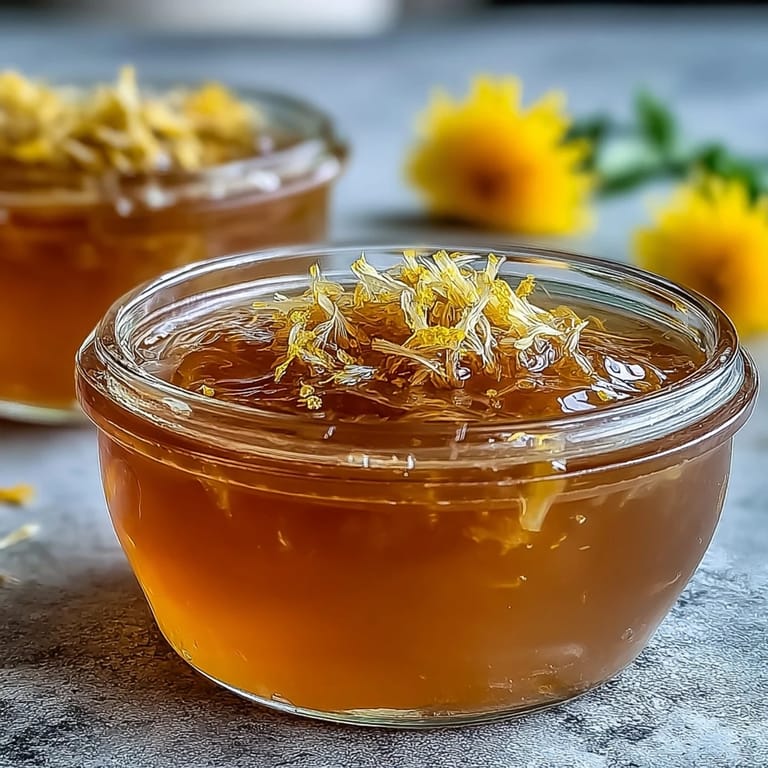
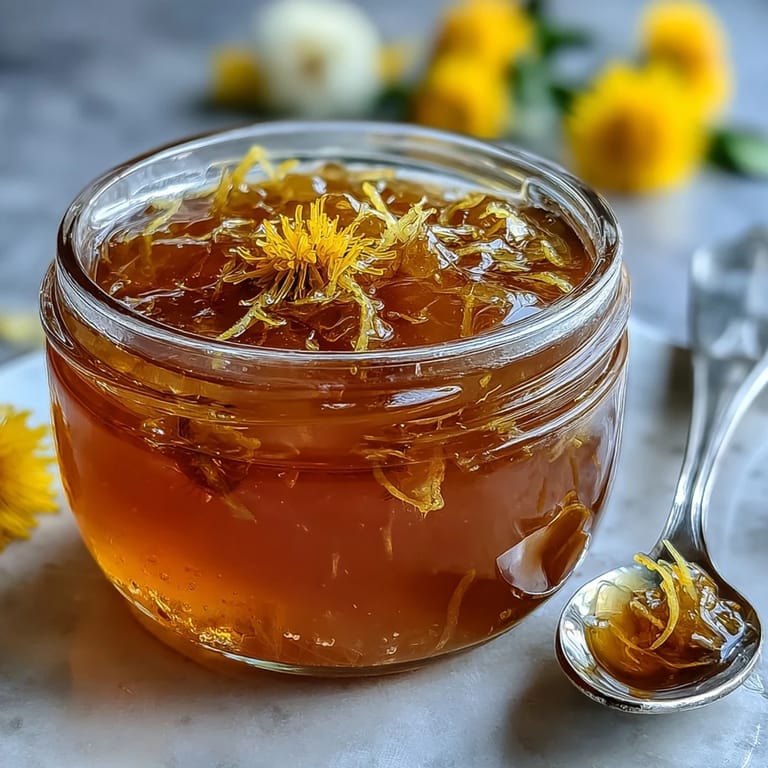
Save The first time I set out to make dandelion jelly, I remember standing barefoot in the dew-soaked grass while the sun was still yawning awake. The gentle buzz of bees and the earthy scent of spring made picking petals feel more like a slow meditation than a chore. There's something enchanting about transforming humble wildflowers scattered across the lawn into jars of gold. Lemon and honey add clarity to the jelly's floral sweetness, and each spoonful captures the spirit of the season. It's a preserve that always feels worth the effort, especially when spread over crusty bread on a rainy afternoon.
I once made a batch for a friend—we sat together at the kitchen table, quietly snipping petals and sharing stories while the scent of simmering dandelions mingled with fresh lemon. When we tasted the finished jelly, both of us were surprised by how fragrant and bright it was. Her youngest daughter insisted on drizzling it over yogurt for weeks afterward. It quickly became a staple in our springtime kitchens. It's the kind of recipe that invites company and conversation.
Ingredients
- Fresh dandelion petals: Only the yellow parts make the jelly delicate, and removing all green bits prevents bitterness—patience here pays off.
- Water: Simmering the petals releases their floral flavor; start with clean, cold water for the purest infusion.
- Fresh lemon juice: Using one whole lemon brings brightness and keeps the jelly from tasting too sweet.
- Granulated sugar: Helps with setting and sweetness; measure carefully for a reliable gel.
- Mild honey: Adds gentle floral notes and blends smoothly into the jelly—too strong and it will overpower the dandelion.
- Fruit pectin: Essential for getting that classic jelly texture; I learned to whisk it in thoroughly to avoid clumps.
Tired of Takeout? 🥡
Get 10 meals you can make faster than delivery arrives. Seriously.
One email. No spam. Unsubscribe anytime.
Instructions
- Petal Preparation:
- Pick only the bright yellow petals, gently plucking from the flower heads and leaving all green parts behind so the jelly stays smooth and golden.
- Make the Floral Infusion:
- Add petals and water to a large saucepan, bring to a boil, then simmer as the kitchen fills with a grassy, honeyed aroma; after 10 minutes, cover and let steep overnight for the richest flavor.
- Strain and Measure:
- Press the infusion through a fine mesh sieve or cheesecloth, squeezing gently to release every drop, and measure out precisely 3 cups—add just enough water if needed.
- Combine and Gel:
- Return liquid to the pan, stir in lemon juice and pectin, then boil, whisking constantly as the scent sharpens and the mixture thickens.
- Sweeten and Boil:
- Add sugar and honey, stir well, then boil hard for 1-2 minutes; check texture by placing a spoonful on a cold plate—if it wrinkles, it's ready to jar.
- Jar and Seal:
- Ladle jelly into sterilized jars, wipe rims clean, and process them in a boiling bath for five minutes; the satisfying pop of sealing lids makes you feel like an old pro.
- Cool and Store:
- Let the jars cool undisturbed, then check the seal before storing in a cool, dark cupboard where they stay luminous for months.
 Save
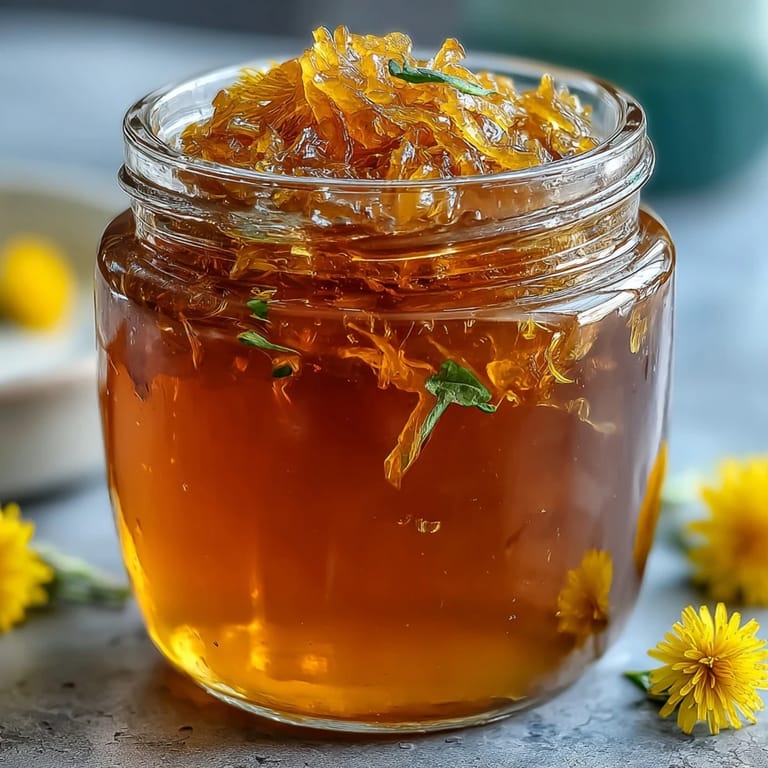
Save After gifting a few jars to neighbors one spring, I watched their faces light up as they tasted this floral jelly for the first time. It suddenly felt like sharing a piece of the season—something rare and handmade, not just another condiment. It's these moments of delight that make foraging and preserving truly special.
What Makes Dandelion Jelly Unique
There's a surprising complexity to dandelion jelly—the flavor is gentle and floral, but not perfumed. I find it pairs beautifully with soft cheeses or as a glaze for roast chicken. The golden color alone beckons with warmth. Making this preserve is a reminder to look for magic in everyday ingredients, especially ones most people overlook.
The Joys of Foraging
Foraging dandelions is best done on a sunny morning when the blooms are open and plentiful—avoid harvests from treated lawns for both safety and taste. There's a peaceful satisfaction in gathering petals, and kids can help too if you're up for a sticky-fingered adventure. Make sure to wash your petals gently before steeping. With a basket and a little patience, nature will reward you with enough blossoms for a whole year's batch.
Best Ways to Enjoy Your Jelly
Spread dandelion jelly over thick toast, swirl into plain yogurt, or dollop atop fresh chèvre—it's lively without being cloying. Whenever you open a jar, the scent of spring returns, even in the depths of winter.
- If you like vanilla, add a teaspoon for a twist.
- Wait for the jelly to fully cool before testing its set.
- Always label your jars with the date so you don't forget when you made them.
 Save
Save It's astonishing how a yard full of dandelions can turn into a handful of golden jars. May this jelly bring the cheer of spring mornings to your table—one spoonful at a time.
Recipe Guide
- → How do I harvest dandelion petals for this jelly?
Pick only bright yellow petals, discarding all green sepals and stems to avoid bitterness. Harvest from pesticide-free areas.
- → Can I use a substitute for honey?
Yes, for a vegan version, replace honey with additional sugar or agave syrup for a similar sweetness level.
- → What is the jelly test mentioned in the instructions?
Place a spoonful of hot jelly on a cold plate; if it wrinkles when pushed, it has set and is ready for storage.
- → What equipment is necessary for making this spread?
You’ll need a large saucepan, fine mesh sieve or cheesecloth, measuring utensils, sterilized jars and lids, ladle, and a water bath canner.
- → How long should the dandelion petals steep?
Allow the petals to steep in boiled water for at least 6 hours, but overnight is best for strongest floral flavor.
- → Is this jelly suitable for gluten-free diets?
Yes, the spread contains no gluten ingredients and fits vegetarian, gluten-free dietary needs.
- → What are some serving suggestions?
Try it on toast, drizzled over yogurt, paired with soft cheeses or as a glaze for roast chicken.