 Save
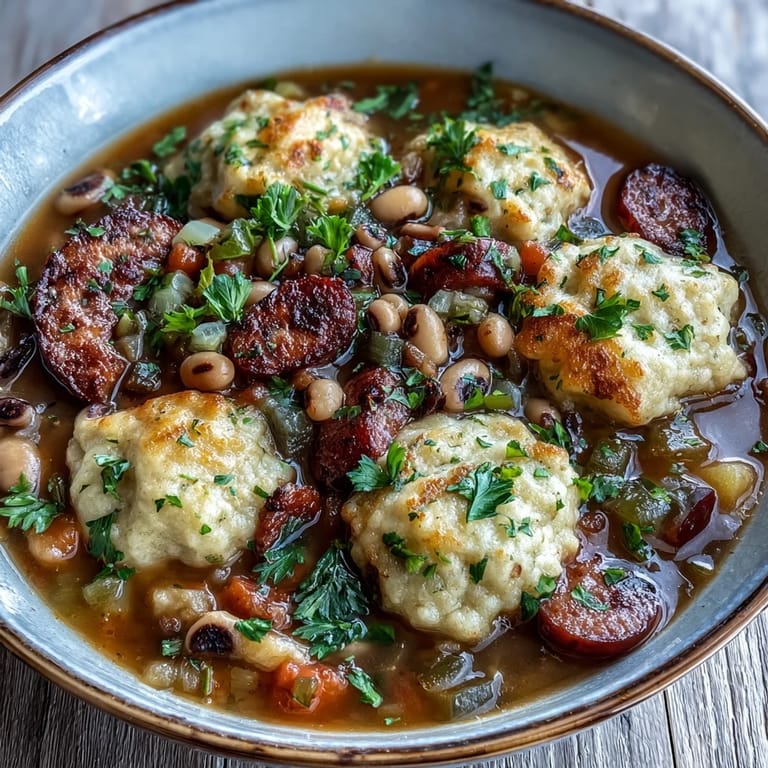
Save My neighbor swore by this dish one November afternoon, leaning against my kitchen counter with a bowl of leftovers she'd brought over. The steam rising from it carried this smoky, warm promise, and I watched her tear into those fluffy dumplings like they held secrets. That first spoonful—the tender black-eyed peas breaking apart, that savory sausage-kissed broth hitting all at once—made me understand why she'd driven across town with it still warm. Now it's become my go-to when I need something that feels like a hug tastes.
I made this for a small dinner party on a cold February night, and something magical happened when everyone bit into those dumplings floating in that dark, savory broth. The conversation slowed, forks clinked more softly, and someone asked for the recipe before dessert even came out. That's when I knew it wasn't just good food—it was the kind of dish that brings people together without any fuss.
Ingredients
- Smoked sausage (12 oz): This is where the soul of the stew lives, so don't skimp or grab whatever's on sale—look for something with real smoke flavor, and slice it about a quarter-inch thick so it browns properly instead of stewing.
- Black-eyed peas (2 cans): Rinsing them matters more than you'd think because it removes the starchy liquid that can make the broth cloudy.
- Yellow cornmeal (1/2 cup): This is what gives the dumplings that subtle sweetness and tender crumb that regular flour alone can't achieve.
- Buttermilk (3/4 cup): Don't substitute with milk and vinegar if you can help it; real buttermilk gives the dumplings a tanginess that rounds everything out.
- Chicken broth (4 cups): Use low-sodium because you're adding sausage, which brings its own salt—this way you control the final flavor.
- Fresh vegetables (onion, celery, carrot, bell pepper, garlic): These build the aromatic base, and dicing them roughly the same size helps them cook evenly.
- Smoked paprika and thyme: These two are the quiet background singers that make this taste authentically Southern without shouting about it.
Tired of Takeout? 🥡
Get 10 meals you can make faster than delivery arrives. Seriously.
One email. No spam. Unsubscribe anytime.
Instructions
- Brown the sausage:
- Heat olive oil until it shimmers, then add your sliced sausage and let it sit undisturbed for a minute or two before stirring—that's how you get golden, caramelized edges instead of gray, steamed meat. You'll know it's ready when the fat renders out and the kitchen smells incredible.
- Build the aromatic base:
- Once the sausage has color, add your onion, garlic, celery, carrot, and bell pepper all at once, stirring often so nothing sticks. This should take about five to seven minutes—you want the vegetables soft but not mushy, still holding some texture.
- Simmer the stew:
- Pour in the broth, add your drained black-eyed peas, thyme, smoked paprika, black pepper, cayenne if you like heat, and a bay leaf. Bring everything to a rolling boil, then lower the heat and let it bubble gently for twenty-five minutes so the flavors marry and deepen.
- Prepare the dumpling batter:
- While the stew simmers, whisk together flour, cornmeal, baking powder, baking soda, and salt in a bowl. Stir in melted butter and buttermilk just until combined—overmixing develops gluten and makes dumplings tough, so stop as soon as you don't see dry flour streaks.
- Taste and adjust:
- Fish out the bay leaf and taste a spoonful of broth before you go further—this is your moment to add more salt or a pinch of cayenne if the flavor feels flat.
- Drop the dumplings:
- Using two spoons or a small ice cream scoop, drop roughly two-tablespoon portions of batter onto the surface of the simmering stew, spacing them so they have room to puff. They'll look small and uncertain at first.
- Steam until puffed:
- Cover the pot and reduce heat to low, then don't peek—seriously, resist the urge to lift that lid for twenty to twenty-five minutes. The steam does the work, and opening the pot releases that precious heat and steam.
 Save
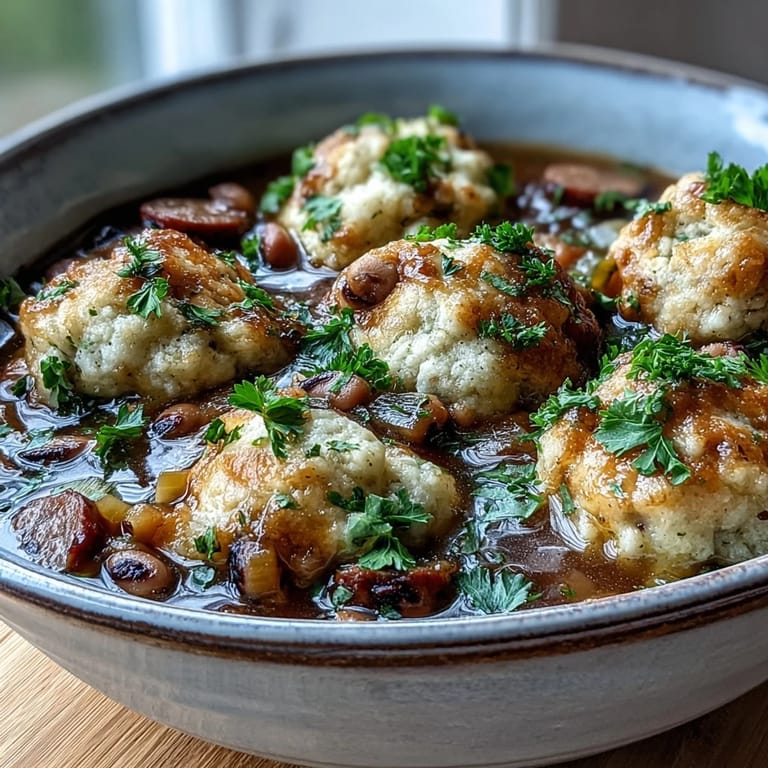
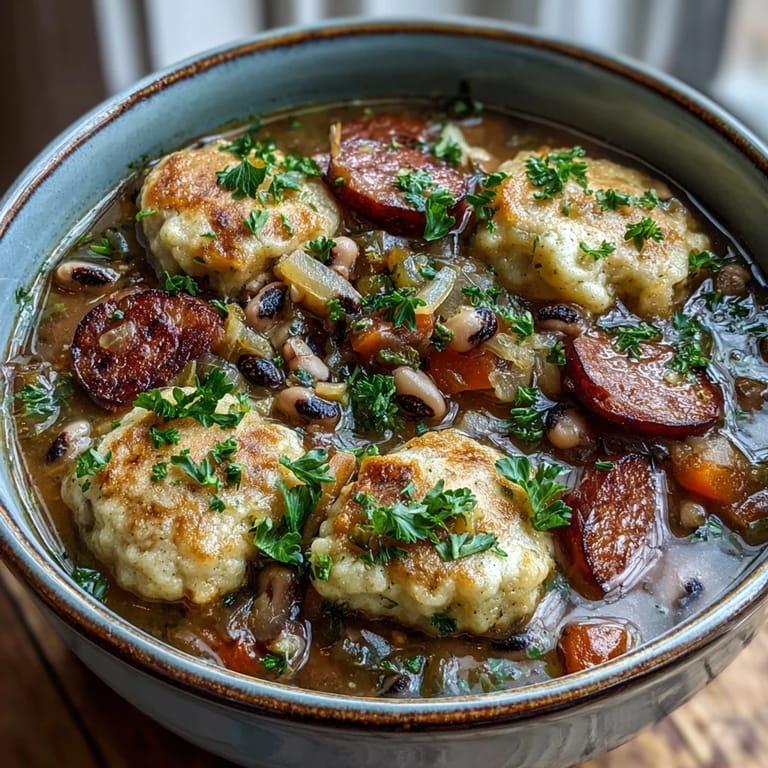
Save There's something about lifting that lid after all that waiting and finding these perfect golden puffs floating in aromatic broth. It's one of those cooking moments that feels like magic even though it's just chemistry and patience doing their thing.
Why the Dumplings Matter
These aren't biscuits and they're not dough—they're somewhere in between, and that's exactly what makes them work. The cornmeal adds sweetness and texture, the buttermilk keeps them tender, and the baking soda gives them lift without the dumplings tasting like they came from a can. I learned this the hard way after trying to use biscuit dough, which turned dense and heavy in the simmering broth.
Sausage Selection Matters More Than You'd Think
Smoked sausage is the obvious choice, but andouille or kielbasa will take this in slightly different directions—kielbasa skews a bit spicier and more garlicky, while andouille brings that deep Louisiana smoke. The type you choose will subtly shift the entire personality of the stew, so grab what speaks to you.
Making It Your Own
This is a forgiving recipe that welcomes improvisation once you understand the fundamentals. I've added diced tomatoes, swapped in white beans when I was out of black-eyed peas, and even stirred in a handful of spinach at the very end for color and nutrition. The framework stays solid no matter what you do.
- For heat, add cayenne to the stew itself rather than at the table—it distributes more evenly and builds flavor depth instead of just making things spicy.
- If you want to make this vegetarian, use vegetable broth and add extra smoked paprika to replace the sausage's depth.
- Leftovers taste even better the next day, so don't hesitate to make a full batch and enjoy it twice.
 Save
Save This dish has a way of turning an ordinary weeknight into something memorable, and that's the real magic. Serve it hot in deep bowls with a piece of crusty bread, and watch people's faces light up.
Recipe Guide
- → Can I make this vegetarian?
Yes, simply omit the smoked sausage and swap chicken broth for vegetable broth. Increase the smoked paprika to maintain that savory depth.
- → What type of sausage works best?
Andouille or kielbasa are excellent choices, but any smoked sausage will add wonderful flavor. Look for fully cooked sausages for convenience.
- → Can I use dried black-eyed peas instead of canned?
Absolutely. Soak 1 cup dried peas overnight, then simmer until tender before adding to the stew. This adds about 1-2 hours to prep time.
- → Why shouldn't I lift the lid while dumplings cook?
Steaming is essential for fluffy dumplings. Lifting the lid releases the steam and can cause the dumplings to become dense or gummy.
- → How do I store and reheat leftovers?
Refrigerate in an airtight container for up to 4 days. Reheat gently on the stovetop, adding a splash of broth if needed. Dumplings may soften but remain delicious.
- → Can I make the stew ahead of time?
Yes, prepare the stew through step 3 and refrigerate up to 2 days. Reheat to a simmer before adding fresh dumplings.