 Save
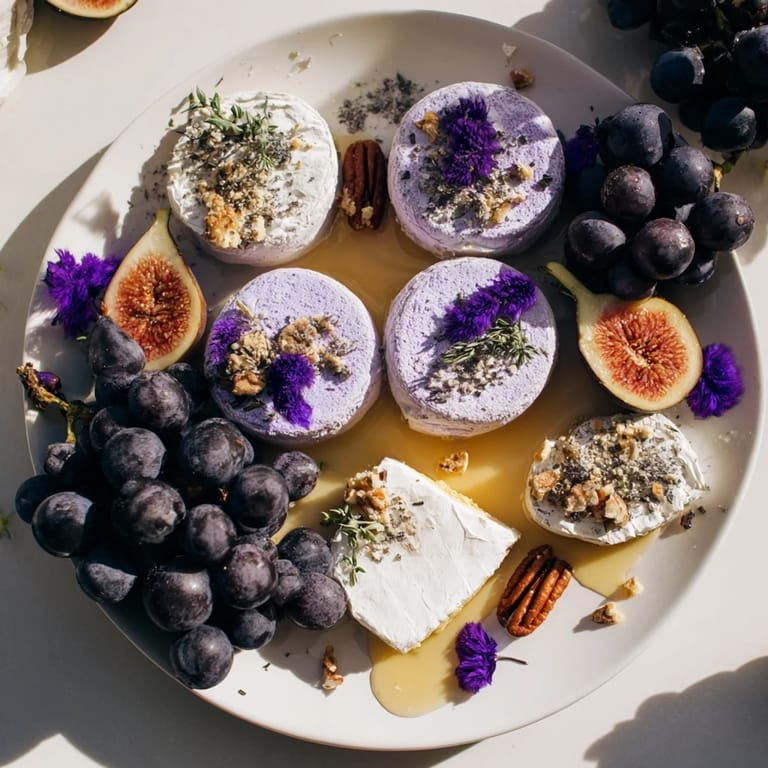
Save A friend once texted me a photo of a lavender-colored cheese board and said, "This is how I want to feel at dinner." That image stayed with me for weeks. When I finally recreated it in my own kitchen, I understood what she meant—there's something about soft purples and elegant greys that transforms a simple cheese platter into a moment of calm sophistication. The lavender-coated goat cheese arrived on a Tuesday, and I knew immediately this board had to happen that weekend.
I served this board last summer at an outdoor dinner, and what struck me most wasn't the compliments—it was watching people slow down. They'd reach for a grape, pause to admire a pansy, take time building their bites instead of rushing through appetizers. My mother-in-law, who usually scrolls through her phone at these things, spent twenty minutes just talking and eating thoughtfully. That's when I realized this board was doing something beyond feeding people.
Ingredients
- Lavender-coated goat cheese: This is the star, and it's worth finding the real thing—the delicate floral coating gives the whole board its personality without overwhelming your palate.
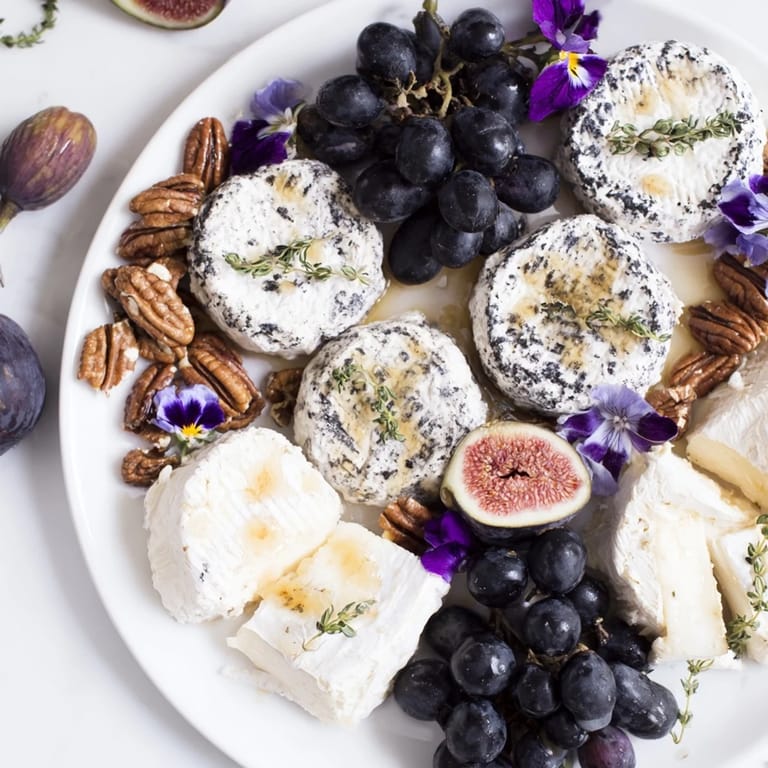
- Ash-rinded brie: The soft, creamy interior contrasts beautifully with those moody grey edges, and it melts just slightly at room temperature for the most luxurious texture.
- Grapes (red or black, halved): Halving them matters because they nestle better among the cheeses and create little pockets of juicy sweetness.
- Fresh figs: If you can find them, use fresh—the honeyed interior plays perfectly with the lavender notes, but dried works when you're out of season.
- Candied walnuts or pecans: The crunch and slight sweetness anchor the board and give guests something to reach for between the softer elements.
- Lavender honey: Drizzle it deliberately over the goat cheese where it pools like liquid gold, amplifying those floral notes that make this board memorable.
- Edible flowers (violets, pansies): Source these from a food-safe supplier—they're not just decoration, they add an unexpected delicate bitterness that balances the sweetness.
- Fresh thyme sprigs: Scatter these last for aroma and color; when guests brush past them, the scent releases subtly.
- Toasted baguette slices: Toast them yourself if you can—the crunch matters, and shop-bought sometimes feels flabby by the time guests reach for it.
- Charcoal or black sesame crackers: These provide visual drama against the pastels and offer a nuttier, more interesting base than plain varieties.
Tired of Takeout? 🥡
Get 10 meals you can make faster than delivery arrives. Seriously.
One email. No spam. Unsubscribe anytime.
Instructions
- Start with your anchor cheeses:
- Place the lavender-coated goat cheese rounds and ash-rinded brie wedges on your board first, spacing them so they're the visual focal points. Think of them as the beginning of a conversation, not a crowded corner.
- Build pockets of fruit:
- Cluster the halved grapes and quartered figs in small groups between and around the cheeses. This creates rhythm and makes it easy for guests to grab without mangling the board.
- Add texture with nuts:
- Scatter candied walnuts or pecans in the remaining gaps, letting some nestle right next to the cheese where their sweetness will complement the creamy richness.
- Drizzle the honey:
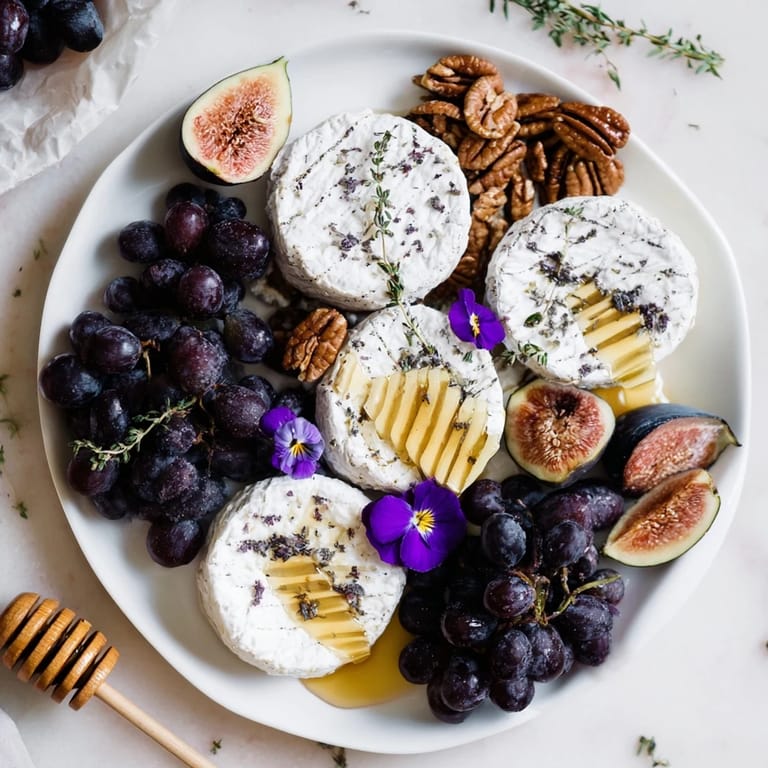
- Pour a small stream of lavender honey over the goat cheese rounds, and leave a small bowl of extra honey nearby for guests who want more. The pooling honey looks intentional and inviting.
- Layer in the flowers and herbs:
- Distribute edible flowers and fresh thyme sprigs across the board in a way that feels scattered, not formal—as if you placed them thoughtfully but without overthinking it.
- Complete with bread and crackers:
- Arrange toasted baguette slices and charcoal crackers in one section where they won't get lost among the softer ingredients. They're the supporting players here.
- Serve with intention:
- Set it down, step back, and let it breathe for a moment before guests arrive. The best boards feel alive, not arranged.
 Save
Save There's a particular satisfaction in watching someone build a perfect bite—a slice of ash-rinded brie on charcoal cracker, a whisper of thyme, a pansy petal, a candied walnut. That moment when someone's expression shifts and they realize this cheese board isn't just food, it's an experience you've created for them. That's why I keep making it.
The Art of Cheese Board Balance
The most common mistake I see is treating a board like a puzzle to be solved—cramming every corner with something. Instead, think of it like a room you want to spend time in: some empty space makes the filled spaces more striking. The lavender and grey tones should feel calm, not chaotic, which means strategic negative space matters as much as what you place. When I leave breathing room, guests naturally linger longer and enjoy more deliberately.
Wine Pairings and Serving Moments
This board sings with a chilled Provence rosé—something dry and crisp that cuts through the richness of the brie without competing with the lavender notes. Gewürztraminer works beautifully too, especially if you want to lean into the floral theme. I've also served it with an elderflower gin and tonic, which sounds unusual but actually mirrors the board's flavor profile in an unexpected way. The key is choosing beverages that feel as thoughtful as the board itself, because once you've created something this deliberate, the drink should honor that energy.
Seasonal Flexibility and Storage
Summer calls for fresh figs and berries; winter demands dried fruit and roasted nuts. I keep this board in my back pocket for all seasons by adapting what I can source—it's genuinely flexible without losing its identity. One final detail: assemble this no more than thirty minutes before serving, and if you're adding edible flowers last, do it just before guests arrive so they don't wilt or absorb moisture from the other ingredients.
- Store your cheeses in the coldest part of your fridge until assembly, and bring them to room temperature gradually for the best texture.
- Toast your baguette slices earlier in the day and store them in an airtight container so they stay crisp.
- Keep edible flowers separate and dry until the final moment of assembly.
 Save
Save This board is proof that the most elegant meals sometimes ask nothing of you except intention and a moment to pause. Let it be a reason to gather, to slow down, and to remember that feeding people is one of the quietest ways to say you care.
Recipe Guide
- → What cheeses are featured on the platter?
The board includes lavender-coated goat cheese and ash-rinded brie, each offering creamy and delicate textures.
- → How can I enhance the floral notes on the platter?
Drizzle lavender honey over the goat cheese and garnish with edible flowers like violets or pansies to elevate the floral aroma and taste.
- → What are suitable accompaniments for this cheese board?
Fresh seedless grapes, figs, candied walnuts or pecans, and fresh thyme sprigs complement the cheeses beautifully.
- → Can this platter be made gluten-free?
Yes, by substituting the baguette with gluten-free crackers, the platter is suitable for gluten-sensitive guests.
- → What serving tools are recommended for assembling the board?
Use a large serving board or platter and a sharp cheese knife for neat slicing and arrangement.
- → Are there alternative nuts that can be used?
Yes, you may choose between candied walnuts or pecans depending on your preference or availability.