 Save
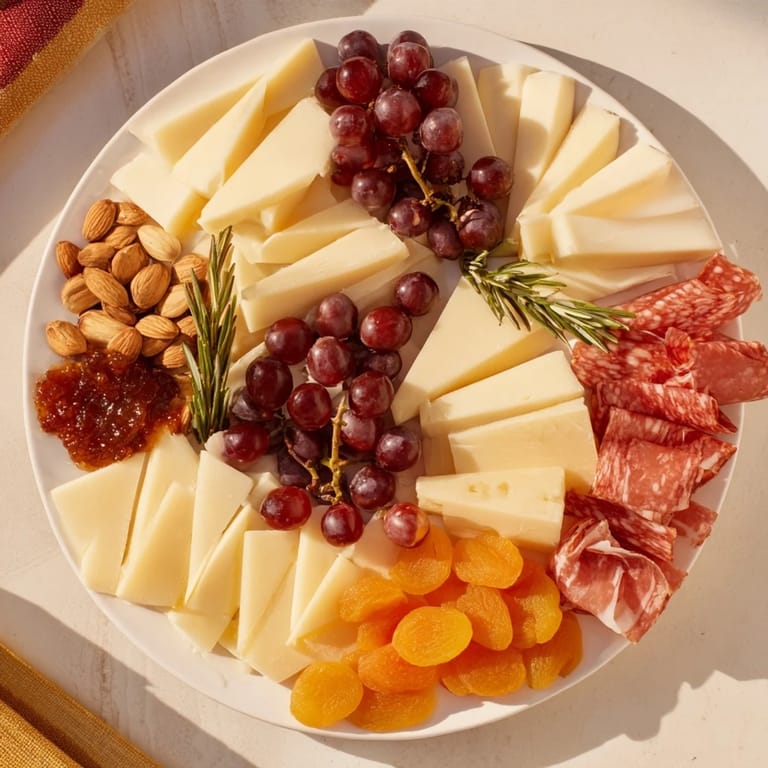
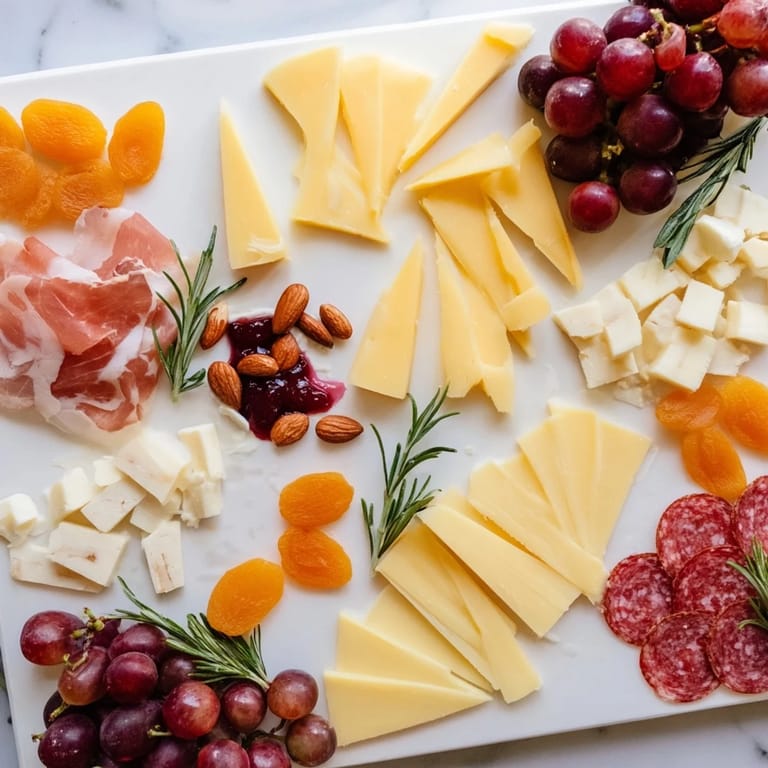
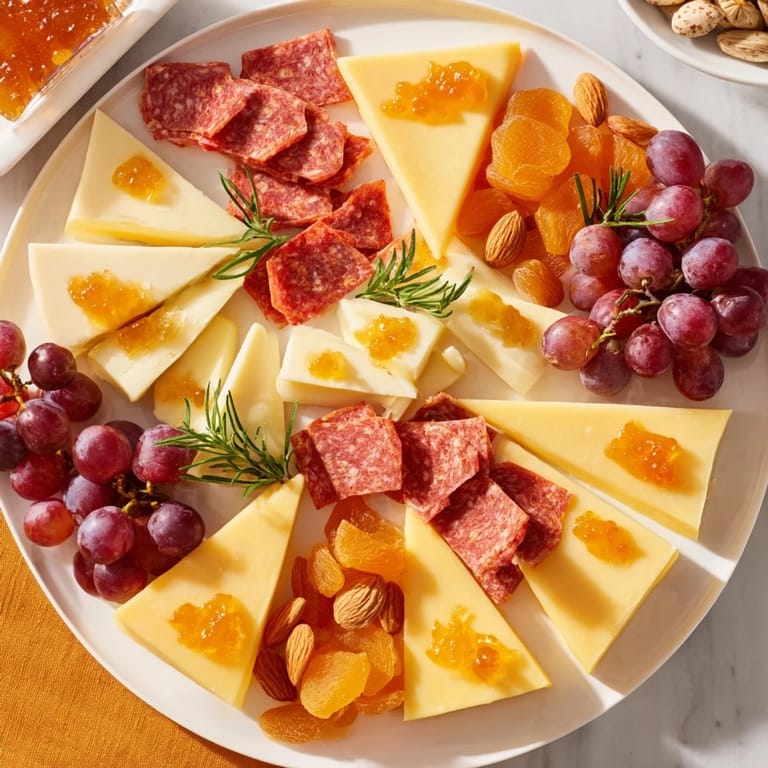
Save My friend Sarah walked in with a mood that needed lifting, and I realized I had exactly what could transform her afternoon: a board of beautiful things arranged with intention. She'd spent weeks planning a dinner party, and I wanted her arrival to feel like stepping into something thoughtfully made, not rushed. That's when The Geometric Gala came to life on my marble slab—each triangle and rhombus placed with the kind of care that says someone actually cared about the small details.
The first time I laid this out for a small gathering, someone pointed at the pattern and asked if I'd studied geometry in culinary school. I hadn't, but I realized that moment—that pause before reaching for food—was exactly the point. A good board should make people look before they eat, and these shapes did that effortlessly.
Ingredients
- Manchego cheese: This Spanish sheep's milk cheese has a slightly nutty bite and firms up beautifully in the fridge, making it ideal for clean cuts.
- Aged cheddar: Choose one that's been aged at least a year so it doesn't crumble unexpectedly when you're cutting triangles.
- Brie: Keep it chilled for at least two hours before slicing, or it'll smear across your knife and ruin those crisp edges.
- Gruyère: Its crystalline texture actually looks beautiful when cut into rhombuses, and those salt crystals catch the light.
- Prosciutto: Fold it into loose triangles rather than cutting it, or the delicate meat tears and looks ragged.
- Soppressata: Slice it thin, then use a small sharp knife to trim the edges into rhombuses—this is where precision actually matters.
- Chorizo: Cut it on a slight diagonal so the slices have that elongated rhombus shape that feels intentional.
- Seedless grapes: Red and green together create visual rhythm without being too obvious about it.
- Dried apricots: Slice these diagonally in half if you want them to echo the geometric theme, though they're beautiful left whole too.
- Marcona almonds: These are roasted and salted, so they're already perfect—just scatter them in the gaps where they look most balanced.
- Fig jam: A spoonful adds sweetness and earthiness; place it where it'll act as a color accent.
- Gluten-free seed crackers: Break them by hand into rough triangles rather than using a knife, which keeps their texture better.
- Fresh herbs: Rosemary and thyme add aroma and soften the geometric rigidity with their organic shape.
Tired of Takeout? 🥡
Get 10 meals you can make faster than delivery arrives. Seriously.
One email. No spam. Unsubscribe anytime.
Instructions
- Chill your cheeses first:
- Pop the harder cheeses in the fridge for at least an hour while you gather everything else. Cold cheese holds a sharp edge and slices cleanly without that crumbly mess that makes you want to scream.
- Cut with intention:
- Use your largest, sharpest knife and wipe it clean between cuts so you're not dragging old cheese residue into fresh slices. Triangles from squares are easy—just cut diagonally—while rhombuses take slightly more thought but feel worth it the moment they're arranged.
- Arrange the foundation:
- Start with the cheeses and meats, alternating them in a loose circular pattern or a clean grid, whichever feels right for your board. Think of it like composing a small edible painting where colors and shapes should build tension and balance.
- Fill the gaps with intention:
- Grapes and almonds go in the spaces between your geometric shapes, creating little pockets of color and texture. Don't overthink this part—let your eye guide you toward what looks balanced.
- Add the softness:
- Place small spoonfuls of fig jam in one or two spots, using it as a color and flavor anchor rather than spreading it everywhere. A single small bowl in a quiet corner of the board often looks more striking than trying to integrate it throughout.
- Finish with fresh herbs:
- Lay rosemary and thyme sprigs across the board in loose, natural clusters that break up the geometry and add life to all those clean lines.
- Serve with confidence:
- Step back, look at what you've made, and remember that you just spent 25 minutes creating something that'll spark actual conversation at the table.
 Save
Save What I didn't expect was that everyone would photograph it before eating. The geometric shapes somehow turned a simple appetizer into something people felt compelled to document, and then the conversations that followed were different—more present, more thoughtful—because they'd actually paused to look.
The Power of Shape
Geometry sounds sterile until you realize it's actually the opposite. Triangles and rhombuses force you to be intentional about placement in a way that circular platters never require, and that intentionality somehow makes the food taste better. There's something about a thoughtfully arranged board that signals care, even when nothing on it is complicated.
Pairing and Serving
A crisp Sauvignon Blanc or a dry rosé will echo the freshness of the grapes while cutting through the richness of the cured meats and aged cheese. The slight acidity wakes up your palate between bites, and suddenly you're tasting each element more clearly. Serve the board at a height where people can easily reach it without leaning awkwardly, and maybe give yourself a quiet moment to step back and feel proud of what you've made.
Making It Your Own
The beauty of this formula is that it's infinitely flexible while keeping that clean, geometric aesthetic. Swap in any firm cheeses you love, try different cured meats like bresaola or coppa, and trust that as long as you keep the shapes intentional, the board will work. The rules exist to help you, not limit you, so break them confidently once you understand why they're there in the first place.
- If you don't have gluten-free crackers, water crackers or any thin, firm cracker breaks into clean geometric shapes just as easily.
- Prep your cuts the morning of, layer them between parchment paper, and refrigerate until 30 minutes before your guests arrive for a stress-free final assembly.
- Trust your eye more than any rule—if something looks balanced and feels right to you, it is right.
 Save
Save This board taught me that sometimes the most memorable meals aren't the complicated ones—they're the ones where someone took 25 minutes to arrange things with care. It's a small gesture that somehow says everything.
Recipe Guide
- → How do I achieve precise geometric cuts?
Use a sharp chef’s or cheese knife and consider a ruler or guide to maintain consistent triangle and rhombus shapes for an artistic look.
- → Which cheeses hold geometric shapes best?
Firm cheeses like Manchego, aged cheddar, and chilled Brie work well to maintain crisp triangular or rhombus cuts.
- → Can I substitute the cured meats?
Yes, alternatives like bresaola or coppa can be used, as long as they hold their shape when sliced.
- → What accompaniments complement the board?
Seedless grapes, dried apricots, Marcona almonds, and dollops of fig jam add texture and flavor contrasts.
- → Are gluten-free crackers necessary?
Gluten-free seed crackers enhance texture and keep the board suitable for gluten-free diets, but any crisp crackers may be used.